

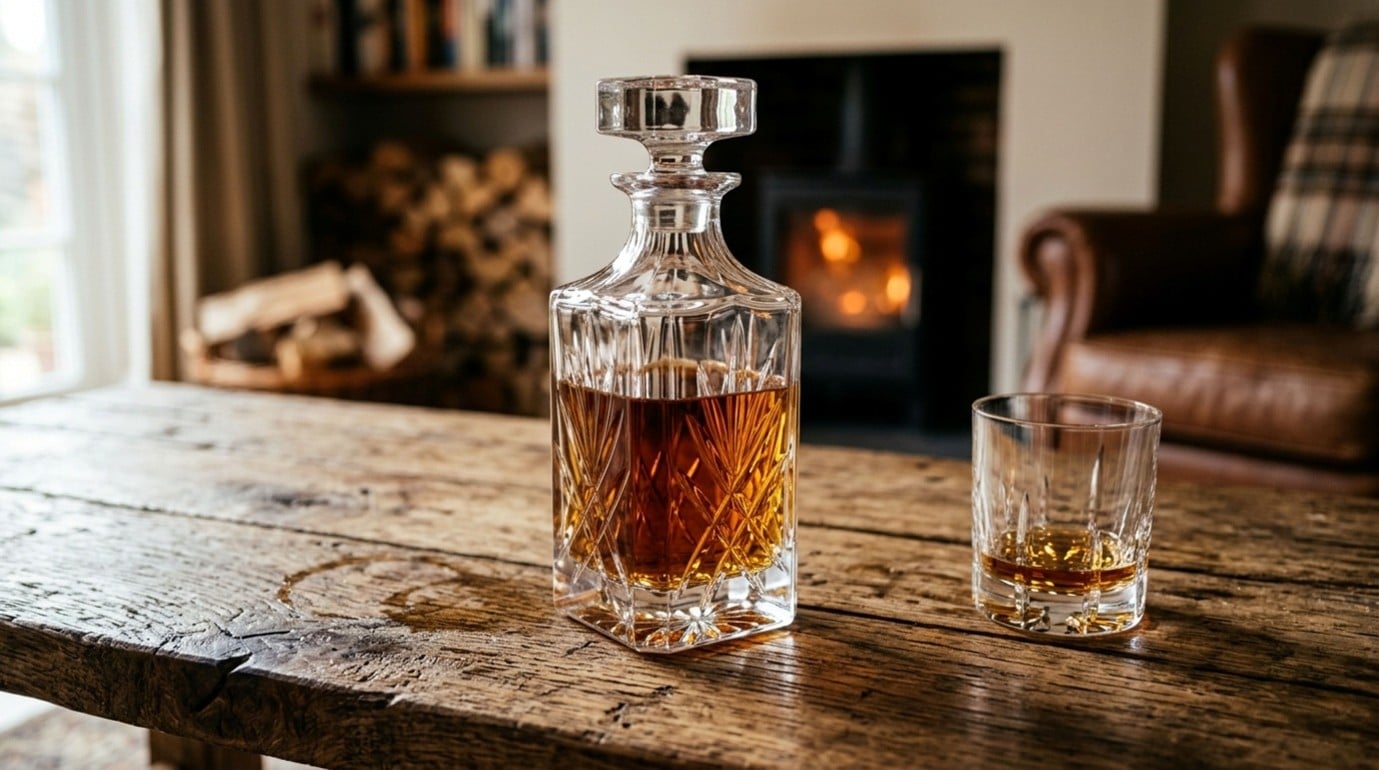
For residents of Lakeland and communities across Tennessee, the tradition of distilling spirits may seem closely associated with the state’s history, culture, and modern tourism industry. Tennessee is internationally known for its whiskey, while the history of small-scale and homemade distilling is intertwined with generations of Appalachian life. Yet despite that history, making distilled spirits at home for personal consumption remains prohibited under federal law.
A newly introduced bill from a Tennessee member of Congress is seeking to change that distinction. U.S. Rep. Diana Harshbarger introduced the Freedom to Home Distill Act on August 27, 2026. The legislation would create a limited federal exemption allowing adults to produce distilled spirits at home for personal or family consumption without being subject to the federal requirements that currently apply to distilled spirits plants.[1]
The proposal would represent a significant change to federal alcohol policy, but it would not create an unrestricted right to make spirits at home. Production limits and equipment requirements would apply, commercial sales would remain prohibited, and states would retain the authority to establish their own laws. For Tennesseans, including those in Lakeland, that final point is particularly important: even if the proposal ultimately becomes federal law, state-level requirements would still have to be considered before residents could legally begin distilling spirits at home.
How Federal Law Currently Treats Home Distilling
Federal law draws an important distinction between making beer or wine at home and distilling spirits. According to the federal Alcohol and Tobacco Tax and Trade Bureau, commonly known as the TTB, adults of legal drinking age may produce limited quantities of beer or wine at home for personal or family use. There is no comparable personal-use exemption for distilled spirits. The TTB states that individuals currently cannot legally produce distilled spirits for beverage purposes at home. Producing spirits anywhere other than a federally qualified distilled spirits plant can result in serious federal consequences.[2]
That means the legal framework surrounding a home still is substantially different from the rules governing someone who makes a batch of beer or wine as a hobby. The distinction has existed for generations. Harshbarger’s office describes the federal restriction on home distilling as predating Prohibition by more than 50 years. The congresswoman argues that federal law should be updated so that responsible adults who want to produce small amounts of spirits for personal consumption can receive an exemption similar to those available to home beer and wine makers.
What the Freedom to Home Distill Act Would Do
Under Harshbarger’s proposal, a “qualifying home distillery” could be established at a private residence or in a connected shed, yard or enclosure. Spirits produced there would have to be intended solely for personal or family consumption. The amount permitted would depend on the number of adults living in the household. A household with one adult could produce up to 10 proof gallons per calendar year, while a household containing two or more adults age 21 or older could produce up to 20 proof gallons annually.[3]
A proof gallon is a measurement used by the federal government that takes both alcohol volume and proof into account. One proof gallon is equivalent to one gallon of spirits at 100 proof, or 50 percent alcohol by volume. As a result, a limit of 10 proof gallons does not necessarily mean a household could produce exactly 10 physical gallons of any type of spirit.
The legislation also makes clear that the exemption would be for personal production rather than a way to establish an unlicensed commercial distillery. Selling or transferring home-distilled spirits for sale would remain prohibited. The proposal would therefore create a distinction between hobby distilling and commercial alcohol production, with businesses continuing to operate under the regulatory system governing the commercial spirits industry.
Proposed Rules for Home Stills
The bill also addresses the equipment that could qualify for the exemption.
Under the proposal, qualifying home stills would be exempt from certain federal registration and notice requirements as long as the equipment meets specified conditions. The still could have a capacity of no more than 50 gallons and would be required to have both a pressure-release valve and a vacuum-relief valve.
Those provisions reflect one of the issues that distinguishes distilling from ordinary home brewing. Distillation involves heating fermented liquid and separating alcohol through evaporation and condensation, making appropriate equipment and safe operation important considerations.
Under existing law, federal restrictions are extensive. The TTB explains that legally producing beverage spirits generally requires prior approval to operate a distilled spirits plant, along with numerous other requirements involving facilities, equipment, records, and reporting.[4] The Freedom to Home Distill Act would establish a much narrower regulatory category for qualifying personal-use operations.
Tennessee’s Connection to the Proposal
Harshbarger has emphasized Tennessee and Appalachia’s long history of distilling in making the case for the legislation. “Distilling has deep roots in Tennessee and across Appalachia, tied to self-reliance and craftsmanship that go back generations,” Harshbarger said when announcing the bill. She is joined by original cosponsors Rep. Tim Burchett of Tennessee and Rep. Riley Moore of West Virginia.
The proposal has also attracted support from Eric “Digger” Manes, a Tennessee distiller known for appearing on the Discovery Channel series Moonshiners. According to Harshbarger’s office, Manes approached the congresswoman about legislation addressing hobby distilling, helping bring an issue with deep historical roots into a modern federal policy discussion.
The cultural connection is especially noteworthy in Tennessee, where distilled spirits have evolved from a regional tradition into an important part of the state’s identity and commercial economy. Harshbarger’s legislation, however, focuses specifically on the much smaller world of personal, noncommercial production rather than Tennessee’s established commercial distilling industry.
A Recent Court Decision Adds to the Debate
The legislation also arrives amid a broader legal debate over the federal government’s authority to prohibit home distilling. In April 2026, the U.S. Court of Appeals for the Fifth Circuit ruled that the longstanding federal home-distilling ban was unconstitutional in a case brought by the Hobby Distillers Association and several of its members. The court concluded that the prohibition was not an appropriate exercise of Congress’s taxing power.[5]
The case does not mean that Tennesseans should assume home distilling is now generally legal. The TTB continues to state that federal law prohibits individuals from producing distilled beverage spirits at home, and Harshbarger’s legislation is itself intended to establish a clear statutory exemption. The court case nevertheless adds another dimension to the national conversation over whether federal rules written more than a century ago remain appropriate for small-scale hobby distilling today.
States Would Still Have the Final Say on Their Own Rules
Perhaps the most important provision for residents of Lakeland and elsewhere in Tennessee is that the Freedom to Home Distill Act addresses federal law only.
The proposal specifically preserves the authority of individual states to regulate or prohibit home distilling. Therefore, passage by Congress would not automatically mean that every adult in every state could legally install a still and begin producing spirits.
State and potentially local requirements would continue to matter.
That distinction also prevents the legislation from establishing a nationwide system in which all home distilling is treated identically. Instead, it would remove the proposed activities from the federal prohibition while allowing states to decide whether and under what circumstances personal distilling should be permitted within their borders.
What Happens Next?
For now, the Freedom to Home Distill Act is a proposal, not a change in law. The legislation would have to move through the congressional process and ultimately be enacted before its proposed federal exemptions could take effect. WSMV reported on August 31 that the bill must pass both the U.S. House of Representatives and Senate before it can become law.[6] Until federal and applicable state laws change, residents should not interpret the legislation’s introduction as permission to begin distilling spirits at home.
Still, the proposal brings a distinctly Tennessee issue into a larger national conversation. From Lakeland to communities throughout the state, residents live in a place where whiskey and distilling are deeply connected to history and culture. The Freedom to Home Distill Act asks whether federal law should recognize a modern version of that tradition by giving small-scale hobby distillers an exemption similar to the one home brewers and winemakers have had for decades.
Whether Congress ultimately agrees remains to be seen, but the legislation has reopened a debate surrounding a federal restriction that has existed for more than a century.
[1] Office of U.S. Rep. Diana Harshbarger, “Harshbarger Introduces Legislation to End Federal Ban on Home Distillation,” Aug. 27, 2026. https://harshbarger.house.gov/media/press-releases/harshbarger-introduces-legislation-end-federal-ban-home-distillation
[2] Alcohol and Tobacco Tax and Trade Bureau, “Home Distilling.” https://www.ttb.gov/regulated-commodities/beverage-alcohol/distilled-spirits/penalties-for-illegal-distilling
[3] WSMV 4, “Tennessee congresswoman introduces bill to allow limited home distilling, ending federal ban. Here’s what’s being proposed,” Aug. 31, 2026. https://www.wsmv.com/2026/08/31/tennessee-congresswoman-introduces-bill-allow-limited-home-distilling-ending-federal-ban-heres-whats-being-proposed/
[4] Alcohol and Tobacco Tax and Trade Bureau, “Distilled Spirits FAQs.” https://www.ttb.gov/regulated-commodities/beverage-alcohol/distilled-spirits/distilled-spirits-faqs
[5] Reuters, “US appeals court declares 158-year-old home distilling ban unconstitutional,” Apr. 10, 2026. https://www.investing.com/news/general-news/us-appeals-court-declares-158yearold-home-distilling-ban-unconstitutional-4608759
[6] WSMV 4, “Tennessee congresswoman introduces bill to allow limited home distilling, ending federal ban. Here’s what’s being proposed,” Aug. 31, 2026. https://www.wsmv.com/2026/08/31/tennessee-congresswoman-introduces-bill-allow-limited-home-distilling-ending-federal-ban-heres-whats-being-proposed/