
October brings cooler evenings, Halloween decorations, and the gradual return of fireplaces and portable heaters to homes across Tennessee. It is also an appropriate time to think about something much less seasonal: whether a household is prepared for a fire.
Fire Prevention Week is observed each October, providing an annual reminder to check smoke alarms, review escape plans, and look for potential hazards around the home. The National Fire Protection Association traces the observance to the Great Chicago Fire of 1871, with Fire Prevention Week now held during the week that includes October 9th.[1]
For Lakeland residents, fire prevention does not require a major home renovation or complicated equipment. Many precautions involve everyday habits and relatively simple checks. From the kitchen and laundry room to electrical outlets and fireplaces, October can be an opportunity to identify problems before they contribute to an emergency.
Start With the Smoke Alarms
Smoke alarms provide one of a home’s most important early warnings, but they can only help if they are installed in the right places and working properly. The U.S. Fire Administration recommends installing smoke alarms inside every bedroom, outside each separate sleeping area, and on every level of the home, including the basement. Alarms should be tested at least once a month, and residents should follow the manufacturer’s instructions for replacing batteries and the alarms themselves.[2]
Testing can be incorporated into an easy household routine. Choose a particular day each month and press the test button on every alarm. If an alarm begins chirping at another time, do not simply remove its battery and forget about it. Determine why the warning is occurring and address the issue. Families should also make sure everyone recognizes the sound of the alarm, particularly children. An alarm is only the first step; household members need to know what to do when they hear it.
Create an Escape Plan Before You Need One
A house fire is not the time to decide which door to use or where family members should meet. Every household should have a basic fire escape plan. The National Fire Protection Association recommends identifying two ways out of every room when possible and establishing an outdoor meeting place a safe distance from the home. Families should practice their plan so everyone understands how to respond.[3]
Children should know that getting outside is the priority. Once someone has escaped a burning home, they should not return for belongings, pets, or anything else. Emergency responders should be told if someone or an animal may still be inside. October can be a good month to hold a household fire drill. Practicing does not have to be frightening or complicated. The goal is simply to make the route familiar enough that family members do not have to invent a plan during an emergency.
Pay Particular Attention in the Kitchen
The kitchen deserves special attention because cooking remains the leading cause of reported home fires and home fire injuries in the United States, according to the U.S. Fire Administration.[4] Many kitchen precautions come down to staying nearby. Food cooking on the stovetop should not be left unattended, and combustible items such as towels, oven mitts, packaging, and paper products should be kept away from burners.
Grease fires require particular caution. Pouring water onto burning cooking oil can cause the fire to spread rapidly. For a small grease fire contained in a pan, carefully sliding a lid over the pan and turning off the burner can help smother the flames if it can be done safely. If a fire is spreading or cannot be controlled immediately, residents should leave and call 911. Families with young children should also establish a safe area around the stove and oven. Pot handles can be turned inward to reduce the chance that a child, or an adult passing by, will accidentally knock a hot pan from the stovetop.
Prepare Fireplaces Before Cooler Weather Arrives
A cool October night may bring the first fireplace fire of the season, making early fall an appropriate time to inspect fireplaces, chimneys, and surrounding areas. The U.S. Consumer Product Safety Commission recommends having chimneys and fireplaces inspected each year for creosote buildup, cracks, blockages, and other potential hazards before regular use.[5]
A sturdy fireplace screen can help keep sparks and embers from escaping into the room. Furniture, decorations, firewood, and other combustible materials should be kept away from the opening. Homeowners should also be selective about what goes into a wood-burning fireplace. Household trash, packaging, and other inappropriate materials can burn unpredictably or produce unwanted fumes. Fires should be completely extinguished before everyone leaves the house or goes to bed.
Give Space Heaters Plenty of Space
Portable space heaters can make a chilly room more comfortable, but they need room to operate safely. The U.S. Fire Administration advises keeping anything that can burn at least three feet away from heating equipment. Portable heaters should be placed on stable, level surfaces and turned off when people leave the room or go to sleep.[6]
Space heaters should generally be plugged directly into wall outlets rather than extension cords or power strips, which may not be designed to handle the electrical load. Placement matters too. A heater positioned next to curtains, bedding, upholstered furniture, or piles of clothing can create an unnecessary hazard. The same applies to high-traffic areas where children, pets or adults could knock the heater over.
Take a Closer Look at Cords and Outlets
Modern households rely on an increasing number of electrical devices, making it easy for outlets, power strips and extension cords to become overloaded. October is a good opportunity to look around the home for damaged electrical cords, loose plugs, or outlets that appear discolored or unusually warm. Frayed or cracked cords should not continue to be used.
Extension cords should also be treated as temporary solutions rather than permanent wiring. Running them underneath rugs or carpeting can hide damage and allow heat to build up. Decorating for Halloween provides another reason to inspect electrical equipment. Lighted decorations should be used according to manufacturer instructions, and outdoor electrical products should be rated for outdoor use.
Don’t Forget the Dryer Vent
The laundry room can be easy to overlook during a fire-safety check. Clothes dryers generate heat while also producing lint, which can accumulate if filters and exhaust systems are not maintained. The U.S. Fire Administration recommends cleaning the lint filter before and after each load and making sure the dryer’s exhaust vent pipe is not restricted.[7]
Residents can also inspect the area around the dryer and avoid allowing combustible clutter to accumulate nearby. If clothes suddenly take much longer than usual to dry, the dryer or vent becomes unusually hot, or airflow from the exterior vent appears weak, those can be signs that the system needs attention.
Use Candles Carefully During Fall Celebrations
Candles can become more common during fall as residents decorate for Halloween or simply make their homes feel more seasonal. Any open flame requires attention. Candles should be placed in sturdy holders on stable surfaces and kept away from curtains, decorations, bedding, books, and other combustible materials. They should never be left burning in an empty room.
Battery-operated flameless candles can provide a similar effect without an open flame, making them particularly useful in decorations that might otherwise be placed near fabric, paper, or other materials. Halloween decorations deserve extra attention because dried plants, paper decorations, and costumes may all be combustible. Keeping open flames away from walkways also reduces the possibility of costumes accidentally coming into contact with them.
Know How and When to Use a Fire Extinguisher
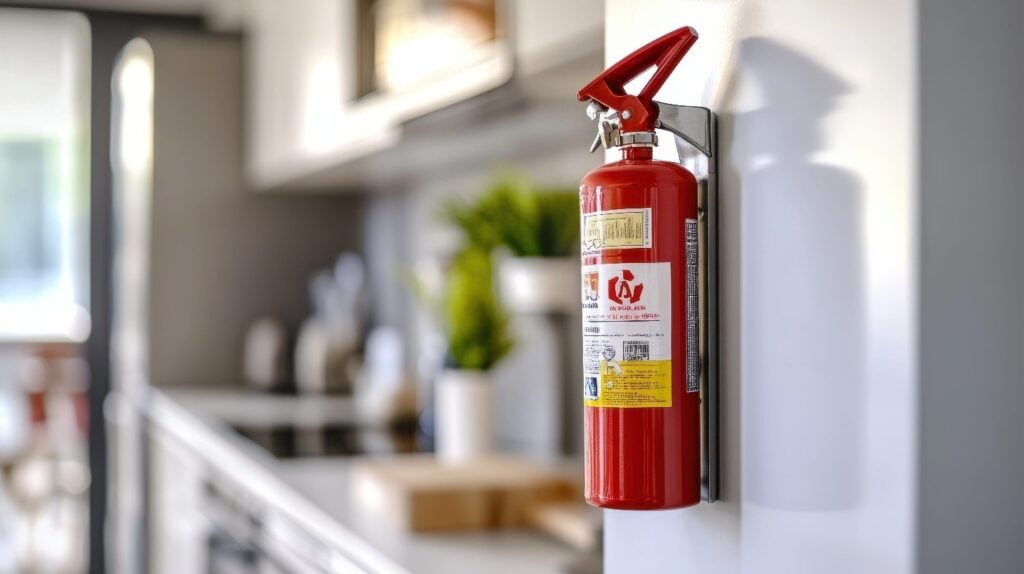
A portable fire extinguisher can be useful for a small, contained fire, but it is not a substitute for escaping a dangerous situation. The Occupational Safety and Health Administration uses the acronym PASS to describe the basic technique: Pull the pin, Aim the nozzle at the base of the fire, Squeeze the handle, and Sweep from side to side.[8]
Residents should familiarize themselves with their extinguisher before an emergency and make sure the model is appropriate for the types of fires that could occur in the home. Most importantly, an extinguisher should only be used when the fire is small, there is a clear escape route, and it is safe to attempt. If there is uncertainty, smoke is spreading, or the fire is growing, getting everyone outside and calling 911 should take priority.
Turn October Into an Annual Home-Safety Check
Fire prevention is most effective when it becomes routine rather than something residents think about only after hearing about a fire. October offers a convenient annual reminder. Test the smoke alarms. Walk through the family’s escape routes. Inspect cords and outlets. Check the dryer vent. Look around the fireplace and heating equipment. Make sure fire extinguishers are accessible and that adults in the household understand how to use them.
None of these precautions can eliminate every fire risk. Together, however, they can reduce common hazards and help families respond more quickly if an emergency occurs. As cooler weather and fall activities arrive in Lakeland, spending a little time on fire prevention can be one of the simplest home projects residents complete this October, and one with benefits that last well beyond Fire Prevention Month.
[1] National Fire Protection Association, “About Fire Prevention Week.” https://www.nfpa.org/events/fire-prevention-week/about-fire-prevention-week
[2] U.S. Fire Administration, “Smoke Alarms.” https://www.usfa.fema.gov/prevention/home-fires/prepare-for-fire/smoke-alarms/
[3] National Fire Protection Association, “Escape Planning.” https://www.nfpa.org/education-and-research/home-fire-safety/escape-planning
[4] U.S. Fire Administration, “Cooking Fire Safety.” https://www.usfa.fema.gov/prevention/home-fires/prevent-fires/cooking/
[5] U.S. Consumer Product Safety Commission, “Fireplaces and Chimneys.” https://www.cpsc.gov/s3fs-public/fireplace.pdf
[6] U.S. Fire Administration, “Heating Fire Safety.” https://www.usfa.fema.gov/prevention/home-fires/prevent-fires/heating/
[7] U.S. Fire Administration, “Clothes Dryer Fire Safety.” https://www.usfa.fema.gov/prevention/home-fires/prevent-fires/clothes-dryers/
[8] Occupational Safety and Health Administration, “Portable Fire Extinguishers.” https://www.osha.gov/etools/evacuation-plans-procedures/emergency-standards/portable-extinguishers