

Fall brings plenty of visible changes to Tennessee. Temperatures begin to cool, daylight hours shrink, and leaves gradually change color. But while people are noticing the changing landscape, wildlife across the state is going through its own seasonal transition.
Deer become more active as breeding season approaches. Squirrels take advantage of nuts and other available foods. Migratory birds begin passing through the state, and many animals adjust their daily routines as they prepare for colder weather.
For residents of Lakeland and the rest of Shelby County, these changes can mean seeing more wildlife in backyards, parks, wooded areas, and sometimes along roadways. Understanding what animals are doing during the fall can make the season more interesting and help residents know when to give wildlife a little extra space.
Deer Become More Noticeable
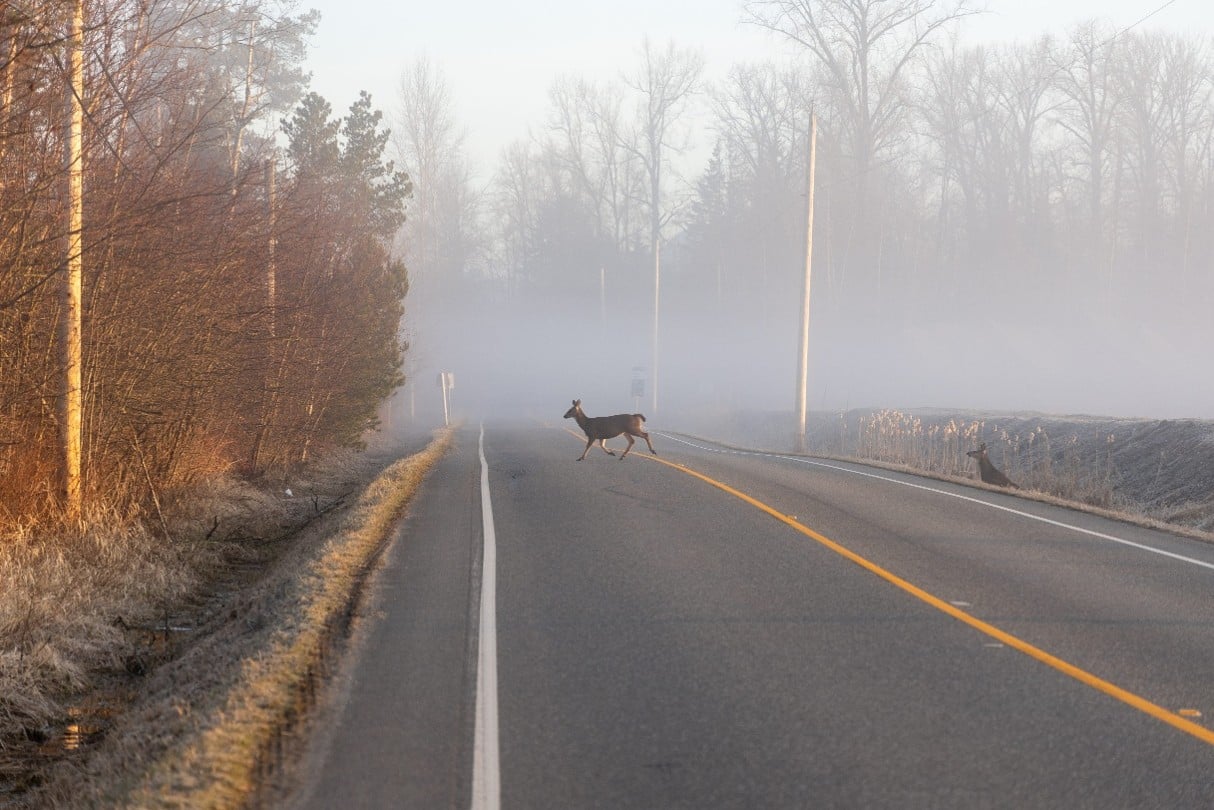
White-tailed deer live throughout Tennessee, including in suburban environments where wooded areas, fields, and neighborhoods meet. During fall, deer behavior begins changing as the breeding season, commonly called the rut, approaches. Deer may travel more frequently and cover greater distances than they do during other parts of the year. This increased movement has consequences for drivers. The Tennessee Wildlife Resources Agency identifies deer-vehicle collisions as a human-safety concern associated with the state’s deer population.[1]
The risk becomes particularly noticeable later in the fall. According to the Tennessee Highway Patrol, November has historically been the peak month for deer-related crashes in Tennessee. In 2024, the state recorded just over 8,000 deer-related crashes, including 465 that resulted in injuries and five fatalities.[2] Drivers should be especially attentive around wooded roads, fields, and areas where deer-crossing signs are posted. Dawn and dusk deserve additional caution because deer can be particularly active during these lower-light periods. Seeing one deer can also mean others are nearby. Deer frequently travel together, so drivers who see one animal cross should slow down and continue watching the roadside.
Why Fall Can Put More Animals Near Roads
Deer are not the only animals motorists may encounter. Roads frequently cut through or alongside wildlife habitat. An animal searching for food, water, shelter, or another member of its species may have to cross pavement as it moves through the landscape.
Seasonal movement can increase those opportunities for interaction. A Tennessee Department of Transportation study examining wildlife-vehicle crashes along TDOT-maintained routes found that deer accounted for the vast majority of the recorded wildlife incidents analyzed. Researchers considered factors including time of day, time of year, environmental conditions, weather, and traffic density when evaluating wildlife-vehicle collisions.[3]
For motorists, the practical lesson is to remain alert rather than assuming wildlife will stay away from developed areas. If an animal suddenly appears, maintaining control of the vehicle is critical. Drivers should reduce their speed in areas where wildlife is common and avoid distractions that reduce reaction time.
Squirrels Get Busy With Fall Foods
Anyone with oak trees nearby may notice plenty of squirrel activity during fall. Eastern gray squirrels are common throughout Tennessee and are frequently seen in city parks, suburban yards, and around bird feeders.[4] As nuts mature and begin falling, squirrels have access to important seasonal food sources. Acorns, hickory nuts, and other tree mast become highly visible and valuable resources in wooded areas.
Squirrels are famous for storing food, and fall gives homeowners plenty of opportunities to observe that behavior. A squirrel may grab an acorn, carry it across a yard, and bury it before immediately beginning the search for another. Not every stored nut will eventually be recovered. Forgotten seeds and nuts can sometimes germinate, meaning the squirrel’s food-storage behavior can inadvertently contribute to plant dispersal.
Late autumn also changes where squirrels search for food. TWRA notes that early in the squirrel season, the animals often feed in leafy, mast-producing treetops. By winter, when mast has fallen and trees are bare, squirrels spend more time foraging on the ground.[5] That seasonal transition can make their activity especially easy to observe around wooded neighborhoods.
Fall Is Migration Season for Birds
The birds outside a Tennessee window in September may not be exactly the same ones seen later in November. Fall migration brings significant movement through the state as many species leave northern breeding areas and travel toward wintering grounds.
Some of those journeys are dramatic. Broad-winged Hawks, for example, are known for their fall migration. TWRA reports that the birds can be seen migrating through Tennessee during fall, with flights occurring in West Tennessee around mid-September. The species generally leaves the state by early October.[6]
Smaller songbirds also move through Tennessee during migration. That means residents who watch feeders, parks, and wooded areas may spot unfamiliar species that are only temporary visitors. Later in the season, other birds begin arriving from farther north. Sandhill Cranes, for example, are migratory and winter residents in portions of Tennessee, with their fall migration generally occurring from late October through late December.[7] Bird activity can therefore change throughout the entire season rather than during one short migration period. A pair of binoculars and a bird identification guide can turn a walk through a local park into an opportunity to see which species are passing through.
Some Birds Stay Put
Migration does not mean Tennessee’s trees and backyards suddenly become empty.
Many familiar species remain in the state year-round. Cardinals, chickadees, woodpeckers, and other resident birds continue searching for food and shelter as the seasons change.
Their diets and routines may shift depending on what foods are naturally available.
Homeowners interested in supporting backyard birds can provide clean feeders and fresh water, but natural habitat matters too. Trees, shrubs, seed-producing flowers and insects all provide resources for birds. Leaving some seed heads on flowers rather than immediately cutting everything back can provide natural food, while native vegetation can offer both shelter and feeding opportunities.
What About Tennessee’s Black Bears?
Black bears are an important part of Tennessee wildlife, although Lakeland and Shelby County are not within the state’s two primary black bear population areas. TWRA identifies Tennessee’s main populations along the Tennessee-North Carolina border in the Appalachians and in the northern Cumberland Plateau near the Kentucky border.[8]
Elsewhere in Tennessee, fall is an important feeding period for bears.
Acorns make up a significant portion of the late-season diet of Tennessee black bears. Bears also eat berries, fruits, insects, roots, grasses, and other foods. Denning can begin as early as November, although timing varies. TWRA notes that females tend to begin hibernation earlier than males and that years with abundant mast can lead bears to enter dens later. The agency also warns that bears are opportunistic and can become accustomed to human food. Garbage, birdseed, and other easily accessible calories can attract them to developed areas. Although bear encounters are much less relevant to everyday life in Shelby County than deer or squirrels, the seasonal behavior demonstrates how dramatically Tennessee wildlife can adjust as winter approaches.
Backyard Visitors May Change Too
Fall wildlife watching does not require a trip to a state park. A suburban backyard can provide plenty of activity. Squirrels may become increasingly visible beneath oak trees. Birds may appear at feeders during migration. Rabbits, raccoons, and opossums may continue searching neighborhoods for food and shelter. Homeowners can reduce unwanted encounters by securing garbage, avoiding intentional feeding of mammals, and closing openings that could allow animals into attics, crawl spaces, garages, or sheds.
Wildlife should generally be observed from a distance rather than approached.
An animal appearing in a neighborhood does not necessarily mean something is wrong. However, residents who encounter wildlife that appears injured, sick, or behaves abnormally can consult TWRA’s reporting resources. The agency provides separate options for reporting concerns involving deer, bears, birds, and other wildlife.[9]
Make Fall Wildlife Watching a Family Activity
Changing wildlife behavior can also provide families with an easy reason to spend more time outdoors. Take a morning walk and count how many squirrels are collecting food. Watch for different birds passing through the trees. Look for deer tracks in muddy areas rather than trying to approach the animals themselves.
Children can keep a simple wildlife journal recording the date, location, and animals they observe. Over several weeks, patterns may begin to emerge. They might notice certain birds disappearing, new species arriving, or squirrels spending more time on the ground. The activity can also reinforce an important lesson: wildlife does not need to be touched, fed, or disturbed to be enjoyed.
Give Wildlife Room to Prepare for Winter
For animals, fall is more than colorful leaves and cooler temperatures. It is a period of movement and preparation. Food availability is changing. Daylight is shrinking. Migratory birds are traveling hundreds or thousands of miles. Deer are entering an important part of their reproductive cycle, while squirrels are taking advantage of seasonal foods.
For people in Lakeland and throughout Shelby County, those changes provide opportunities to observe wildlife while also creating reasons to be more cautious behind the wheel. As fall progresses, watch the edges of roads, pay attention around wooded areas and notice which animals appear in the backyard. The changing leaves may be the most obvious sign of autumn, but they are only one part of a much larger seasonal transition happening throughout Tennessee.
[1] Tennessee Wildlife Resources Agency, “White-tailed Deer in Tennessee.” https://www.tn.gov/twra/wildlife/mammals/large/DEER.html
[2] Tennessee Department of Safety and Homeland Security, “It’s ‘Deer Season’ on Tennessee Roads, Too.” https://www.tn.gov/safety/news/2025/11/13/its-deer-season-on-tennessee-roads-too.html
[3] Tennessee Department of Transportation, “Countermeasures for High-Risk Locations.” https://www.tn.gov/content/dam/tn/tdot/research/final-reports/res2024-final-reports/RES2024-03%20-%20Final%20Report.pdf
[4] Tennessee Wildlife Resources Agency, “Eastern Gray Squirrel.” https://www.tn.gov/twra/wildlife/mammals/medium/eastern-gray-squirrel.html
[5] Tennessee Wildlife Resources Agency, “Nuts About Squirrels.” https://www.tn.gov/twra/twra-outdoors-blog/2019/9/6/nuts-about-squirrels.html
[6] Tennessee Wildlife Resources Agency, “Broad-winged Hawk.” https://www.tn.gov/twra/wildlife/birds/forest-birds/broad-winged-hawk.html
[7] Tennessee Wildlife Resources Agency, “Sandhill Crane.” https://www.tn.gov/twra/wildlife/birds/sandhill-crane-festival.html
[8] Tennessee Wildlife Resources Agency, “Black Bears in Tennessee.” https://www.tn.gov/twra/wildlife/mammals/large/black-bears.html
[9] Tennessee Wildlife Resources Agency, “Report Wildlife Encounters, Incidents, or Illness.” https://www.tn.gov/twra/wildlife/report-wildlife.html