

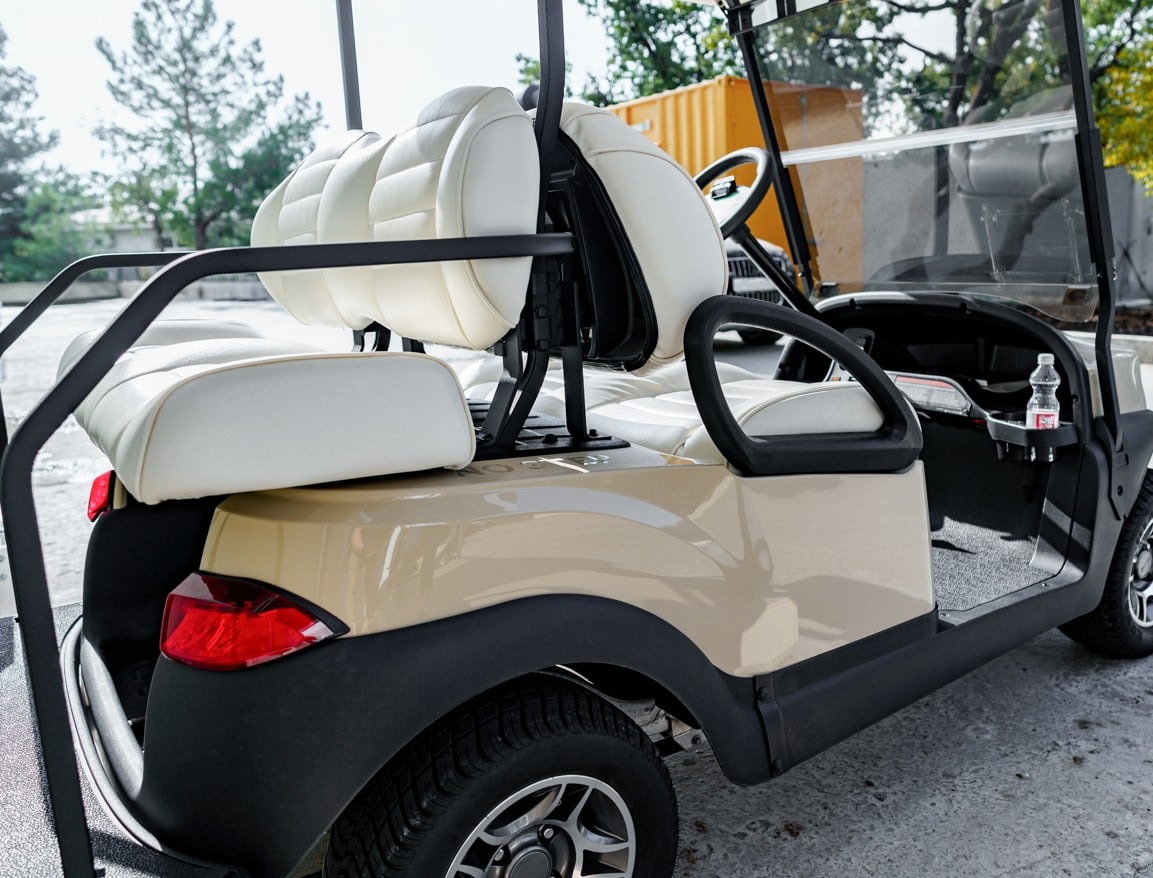
As golf carts become increasingly popular for Lakeland neighborhood transportation, the Shelby County Sheriff’s Office is reminding residents that not all golf carts are legal to operate on public roadways.
The agency recently issued guidance explaining the distinction between traditional golf carts and street-legal low-speed and medium-speed vehicles under Tennessee law. While golf carts designed for use on golf courses may appear similar to street-legal models, they do not automatically meet the requirements for operation on public roads.
According to the Sheriff’s Office, traditional golf carts are not street legal. However, vehicles that meet Tennessee’s safety standards may qualify as either a Low-Speed Vehicle (LSV) or Medium-Speed Vehicle (MSV). To be legally operated on public roads, these vehicles must be titled, registered, insured, and display a valid license plate. Drivers are also required to possess a valid Tennessee Class D driver’s license.
State law requires LSVs and MSVs to be equipped with several safety features, including headlights, taillights, brake lights, turn signals, rearview mirrors, seat belts, a parking brake, a compliant windshield, and a vehicle identification number (VIN).
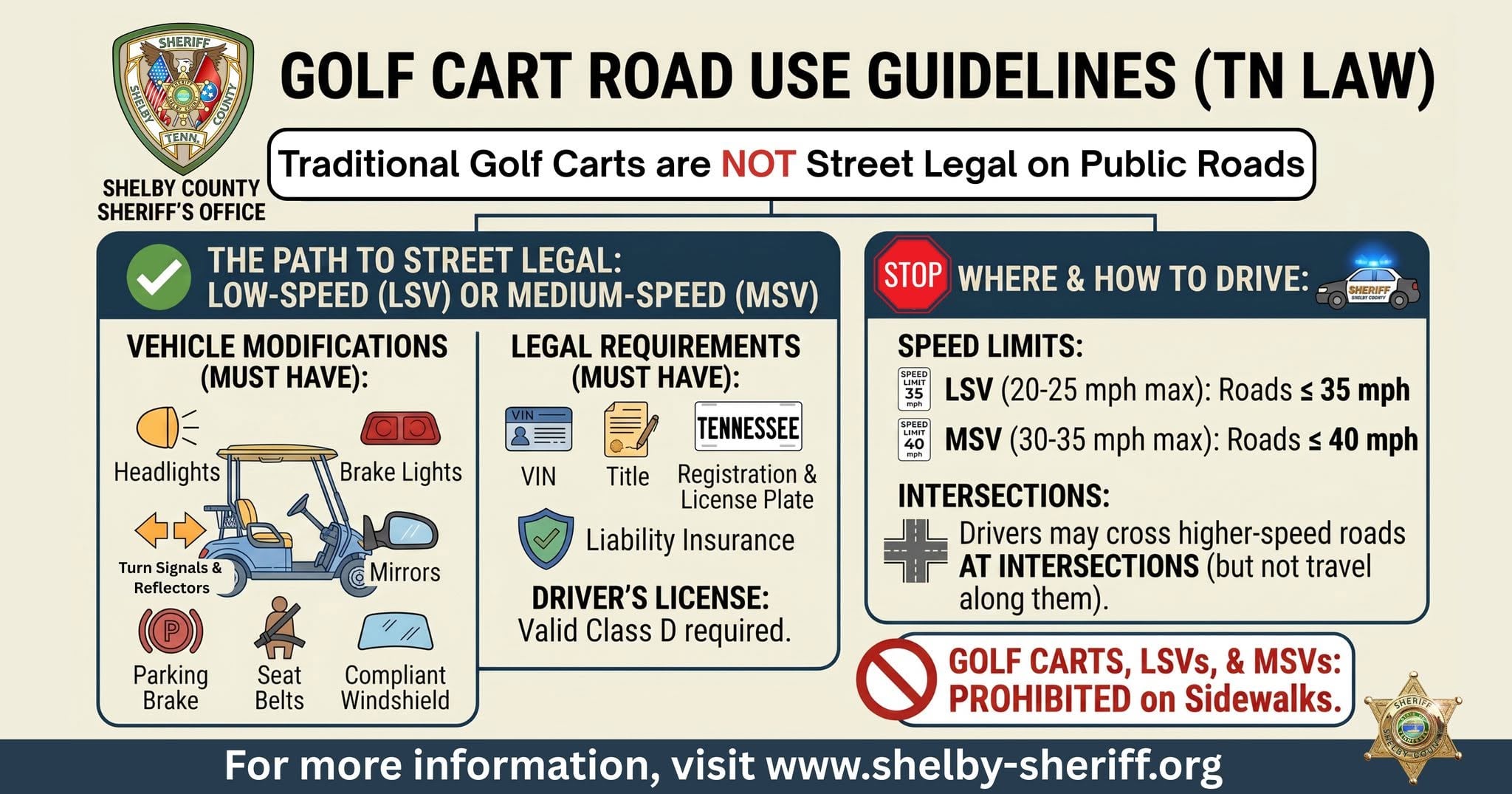
Where these vehicles may be driven is also regulated. Low-speed vehicles are permitted only on roads with posted speed limits of 35 mph or less, while medium-speed vehicles may travel on roads with speed limits up to 40 mph. Both vehicle types may cross higher-speed roadways only at intersections and must comply with all applicable traffic laws.
The Sheriff’s Office also emphasized that local ordinances in Shelby County, as well as the cities of Lakeland and Arlington, prohibit traditional golf carts, LSVs, and MSVs from operating on sidewalks.
Officials further reminded residents that Tennessee’s driving under the influence (DUI) laws apply to all motor vehicles, including golf carts and street-legal low-speed vehicles.
Residents considering purchasing, modifying, or operating a golf cart on public streets are encouraged to familiarize themselves with Tennessee’s vehicle requirements to ensure they remain in compliance with state law and local ordinances.