

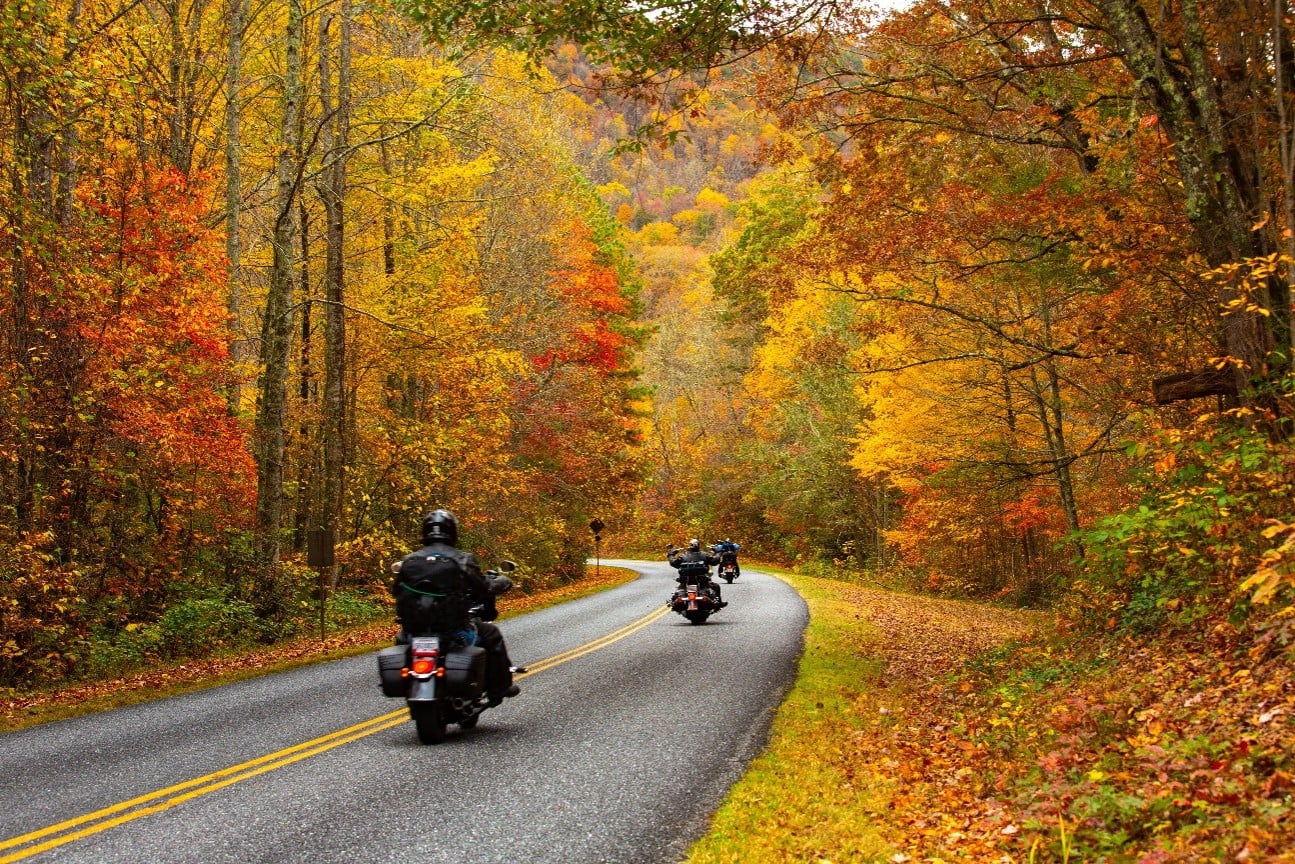
October brings one of Tennessee’s most recognizable seasonal changes. Trees that spent the summer covered in green gradually begin displaying shades of yellow, orange, red, and sometimes deep purple. In Lakeland and across West Tennessee, the transformation usually develops gradually, with individual trees changing at different rates as autumn progresses.
The colors may be beautiful, but what is happening inside the leaves is also a complex biological process. Trees respond to shorter days, changing temperatures, and other environmental conditions by preparing for winter. As that happens, the green pigment that dominated leaves throughout spring and summer begins to disappear, allowing other colors to become visible.
Weather also plays a role in determining just how impressive the display becomes. Temperature, sunlight, and moisture can affect the intensity and duration of fall color, which helps explain why Tennessee’s autumn landscape can look dramatically different from one year to another.
Why Are Leaves Green in the First Place?
Understanding fall color begins with understanding why leaves are green during most of the growing season. Leaves contain chlorophyll, the pigment responsible for their familiar green appearance. Chlorophyll plays an essential role in photosynthesis, the process plants use to convert light energy into chemical energy. During spring and summer, trees continually produce chlorophyll, and its strong green color masks many of the other pigments that are also present in leaves. As autumn approaches, that begins to change.
The U.S. Forest Service explains that the lengthening nights of fall trigger biochemical processes within leaves. Chlorophyll production slows and eventually stops. Existing chlorophyll then breaks down, causing the green color to gradually disappear.[1] Rather than leaves simply being “painted” yellow or orange when the weather turns cold, some of those colors were effectively there all along. They were simply hidden by the much greater amount of green chlorophyll.
Yellow and Orange Were Hiding Under the Green
Once chlorophyll begins disappearing, pigments known as carotenoids become much easier to see. Carotenoids produce yellow, orange, and brown colors. They are present in leaves throughout the growing season but are usually overwhelmed visually by chlorophyll. When the green fades, the colors produced by carotenoids become prominent. The same general family of pigments helps create familiar colors in foods such as carrots and corn.
This explains why some trees transition fairly directly from green to yellow or orange. The tree does not necessarily need to manufacture an entirely new yellow pigment in October. Instead, the changing balance of pigments allows colors that were previously hidden to become visible. Different tree species contain different combinations and concentrations of pigments, helping create the variety found in a Tennessee autumn landscape.
Red Leaves Work a Little Differently
Brilliant red and purple leaves involve another group of pigments: anthocyanins. Unlike carotenoids, anthocyanins are not necessarily present in leaves throughout the entire growing season. They can be produced in the leaf during autumn as sugars become trapped there. The National Park Service explains that anthocyanins can create red and purple coloration, while the amount produced can be influenced by weather conditions.[2]
This distinction helps explain why red fall color can be particularly variable. A tree may reliably produce yellow foliage each autumn because of carotenoids already present in its leaves, while the intensity of red coloration can be much more dependent on what happens during the weeks leading into peak color. Species also matter. Some trees are naturally much more likely to develop red or reddish-purple leaves, while others tend toward yellow, gold or brown regardless of the year’s weather.
Shorter Days Start the Seasonal Transition
Cool temperatures are closely associated with autumn, but temperature alone does not tell a tree that fall has arrived. Day length is one of the most dependable seasonal signals available to plants. As Tennessee moves farther from the summer solstice, nights steadily become longer. Unlike temperature, which can fluctuate considerably from one day to the next, the seasonal change in daylight follows a predictable pattern. Trees respond to that change by beginning preparations for winter.
As chlorophyll production declines and photosynthesis slows, trees start withdrawing useful nutrients from their leaves. Eventually, a specialized layer of cells develops near the point where each leaf connects to its stem. This process ultimately allows the leaf to separate and fall. For deciduous trees, dropping leaves is part of a survival strategy. Maintaining large, delicate leaves through winter would require resources at a time when freezing temperatures and limited daylight make photosynthesis much less productive.
Why Sunny Days and Cool Nights Can Produce Brilliant Color
Although shorter days help initiate the seasonal process, weather can influence the quality of the resulting display. According to the U.S. National Arboretum, temperature and moisture are important influences on autumn color. Warm, sunny days followed by cool, but not freezing, nights can encourage some of the most vivid coloration.[3]
Sunlight supports sugar production in leaves during the day. Cool nights can slow the movement of those sugars out of the leaf. Those conditions can favor anthocyanin production, contributing to stronger reds and purples. An early hard freeze, on the other hand, can interrupt normal color development. Extremely warm fall conditions can also affect how quickly the seasonal transition unfolds. That is one reason a calendar date alone cannot predict exactly how colorful a particular October will become.
Rainfall Months Earlier Can Matter Too
What happens during October is only part of the story. Conditions during the preceding growing season can influence autumn foliage as well. Trees that experience significant drought stress may behave differently from trees that received adequate moisture. Drought can contribute to leaves browning or dropping prematurely, potentially shortening the fall-color season. At the opposite extreme, prolonged cloudy or wet fall conditions may limit the sunny conditions associated with especially vibrant red coloration.
The relationship is complicated because weather factors interact. A dry summer followed by a particular combination of fall temperatures may produce different results from a wet summer followed by those same temperatures. The University of Tennessee Institute of Agriculture notes that water stress can affect tree health and that proper tree selection, planting, and care are important to maintaining healthy landscape trees.[4] Healthy trees are generally better positioned to respond normally to seasonal changes than trees already struggling with disease, damage, or environmental stress.
Why Trees Right Next to Each Other Can Change at Different Times
A drive through Lakeland in October may reveal one tree blazing orange while the tree beside it remains almost entirely green. That is normal. Species is one of the biggest reasons. Different types of trees have their own biological schedules and characteristic colors. Genetics can even create variation among individual trees of the same species.
Location matters as well. Trees growing in full sunlight may experience different conditions from trees in shaded areas. Elevation, soil moisture, nearby pavement, buildings, and exposure to wind can create small localized environments known as microclimates. Even different portions of the same tree can change at different rates. Leaves receiving more direct sunlight may develop differently from those growing deep inside the canopy. The result is the patchwork effect that characterizes much of the fall-color season. Instead of an entire community changing overnight, the landscape transitions tree by tree and sometimes branch by branch.
Why Leaves Eventually Fall
Changing color is only one stage of a larger preparation for winter. As trees reduce their investment in leaves, an abscission layer develops where the leaf stem connects to the branch. Eventually, that connection weakens enough for wind or gravity to remove the leaf. Dropping leaves helps deciduous trees conserve resources during winter. The tree itself remains alive, with energy stored in its trunk, branches, and roots until favorable growing conditions return.
Those fallen leaves continue playing an ecological role after reaching the ground. The National Wildlife Federation notes that leaf litter can provide habitat for insects and other wildlife while returning nutrients and organic matter to the soil as it decomposes.[5] That means homeowners do not necessarily need to remove every fallen leaf from every portion of a property. Leaves can be composted, shredded with a mower, or used as mulch in appropriate areas rather than automatically being discarded.
Why Every Tennessee Fall Looks a Little Different
There is no single ingredient that creates a spectacular fall-color season.
Day length sets the broad seasonal process in motion. Tree species determine which pigments are likely to dominate. Chlorophyll breaks down to reveal yellows and oranges, while certain conditions encourage the development of red and purple anthocyanins. Temperature, sunlight, rainfall, and the health of individual trees then influence how those colors appear. Weather also determines how long they remain.
A stretch of favorable conditions can allow colorful leaves to stay on trees longer, while strong winds, heavy rain, or an early freeze can bring the display to a quicker end.
That combination of biology and weather is what makes every autumn slightly different. Even if Tennessee’s forests contain the same species from one year to the next, the environmental conditions surrounding them are never exactly repeated.
For Lakeland residents, October therefore offers more than an opportunity to enjoy changing scenery. A tree shifting from green to yellow, orange, or red is visibly responding to changes in daylight, chemistry, and weather while preparing itself for winter. The next time a particularly colorful tree stands out along a neighborhood street or local trail, its leaves are providing a glimpse of a process that has been underway for weeks, and one that will begin again when another Tennessee growing season eventually comes to an end.
[1] U.S. Forest Service, “Science of Fall Colors.” https://www.fs.usda.gov/visit/fall-colors/science-of-fall-colors
[2] National Park Service, “Fall Colors.” https://www.nps.gov/articles/000/fall-colors.htm
[3] U.S. National Arboretum, “The Science of Color in Autumn Leaves.” https://www.usna.usda.gov/education/science-of-color-in-autumn-leaves/
[4] University of Tennessee Institute of Agriculture, “Trees, Shrubs and Groundcovers.” https://uthort.tennessee.edu/trees-shrubs-groundcovers/
[5] National Wildlife Federation, “What to Do With Fallen Leaves.” https://www.nwf.org/Magazines/National-Wildlife/2015/OctNov/Gardening/Fallen-Leaves