

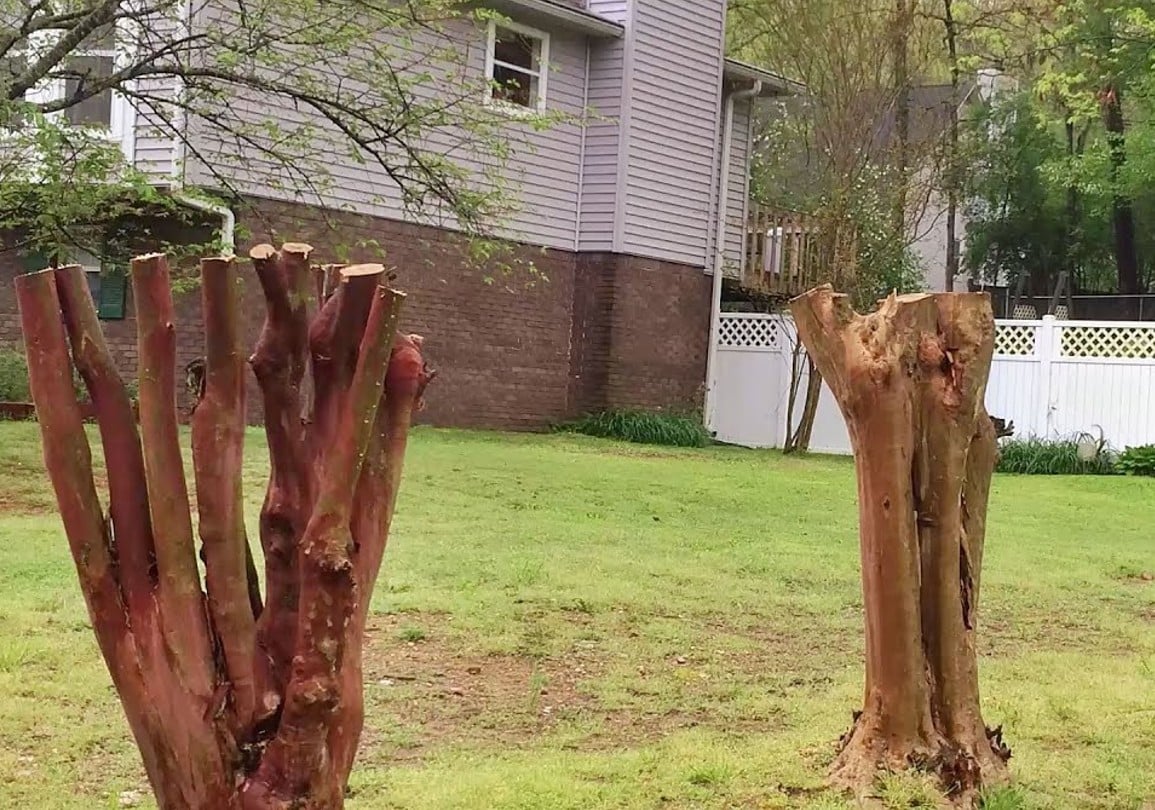
Each spring across Lakeland, crape myrtle trees are often cut back to thick, bare stubs in a practice widely referred to as “crape murder.” Although many homeowners believe this aggressive pruning encourages stronger growth, horticulture experts warn that it can actually harm the tree over time.
Wesley Wright, a local landscape business owner, says the practice remains common but is largely misunderstood.
“It’s not just about appearance—it directly affects the health of the tree,” Wright explained. “When crape myrtles are cut back too severely, they respond by producing long, weak shoots that are much more susceptible to breaking during storms.”
In addition to creating structurally weaker growth, heavy pruning leaves large wounds that increase the tree’s vulnerability to disease and decay. Over time, repeatedly cutting the same areas can lead to the formation of knobby growths—often called “knuckles”—which permanently alter the tree’s natural shape.
Rather than harsh cutting, experts recommend a more selective approach. Removing dead wood, crossing branches, and small suckers helps preserve the tree’s natural form while promoting healthier growth and more resilient blooms.
Wright encourages homeowners to trust experienced professionals, especially when dealing with mature trees.
“Proper pruning helps maintain the tree’s beauty, strength, and longevity,” he said.