


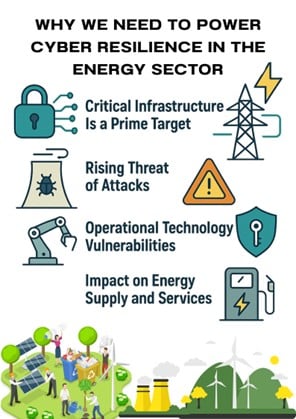
In 2023, 90% of major energy companies worldwide experienced significant cybersecurity breaches, placing critical infrastructure at the top of hackers’ target lists. The implications extend far beyond momentary disruptions – a successful attack on energy infrastructure can paralyze multiple sectors, threaten national security, and cause devastating economic damage.
With the average cost of a data breach in the energy sector exceeding $4.88 million per incident, companies can no longer treat cyber resilience as optional. As energy systems grow more interconnected, they become more vulnerable, just as geopolitical tensions and cyber threats reach new heights.
For energy providers, building cyber resilience isn’t just about protecting assets, it’s about ensuring the continuous flow of power that underpins our entire economy.
The Evolution of Energy Sector Vulnerabilities in 2025
The energy sector’s vulnerability landscape has transformed dramatically in recent years, creating new opportunities and unprecedented risks. Today’s threats are more sophisticated, better funded, and increasingly targeting critical infrastructure with potentially catastrophic consequences.
Digital Transformation’s Double-Edged Sword
Modernizing energy grids has delivered remarkable efficiency gains but created expansive new attack surfaces. Smart meters, Internet-of-Things (IoT) sensors, and automated distribution systems have transformed traditional infrastructure into networked digital environments. These systems communicate constantly, creating countless potential entry points for attackers.
The convergence of operational technology (OT) and information technology (IT) has eliminated the air gaps that once protected critical infrastructure. As previously isolated control systems now connect directly to business networks and remote access points, industrial cybersecurity must address both operational and IT environments.
Distributed energy resources (DERs) like residential solar panels and battery storage systems further complicate security challenges. Each new connected device represents a potential vulnerability, and many were designed with functionality as the primary concern.
Critical Industrial Cybersecurity Challenges Unique to Energy Infrastructure
The energy sector faces distinct security challenges that require specialized solutions beyond standard enterprise cybersecurity. These unique vulnerabilities demand targeted approaches to protection and resilience.
Legacy Systems vs. Modern Threats
The operational technology that powers much of our critical infrastructure was designed for reliability and longevity. Many systems controlling power generation and distribution were deployed decades ago, with expected operational lifespans of 20-30 years.
These legacy systems often run on outdated software that cannot be patched or updated. Defender operators face the nearly impossible challenge of protecting systems designed before cybersecurity was a significant consideration.
The consequences of compromise in energy systems extend beyond data loss to potential physical damage. Attacks targeting industrial control systems can cause equipment failures, safety incidents, and widespread service disruptions with real-world impacts.
Supply Chain Vulnerabilities
Energy providers rely on complex networks of vendors, contractors, and technology partners, each presenting potential security risks. The Colonial Pipeline and SolarWinds incidents demonstrated how compromises in third-party systems can provide attackers with pathways into critical infrastructure.
The increasingly global nature of energy technology supply chains introduces additional risks. Components sourced internationally may contain vulnerabilities or even deliberate backdoors inserted by foreign adversaries.
Software dependencies represent another blind spot in cyber risk management. Many critical systems rely on open-source components or third-party libraries that may contain unpatched vulnerabilities that traditional security tools cannot detect.
Building Comprehensive Cyber Risk Management Frameworks for Energy Providers
Developing effective security strategies for energy infrastructure requires a holistic approach that goes far beyond traditional IT security measures. Comprehensive frameworks must address the unique challenges of operational environments while balancing security and reliability requirements.
Beyond Compliance: Strategic Risk Assessment
Energy providers must move beyond checkbox compliance approaches to truly risk-based security strategies. While regulatory frameworks like NERC CIP provide baseline requirements, they don’t guarantee protection against sophisticated attacks.
Cyber risk management frameworks should quantify potential impacts in both operational and financial terms. Understanding the business consequences of various attack scenarios helps prioritize investments and justify security expenditures to executive leadership.
Implementing the NIST Cybersecurity Framework with energy-specific adaptations provides a proven model for improving security maturity. This flexible framework allows organizations to assess current capabilities and develop roadmaps for continued improvement.
ICS Asset Management as the Foundation of Security
You can’t protect what you don’t know exists. Complete visibility into operational technology environments forms the foundation of effective security programs for energy providers.
ICS asset management solutions must automatically discover, inventory, and assess all connected devices across the operational environment. Many organizations are shocked to discover “shadow OT”—unauthorized or forgotten devices connected to critical networks.
Maintaining accurate, real-time inventories of all industrial control system components enables vulnerability management, configuration control, and rapid incident response. Without this foundation, other security controls become much less effective.
The Defender Operators’ Toolkit: Next-Generation Protection Strategies
Armed with comprehensive asset visibility, energy security teams can deploy sophisticated protection strategies that leverage cutting-edge technologies designed specifically for operational environments.
AI-Powered Threat Detection and Response
Machine learning algorithms can identify anomalous behavior in industrial control systems that traditional security tools would miss. AI solutions can establish baselines of normal operations and alert on subtle deviations that may indicate compromise.
Automated response capabilities allow for rapid containment of threats in environments where manual intervention might take too long. Predefined playbooks can isolate affected systems or activate compensating controls to maintain operational continuity.
The most effective AI implementations balance automation with human expertise. Defender operators provide the contextual understanding and judgment that machines lack, creating partnerships that maximize the strengths of both.
Zero Trust Architecture for Critical Infrastructure
The traditional security model of “trust but verify” has proven inadequate for protecting critical infrastructure. Implementing least privilege access in operational environments ensures that users and devices have only the minimum permissions necessary. This limits the potential damage from compromised accounts and reduces the attack surface.
Network segmentation is essential for containing breaches within industrial environments. Properly designed micro-segmentation prevents lateral movement and restricts attacker access to critical systems even after initial compromise.
While AI enhances detection capabilities, the most fundamental shift in energy security strategy involves rethinking access controls through a Zero Trust lens.
Enhancing Resilience Through Proactive Defense Measures
Even with advanced technologies, true cyber resilience requires organizations to move beyond technology alone and adopt proactive defense measures that prepare for inevitable attacks.
Cyber Resilience Exercise Programs
Regular tabletop exercises and simulations help teams prepare for realistic attack scenarios. These exercises should span organizational silos, involving both IT and OT teams along with executive leadership.
Recent pan-European exercises demonstrated the value of cross-organizational preparation. Energy providers that practiced responding to simulated attacks performed better during actual incidents.
Testing incident response plans under pressure reveals gaps and weaknesses that might otherwise go unrecognized. Many organizations discover communication challenges or procedural flaws only during simulated crises.
Building Human Firewalls in Industrial Environments
The human element remains both the greatest vulnerability and strongest asset in energy sector cybersecurity. Targeted awareness programs for operational staff address the specific risks of industrial environments.
Social engineering attacks increasingly target operational personnel who may have less cybersecurity training than their IT counterparts. Specialized training helps these key personnel recognize and report potential threats.
Creating a security-first culture requires leadership commitment and consistent messaging. Organizations with strong security cultures report incidents more quickly and respond more effectively than those where security is seen as an impediment.
Common Questions About Energy Sector Cybersecurity
Why is cybersecurity important in the energy sector?
As the energy industry adopts connected solutions, security concerns become paramount. Cybersecurity defends against data breaches, ransomware attacks, and infrastructure sabotage. In energy, these threats can cause widespread outages, physical damage, and even public safety hazards, making protection essential.
Why is cyber resilience important?
Cyber resilience minimizes downtime during attacks, ensuring business operations continue despite disruptions. With proper preparation and robust security measures, energy providers can maintain critical services, avoid costly interruptions, and recover quickly from incidents while protecting essential infrastructure.
What is the resilience of the energy system?
Energy resilience is the grid’s ability to withstand and rapidly recover from disruptions while maintaining electricity, heating, cooling, and other energy-dependent services. It combines physical infrastructure protection, cyber defenses, and response capabilities to ensure continuous operation through physical and virtual threats.