

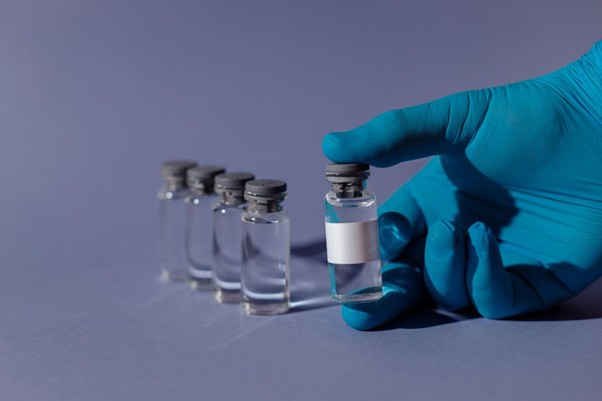
BPC-157 is one of the most widely discussed peptides in research related to tissue repair, inflammation, and cellular signaling. Despite its growing visibility, it is often described in simplified or outcome-driven terms, which can make it difficult to understand what it actually is and how it works.
At its core, BPC-157 is a synthetic peptide derived from a naturally occurring protein found in gastric juice. It consists of a specific sequence of 15 amino acids and is typically studied for how it interacts with biological systems involved in healing and regulation.
For researchers exploring BPC-157, the key is to move beyond surface-level claims and understand the mechanisms, research context, and limitations that define this compound.
What Exactly Is BPC-157?
BPC-157 stands for “Body Protection Compound-157,” a name that reflects its origin rather than its function.
It is derived from a partial sequence of a protein naturally present in gastric fluids, where it is believed to play a role in protecting and maintaining tissue integrity. The synthetic version used in research replicates this sequence, allowing it to be studied in controlled environments.
Structurally, BPC-157 is a short peptide consisting of 15 amino acids, which allows it to function as a signaling molecule that interacts with specific receptors and pathways rather than serving a structural role in tissue. That compact size also contributes to one of its more notable characteristics, an apparent stability under a range of experimental conditions that many peptides of similar length do not exhibit, making it broadly applicable across different research models.
BPC-157 also appears to engage a wide range of pathways, spanning tissue repair, inflammatory regulation, angiogenesis, and cellular migration. This has made BPC-157 one of the more versatile compounds in preclinical research.
This also means that researchers working with this compound should be more attentive to the structural integrity and purity of the peptide used in research, given the sensitivity of the pathways involved. New England Biologics supplies BPC-157 synthesized to rigorous research-grade standards, providing the molecular consistency needed to draw meaningful conclusions from experimental work in this area.
How BPC-157 Works: Mechanisms and Pathways
BPC-157 does not function as a direct “repair agent.” Instead, it influences signaling pathways that regulate how the body responds to injury and stress.
Research suggests that BPC-157 interacts with several key systems:
- Angiogenesis pathways, influencing the formation of new blood vessels
- Nitric oxide signaling, which plays a role in vascular function and cellular communication
- Inflammatory pathways, including modulation of cytokine activity
- Growth factor signaling, which affects tissue repair and regeneration processes
Through these interactions, BPC-157 appears to support the coordination of multiple processes involved in healing. Rather than acting on a single target, it influences how different systems work together.
This multi-pathway activity is part of what makes it difficult to categorize. It does not fit neatly into a single functional group, as its effects often span vascular, immune, and structural systems.
What Does Research Say About BPC-157?
BPC-157 has been studied across a range of experimental models, primarily focused on tissue repair and recovery.
In these settings, researchers often examine:
- Changes in inflammatory markers
- Rates of tissue regeneration
- Collagen deposition and organization
- Blood vessel formation in damaged areas
Some studies have also explored its interaction with neurological and gastrointestinal systems, although these areas are less well-defined.
The key point is that these findings come from controlled experimental conditions. While they provide insight into how BPC-157 interacts with biological systems, they do not represent established clinical outcomes.
Understanding this distinction is essential for interpreting the available data.
Why BPC-157 Is Often Associated with “Recovery”
One of the reasons BPC-157 is frequently linked to recovery is its involvement in processes that are central to tissue repair.
When tissue is damaged, the body initiates a coordinated response that includes inflammation, cell migration, angiogenesis, and remodeling. BPC-157 appears to interact with several of these stages, which is why it is commonly studied in injury models.
However, it’s important to frame this correctly. BPC-157 does not “repair tissue” on its own. It influences the signaling environment that determines how repair processes unfold.
This distinction helps avoid oversimplification and keeps expectations aligned with how peptides actually function.
Potential Benefits of BPC-157 (What Research Explores)
One of the most common questions surrounding BPC-157 is what it actually does in practical terms. While the peptide is best understood through its mechanisms, research has explored several outcome-based areas that help contextualize its effects.
In experimental settings, BPC-157 is frequently studied for its role in tissue repair and regeneration. This includes changes in collagen formation, fibroblast activity, and the coordination of processes involved in wound healing.
Another area of focus is inflammation modulation. Studies often examine how BPC-157 interacts with inflammatory signaling pathways, including cytokine activity, which plays a central role in how the body responds to injury and stress.
BPC-157 has also been explored in relation to angiogenesis, or the formation of new blood vessels. This process is essential for delivering nutrients and oxygen to damaged tissues, making it a key component of recovery-related research.
In some models, researchers have investigated its interaction with gastrointestinal integrity, given its origin from gastric proteins. This includes studies examining how it influences mucosal repair and protective mechanisms within the digestive system.
There is also emerging interest in neurological and stress-response pathways, although this area is still less defined and largely preclinical.
The key point is that these “benefits” are not direct effects in isolation. They are the result of BPC-157 influencing multiple interconnected pathways. Understanding this helps avoid oversimplification and keeps expectations aligned with how the peptide actually functions.
How BPC-157 Is Used in Research Contexts
In research environments, BPC-157 is used as a tool to study how biological systems respond to injury, stress, and signaling modulation.
Its applications include:
- Investigating tissue repair mechanisms
- Studying inflammatory responses
- Exploring vascular and connective tissue dynamics
- Examining interactions between multiple signaling pathways
Because it influences several systems at once, it is often used in models where coordinated responses are important.
From a workflow perspective, BPC-157 is typically supplied as a lyophilized powder. It is stored under controlled conditions and reconstituted prior to use, with stability depending on factors such as solvent choice and temperature.
These handling considerations are not trivial because they can affect how the peptide behaves in experimental settings.
Safety, Limitations, and Research Status
BPC-157 does not have a fully established clinical safety profile in humans. Most available data comes from preclinical studies, which means there are still gaps in understanding its long-term effects and broader applications.
As a result, it is generally classified as a research compound rather than an approved therapeutic or supplement.
This classification shapes how it should be approached. Findings related to BPC-157 should be interpreted within the context of controlled experimental environments, not as confirmed outcomes in real-world use.
Why Understanding Context Matters
BPC-157 is often discussed in simplified terms, but its actual behavior is more nuanced.
It does not act instantly, nor does it produce uniform outcomes across all systems. Its effects depend on context, including biological environment, experimental design, and the specific pathways being studied.
For those exploring this peptide, the most important takeaway is that it functions as a regulator of processes, not a direct solution.
If your priority is understanding how signaling pathways influence repair and adaptation, BPC-157 provides a useful framework. If you’re looking for immediate or guaranteed outcomes, the reality is more complex.