


Golf is a sport of rhythm, precision, and patience. But these qualities can fade quickly without regular practice. What if the course is closed, the weather isn’t cooperating, or your schedule doesn’t allow for a full round? Fortunately, improving your game doesn’t require 18 holes. With a bit of strategy and the right tools, you can refine your swing, maintain consistency, and even lower your scores all from home.
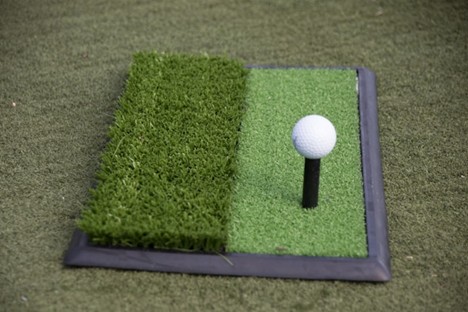
Indoor golf mats for sale can make a remarkable difference. They provide a realistic feel that closely mimics natural turf, allowing you to practice with precision and confidence no matter where you are.
What It Means to “Play” Without Playing
One of the biggest misconceptions about golf is that progress only happens on the course. In reality, the foundation of great play is built in controlled environments. These quiet spaces are where you can focus on mechanics, repetition, and awareness. When you remove the distractions of scorekeeping and competition, you’re left with fundamentals: a chance to break habits, strengthen consistency, and reconnect with fundamentals.
Off-course training doesn’t just fill the gap between tee times, it enhances your performance when you return to the fairway. Many professional golfers spend more hours on drills, video review, and mental conditioning than they do in actual rounds. Following that example can transform how you approach your own development.
Mechanics Over Muscle
The golf swing is a motion of precision, not power. Practicing at home allows you to slow things down and refine technique. Begin by breaking your swing into segments. Focus on grip, stance, takeaway, backswing, downswing, and follow-through. Use mirrors or video recording to analyze your form. You might notice small misalignments that you never feel on the course but that affect your shots significantly.
Tools like alignment sticks and training clubs can help you visualize your swing path. Even without hitting a ball, rehearsing a smooth, balanced motion reinforces muscle memory. A simple 10-minute daily routine can build more consistency than hours of unfocused play.
If you have the space, practice full swings using foam or plastic practice balls. They’re designed for limited flight but still provide enough feedback to gauge direction and contact. For indoor setups, hitting nets are a smart investment. They allow you to swing freely while keeping the ball safely contained.
The Unsung Hero of the Scorecard
Roughly 40% of all strokes in a round are putts, yet most golfers spend far more time practicing their drives. A missed three-foot putt can sting as much as a slice into the trees, but it’s also one of the easiest skills to improve at home.
A flat, smooth surface is all you need. You can purchase putting mats that simulate green speeds or use a carpeted hallway. The key is consistency. Set a routine of short, focused sessions. Work on alignment, distance control, and stroke rhythm.
To keep things interesting, create personal challenges: set up markers at different lengths or try to “sink” five putts in a row before stopping. If you want more realism, small putting cups or return systems add feedback and help maintain momentum.
Chipping and Pitching Practice
Short-game control can make or break your score, and it’s one of the easiest areas to maintain off the course. If you have a backyard or garage space, you can practice chipping onto a target area using foam balls. Focus on your stance, weight transfer, and follow-through.
The goal is accuracy, not distance. Choose specific landing zones and adjust your club choice to simulate different shots: low bump-and-runs, high floaters, or soft landings. These drills improve hand-eye coordination and touch.
If you want to take it further, portable chipping nets and turf patches let you replicate real-grass conditions without damaging your yard. They’re also ideal for pre-round warm-ups or rainy-day sessions.
The Physical Side of the Game
Golf is often underestimated as a physical sport, but flexibility, balance, and core strength all play major roles in performance. Without these, your swing speed, endurance, and accuracy can decline.
Incorporate mobility exercises into your weekly routine. Focus on shoulder rotation, hip flexibility, and spine stability. Yoga and Pilates are excellent for golfers because they enhance balance and control – qualities essential to smooth swings.
Strength training should target the core, glutes, and legs. Exercises like squats, planks, and rotational movements mimic the motion of a golf swing and prevent injury. Resistance bands can also help you build stability in key muscle groups without heavy equipment.
The goal is to improve endurance and maintain the fluid motion that defines great golf.
The Mental Game
Golf is as much a mental challenge as it is a physical one. Learning to focus, manage emotions, and visualize shots can elevate your game even when you’re not swinging a club.
Visualization is a powerful tool and many top players use it before every shot. Imagine the flight of the ball, the sound of impact, and the roll on the green. This mental rehearsal trains your brain to associate calm focus with performance.
You can also practice mindfulness techniques to improve concentration and reduce frustration. Breathing exercises or brief meditations before a swing session help reinforce composure under pressure, which is a skill that translates directly to the course.
Keeping a practice journal can also be transformative. Write down what drills you worked on, what felt strong, and where you struggled. Over time, patterns emerge, helping you fine-tune your training approach.
Bringing the Course Home
Technology has changed the way golfers practice. Affordable launch monitors, swing analyzers, and simulator apps now offer feedback once reserved for pros.
A launch monitor tracks metrics like swing speed, launch angle, and ball spin, allowing you to make data-driven improvements. Pair this with a net setup, and you can recreate a driving range experience indoors.
For those with the space and budget, golf simulators provide immersive training. You can “play” famous courses, measure shot accuracy, and compare stats over time. These systems are also useful for keeping your skills sharp through the off-season when weather makes outdoor practice impossible.
Creating a Routine That Works
The most effective practice is structured, consistent, and goal-oriented. Set small, measurable targets like improving your putting accuracy by 10% or increasing swing speed by 2 mph over a month.
Balance technical drills with fun challenges to stay motivated. Mix in strength training, mental conditioning, and full-swing practice to maintain a holistic approach.
If possible, record short videos to monitor progress. Watching yourself perform over time can highlight subtle improvements and areas still needing attention.
Remember, even brief daily sessions, just 15 to 30 minutes, add up. Regular engagement keeps your muscles trained, your timing sharp, and your confidence high.
Bringing It All Together
Keeping your golf skills sharp without hitting the course isn’t just possible, it’s one of the smartest ways to elevate your game. By combining physical practice, mental training, and smart use of technology, you can maintain your edge year-round and even return to the greens stronger than before.
Practice may not replicate the full thrill of a round under the sun, but it prepares you for every shot when it counts. Whether you’re in your living room or backyard, every swing, stretch, and moment of focus is an investment in mastery.
The next time you step onto the course, you won’t just be dusting off your clubs, you’ll be proving that discipline and creativity can make any space your personal fairway.