

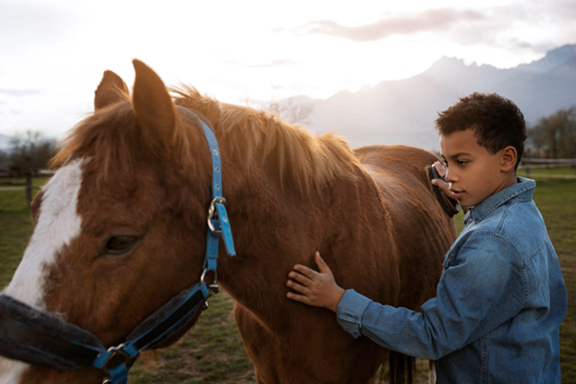
For many adolescents facing emotional, behavioral, or social challenges, approaches like equine therapy offer alternatives when traditional talk-based therapy feels overwhelming or ineffective. Teens may struggle to articulate feelings, resist direct questioning, or disengage when therapy feels too clinical. Within therapeutic environments designed for adolescents, this approach has become a meaningful way to help teens reconnect with emotions through experience rather than conversation alone.
By working with horses in structured, supervised settings, teens are provided opportunities to slow down, observe their reactions, and develop emotional awareness in a setting that feels natural and non-threatening.
Why Experiential Approaches Are Relevant for Adolescents
Adolescence is a developmental stage marked by heightened emotions, identity formation, and sensitivity to external pressure. When teens feel misunderstood or overwhelmed, they may shut down emotionally or act out behaviorally. Experiential approaches focus less on verbal processing and more on real-time engagement, helping teens learn by doing.
Equine therapy offers a physical and emotional outlet that encourages participation without forcing vulnerability. Activities involving horses require attention, patience, and presence, which naturally draw teens into the moment and away from internal distress.
How Equine Therapy Supports Emotional Growth
It supports emotional growth by helping teens recognize how their emotions influence behavior. Horses are highly responsive to body language, tone, and energy. When a teen approaches a horse feeling anxious, frustrated, or distracted, the animal’s response often reflects that emotional state.
Through guided interaction, teens begin to understand the connection between internal emotions and external outcomes. Over time, equine therapy helps reinforce emotional regulation, accountability, and consistency in a way that feels experiential rather than instructional.
Developing Responsibility and Self-Awareness
Caring for horses involves routine, follow-through, and attention to detail. Grooming, feeding, and leading activities encourage teens to take responsibility for another living being. This responsibility can be especially impactful for adolescents who struggle with impulsivity or avoidance.
As teens engage in equine therapy, they often become more aware of how their actions affect others. This awareness can translate into improved relationships with peers, family members, and authority figures.
Building Trust Without Pressure
One of the unique aspects of equine therapy is the absence of judgment. Horses do not respond to labels, diagnoses, or past behavior. Instead, they react to what is happening in the present moment. This creates a safe space for teens who may feel defensive or guarded in traditional therapeutic settings.
Trust is built gradually through consistent interaction. Teens learn that calm, respectful behavior leads to positive outcomes, reinforcing trust as something earned through actions rather than demanded through authority.
Supporting Emotional Regulation in Real Time
Emotional regulation is not learned through instruction alone. It develops through repeated practice in real-life situations. This therapy places teens in scenarios where emotional control is necessary for success. Sudden movements, raised voices, or emotional volatility can disrupt interaction with the horse, offering immediate feedback.
According to research shared by the National Institutes of Health, animal-assisted interventions can help reduce stress responses and support emotional regulation in adolescents. These findings clarify why comprehensive therapeutic programming often incorporates equine therapy.
Encouraging Communication Through Experience
For teens who struggle to express themselves verbally, equine therapy provides an alternative pathway for communication. Processing sessions often take place after activities, allowing teens to reflect on what happened rather than explain how they feel directly.
This indirect method reduces pressure and defensiveness. Over time, many teens become more comfortable discussing emotions because the experience provides a concrete reference point.
Transferring Skills Beyond the Program
The benefits of equine treatment extend beyond the therapeutic setting. Academic environments, social interactions, and family relationships can apply skills such as patience, emotional awareness, responsibility, and problem-solving.
Teens who experience success through this therapy often regain confidence in their ability to manage challenges. This confidence supports long-term growth and resilience.
A Holistic Approach to Teen Development
Equine therapy is most effective when integrated into a broader therapeutic framework that includes emotional support, structure, and consistency. Within residential and therapeutic programs, this approach complements traditional methods by offering teens multiple ways to engage and heal.
By meeting teens where they are emotionally and developmentally, equine treatment supports meaningful progress without forcing change.
Closing Perspective
Experiential approaches like equine therapy provide adolescents a chance to reconnect with themselves in ways that feel authentic and empowering. Through guided interaction with horses, teens develop emotional awareness, responsibility, and trust that support lasting growth. When incorporated into therapeutic environments, this approach helps teens move forward with greater confidence and emotional stability.