

Introduction
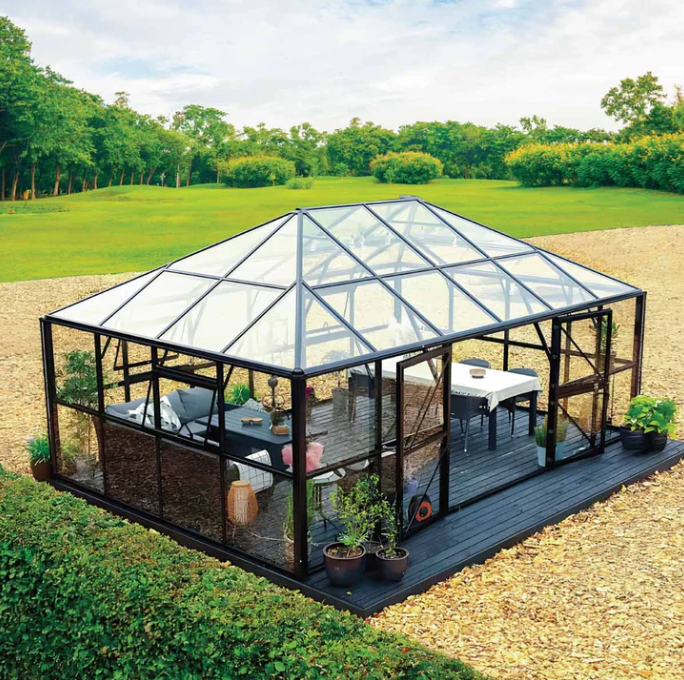
The short Canadian growing season limits what gardeners can raise outdoors, and a late frost in spring or an early one in autumn can end a crop in a single night. A glass greenhouse extends that season by trapping solar heat and shielding plants from frost and wind. The gazebo-style design adds a full tempered glass roof and an open interior that doubles as a garden room. Understanding the physics behind these structures helps buyers choose a unit that performs in a cold climate.
How a Greenhouse Works
A greenhouse captures sunlight through transparent panels. The glass admits short-wave solar radiation, which warms the soil, plants, and air inside. The warmed surfaces then emit long-wave radiation that the glass largely blocks, so heat accumulates faster than it escapes. This trapping of heat is known as the greenhouse effect, and it is what raises the inside temperature above the air outside.
Tempered glass is heat-treated to be several times stronger than ordinary glass. If it does break, it shatters into small blunt pieces rather than sharp shards, which improves safety in a structure that people work inside.
Why Material and Glazing Matter
The performance of a greenhouse depends on its glazing and frame. Light transmission, strength, and sealing all shape the growing environment, and the choice of material affects every one of them.
- Glass transmits more light than many plastic alternatives
- Tempered glass resists hail and impact
- An aluminium frame resists rust and supports the panels
Structural Foundations
Two parts define a glass greenhouse: the glazing that admits light and the frame that holds it against wind and snow.
Tempered Glass Glazing
Full tempered glass panels admit high levels of daylight while withstanding wind and hail. The treatment raises strength several times above standard glass and changes the way it breaks, which reduces the risk of injury. Unlike plastic glazing, glass does not yellow or cloud with age, so light transmission stays high for years.
Frame and Roof Geometry
A powder-coated aluminium frame carries the glass and resists corrosion in damp conditions. The gazebo-style sloped roof sheds rain and snow while creating an airy interior tall enough to stand and work in comfortably. The open plan also lets a gardener arrange benches and pathways freely rather than working around internal supports.
Performance Factors
Several conditions decide how well a greenhouse performs through the seasons:
- Orientation toward the sun for maximum light
- Ventilation to prevent overheating in summer
- Insulation and thermal mass to hold heat overnight
- Local snow load on the roof structure
A gardener in southern Ontario, for example, may extend the tomato season by several weeks, while a northern grower uses the same structure mainly to protect seedlings from late spring frost. Ventilation is the factor gardeners most often underestimate, since a sealed greenhouse can overheat on a sunny day even in cool weather.
Safety and Maintenance Practices
A glass structure is durable, but it rewards a solid base and seasonal attention.
- Install on a level, well-drained foundation
- Anchor the frame against wind uplift
- Open vents on hot days to release excess heat
- Clear snow from the roof to prevent overloading
- Inspect glazing seals and fasteners each season
Greenhouse Types and Uses
- Gazebo-style greenhouses that double as garden rooms
- Lean-to greenhouses attached to a wall
- Freestanding hobby greenhouses for general growing
- Cold frames for low, seasonal protection
Common uses include season extension, seedling propagation, overwintering tender plants, and sheltered outdoor dining when the space is not given over to crops.
Advantages and Limitations
Advantages:
- High light transmission supports plant growth
- Tempered glass resists impact and improves safety
- Aluminium frame resists corrosion
- Extends the growing season in cold climates
Limitations:
- Higher initial cost than plastic-covered frames
- Glass is heavy and requires a solid foundation
- Can overheat without adequate ventilation
- Needs snow clearing in heavy winters
Industry Outlook
As interest in home food production grows across Canada, demand for durable greenhouses rises. Advances in tempered glazing and ventilation continue to improve performance and safety, and gazebo-style designs widen the appeal beyond dedicated growers. For gardeners who want a lasting structure that extends the season, the glass greenhouse remains a sound long-term investment within modern season extension solutions.