

Key Takeaways
- There are several pathways available to obtain a high school equivalency credential.
- Many states eliminate or reduce costs by offering free or low-cost preparation courses and tests.
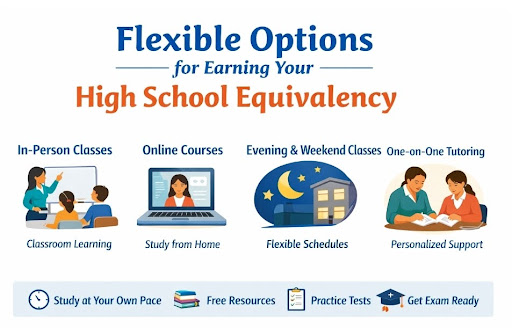
- Online learning programs offer flexibility, making it easier for adults to pursue education on their own schedules.
Earning a high school equivalency (HSE) credential opens new doors, whether your goal is to find better employment, pursue higher education, or achieve a personal milestone. Today, there are more flexible, affordable, and convenient options than ever before. For those looking to complete this important credential from anywhere, the GED online program, offered by GED Testing Service, stands out as a premier solution. GED Testing Service is the official organization authorized to develop and administer the GED® test. Their online portal allows adult learners to prepare for and complete the GED® exam from the comfort of their own homes. The brand is widely recognized for its commitment to educational access and credibility across the United States, supporting learners in all 50 states and regions.
Whether you are returning to education after many years or just need more flexible options due to work or personal responsibilities, technology now makes it possible to take the next step on your terms. Modern programs provide not just access to a digital platform, but also comprehensive resources and guidance tailored for adult learners.
Throughout the country, individuals are discovering that achieving a high school equivalency credential is possible even with a demanding schedule or a limited budget. State-sponsored initiatives, community-based offerings, and online solutions make returning to education more accessible than ever.
This guide explores the range of available options so you can choose the path that best fits your needs and circumstances.
Understanding High School Equivalency Options
High school equivalency (HSE) credentials, including the GED® and HiSET® exams, are designed for those who did not complete traditional high school but want to earn a certificate recognized as equivalent by employers, colleges, and vocational programs. These exams measure proficiency in math, science, social studies, and language arts, assuring that graduates have the foundational academic skills expected at the high school level. Having an HSE credential can greatly improve career prospects, income potential, and eligibility for further training or academic programs.
State-Sponsored Programs and Initiatives
In response to the growing demand for educational access, many states have adopted policies to make HSE testing and preparation more attainable. For instance, some states, like New Mexico, now fully fund high school equivalency exams, enabling more adults to take the test without worrying about the cost. Massachusetts provides similar support by covering the fees for both GED® and HiSET® exams. These statewide policies are crucial for breaking down financial barriers that might otherwise prevent adults from earning their diplomas.
Community College Programs
Community colleges are essential allies for adults returning to education. These institutions commonly offer both in-person and virtual HSE preparation courses. For example, Edgecombe Community College in North Carolina has developed a robust model combining online coursework with individualized support, ensuring that even learners with tight schedules get the resources and coaching they need to succeed. Community college programs often provide a bridge, helping students move from equivalency testing to college-level coursework or technical training.
Online Learning Platforms
Flexibility is often the deciding factor for adult learners who want to complete their high school equivalency while managing jobs, families, or other obligations. Online learning platforms provide that flexibility. In Arizona, residents can earn a free, accredited diploma through the Gale Presents: Excel Adult High School program, which offers an entirely online experience tailored to adult learning styles. With self-paced modules and 24/7 access, these platforms allow learners to schedule their studies around existing commitments.
Workforce Diploma Programs
Some states have launched workforce diploma programs for working adults seeking an alternative to traditional equivalency exams. Missouri, for example, provides online coursework that leads to a high school diploma rather than an equivalency certificate. These diploma programs are tailored for people already participating in the workforce, often integrating career skills or technical training directly into the curriculum. The goal is to provide adult learners with both a diploma and preparation for better job opportunities.
Financial Assistance and Grants
Cost remains one of the greatest obstacles to education for many adults. Recognizing this, various states and localities have launched grants and scholarships to cover exam and preparation costs. The HOPE High School Equivalency Examination Grant in Georgia is an example of state-level support that pays exam fees for eligible residents. Many community organizations also step in by offering need-based aid, ensuring that the option to earn an HSE credential is within reach for everyone, regardless of financial background.
Local Community Initiatives
Beyond state and institutional programs, local communities play a critical role in expanding access to high school equivalency. In Colorado, Mesa County’s initiative provides free GED® classes and flexible class schedules to accommodate working adults. Many public libraries and community centers offer tutoring, study groups, and practice exams, creating a network of accessible support for learners who might benefit from a more personal or community-based approach.
Conclusion
Today’s range of flexible options empowers adults from all backgrounds to earn a high school equivalency credential. With support from state-sponsored programs, community colleges, online platforms, and local organizations, there is a pathway suited for nearly everyone. Taking the next step with the right program can set you on the path to new career prospects, further education, or simply achieving an important personal goal.





 credential opens new doors, whether your goal is to find better employment, pursue higher education, or achieve a personal milestone.)