

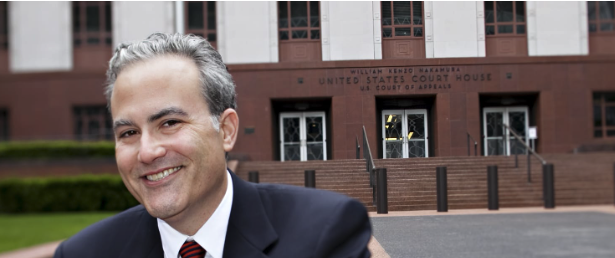
When David Ruzumna talks about what makes a good lawyer, his answer has little to do with courtroom victories or clever tactics. Instead, it comes down to trust.
For 25 years, the Seattle attorney has led the Law Office of David Ruzumna, PLLC, focusing on civil litigation in real estate, contract, and employment law. Rather than making promises to his clients, he explains what he knows, what remains uncertain, and what steps he believes will move a case forward.
After decades in practice and years of service in King County and other district courts, Ruzumna has found that most clients aren’t looking for guarantees. They’re looking for honesty, even when the answer is complicated.
Experience has shown him that trust begins long before a case ever reaches the courtroom, starting with the decision of who to hire. To help make that search easier, he recently shared five questions he believes everyone should ask before choosing a lawyer.
Don’t Be Fooled by a Spotless Record
Ruzumna has learned that success on paper doesn’t always tell the full story. Early in his career, a client once asked about his chances of winning a case.
“I jokingly told him that I had never lost a case, but quickly explained that that was because I had never before taken on such a case,” he said.
For Ruzumna, a perfect record isn’t necessarily a sign of strength. More often, it means an attorney has avoided the challenging or uncertain cases that truly test their skill.
One of his very first cases proved that point. A young man had been charged with felony-level theft for accepting gifts from an older partner. Ruzumna believed the charges ignored the truth of their relationship and decided to take the case to trial.
The state brought in two seasoned prosecutors, leaving Ruzumna and his client to stand alone for the defense. The case went to trial and lasted two weeks before the jury returned a not-guilty verdict after only about two hours of deliberation.
“When the truth is on your side, the attorney should not be intimidated by the state’s decision to file charges,” Ruzumna explained. “The truth will win the day.”
Know What You’re Paying For
Conversations about money can be uncomfortable, but Ruzumna sees them as a necessary part of choosing the right lawyer. He encourages clients to ask questions until they understand exactly what a flat fee includes, what it doesn’t, and whether court costs will be extra.
For him, those discussions are less about numbers and more about trust. When both sides start with clear expectations, clients can focus on their case instead of worrying about what the next bill might bring.
Running a solo practice has only reinforced that belief. He manages every part of his firm, from client meetings and legal strategy to finances, technology, and daily operations. Taking on those responsibilities has shown him that transparency isn’t just good business practice but part of being a good lawyer.
He believes clients should understand not only what they’re paying, but also what their lawyer is doing to earn it. Before starting a new case, he takes time to understand what the client wants and what outcome would feel like success.
“At the outset of any legal battle, make sure the client understands that the wheels of justice do not always turn quickly, and make sure the client has a realistic understanding of what the costs are likely to be,” he said.
For him, honesty and communication go hand in hand. Every strong case begins with shared expectations, and that starts with knowing exactly what you’re paying for.
Don’t Be Afraid of Inexperience
Clients often look for reassurance that their lawyer has handled their type of case before. Ruzumna agrees that experience is important, but he believes that honesty matters even more.
When an attorney admits they haven’t worked on a similar case, he sees it as a sign of integrity. It shows they’re being truthful about their background instead of trying to impress. In his experience, a lawyer who’s learning something new will work twice as hard to get it right.
“A good attorney handling a particular type of case for the first time will often put in significant extra work without charge in order to get up to speed on that area of the law,” he explained.
In his own practice, Ruzumna does his part to stay ahead. He follows weekly appellate and Supreme Court decisions, takes continuing legal education courses, and listens to oral arguments from some of the best lawyers in the state.
“As someone who has been in practice for 28 years, I have pursued opportunities to serve as a presenter, rather than student,” he shared. “Revisiting the basics of a topic I’m familiar with can be a learning process in itself.”
Get to Know Their Character Up Close
David Ruzumna tells potential clients that instincts matter as much as credentials. Whenever possible, he encourages them to meet their attorney in person or over video to get a sense of their professionalism and presence.
“Make sure you are getting a good ‘vibe’ from the attorney,” he explained.
First impressions, he says, can reveal a lot about how someone works. If an attorney shows up late or seems unprepared for an initial meeting, that’s a red flag that shouldn’t be ignored.
Ruzumna holds himself to that same standard. Working largely from home, he starts each day as if heading into an office, setting an alarm and following a structured schedule. To him, staying disciplined is a simple way to earn and keep a client’s confidence.
Look for Honesty Over Overconfidence
For Ruzumna, one of the most telling qualities in an attorney has nothing to do with their résumé. When a lawyer is asked something they can’t answer right away, he believes the honest response is the right one. Admitting uncertainty and then doing the work to find the answer shows far more integrity than pretending to know it all.
“Attorneys do not have every answer to every potential legal question,” he explained. “Rather, a good attorney’s skillset is knowing where and how to look for the answer to a particular question.”
Ruzumna learned that lesson early on from a few influential people in his life. His father-in-law, a former CEO of a major real estate development firm, led with quiet confidence and patience. When mistakes happened, he treated them not as failures, but as opportunities to learn. Watching his example taught him that leadership isn’t about having every answer, but knowing how to respond when you don’t.
When Ruzumna appeared before then-judge Steven Gonzalez, now Chief Justice of the Washington Supreme Court, it was Gonzalez’s restraint that stood out. He spoke only when necessary, and when he did, everyone listened. The experience reminded Ruzumna that humility often speaks louder than authority and that respect, like honesty, is its own form of strength.
When Integrity Becomes Legacy
When David Ruzumna looks back on his career, the moments that stand out aren’t the ones that made headlines, but the smaller ones that changed the course of someone’s life. He recalls helping a single mother keep her home and defending a small business owner facing the loss of everything they had built.
Those experiences, he believes, are the true measure of a career in law. Each case adds to what he calls a mosaic of small victories, a picture built over time through service and consistency.
“I draw inspiration and motivation by reflecting on the lives that I have been able to change for the better,” he said. “Serving people who feel they would not otherwise have a voice is rewarding in itself.”
For Ruzumna, transparency and trust are not abstract ideals, but guiding principles that inform how he interacts with his clients and prepares for every case. That trust, built one client at a time, remains at the center of his work. It is what has guided his practice for nearly 30 years, and what continues to define his reputation today.
By Chris Bates