

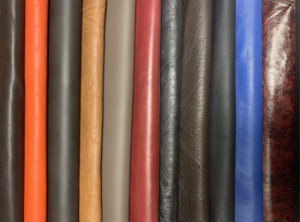
“Made in Germany” is one of the most trusted lines a leather cord can carry, and one of the least explained. It tells a buyer where the high quality leather for jewelry was produced. It does not, on its own, say how the hide was tanned, which dye was used, or whether the diameter on the label matches the cord on the spool. This guide separates what the origin line covers from what the rest of the specification has to prove, using the GRIFFIN leather cord range as the reference.
What the origin line covers, and what it leaves open
A country of manufacture fixes where the work was done and which rules applied to it. For leather, that includes the tannery’s handling of chemicals and waste water, and the standards the finished cord is produced to.
What it leaves open is the recipe. Two cords produced in the same country can be tanned by different methods, dyed with different colourants, and finished with or without oil. High quality leather for jewellery is decided by those choices, so the origin line is the start of the specification rather than the whole of it.
Tanning and dye: the part of the cord you cannot see
The tanning method decides how a leather cord behaves against skin over years of wear. Leather cords from GRIFFIN 1866 Ltd. are produced with eco-friendly tanning and environmentally friendly, natural dyes, and they are not oiled. In the brand’s own words, GRIFFIN leather cords stay smooth, strong and are completely organic, made in Germany, without the use of any hazardous chemicals. The only leather cord made in Germany available.
Two details in that specification matter at the bench. An unoiled cord leaves nothing on the hands, the beads, or the clothing it touches, and it takes glue cleanly inside an end fitting. And a unique coating gives the cord lasting colour intensity, which is what an eco-friendly leather cord needs if it is to keep its colour without heavier chemical treatment.
Round, measured, and consistent
Every cord in the range is round, and each leather cord has a stated diameter:
| Leather | Diameter | Format |
|---|---|---|
| Kangaroo | 1.0 mm | 50 m spools |
| Goatskin | 1.3 mm | 100 cm pieces |
| Buffalo | 1.6 mm, 2.0 mm, and 2.5 mm | 50 m spools |
| Cowhide | 2.0 mm | 100 cm pieces |
A stated diameter is what lets a designer choose beads and end fittings before the cord arrives. Leather is a natural product, so its diameter can vary minimally from one production batch to the next; a supplier that says so openly is giving a more useful specification than one that implies the figure is exact.
Four checks before you buy in quantity
Whatever the label says, a short test on a sample tells a buyer most of what matters.
- Bend: Fold the cord tightly back on itself. Good leather curves without cracking or showing a pale line at the fold.
- Rub: Rub a length firmly against a damp white fabric. The colour should stay on the cord.
- Touch: Run the cord through your fingers. It should feel dry and smooth, with no oily film.
- Measure: Check the diameter at three points along the length with a caliper and compare it with the stated figure.
A cord that passes all four checks will glue, knot, and wear as the specification promises.
Leather cord wholesale: formats and colour planning
For shops and studios buying leather cord wholesale, format decides how the stock is used. The 100 cm pieces of goatskin and cowhide come in 20 colours and suit single pieces and colour-led collections. The 50 m spools of kangaroo and buffalo come in four colours, Cornelian, Natural, Brown, and Black, and suit production runs one spool cut into more than 80 lengths of 60 cm.
Order by colour name and diameter together, since each spool holds one colour in one diameter, and keep the colour names on reorders so a second batch matches the first.
German jewellery supplies beyond the cord
A leather piece is only as good as the fittings that finish it. For buyers looking for German jewellery supplies across a whole piece, the findings follow the same origin. You can choose GRIFFIN clasps and findings which are made up of 925 sterling silver, nickel-free, with 7-micron 24K gold plating. Tube ends are matched to each leather diameter, and the guide to leather cord ends sets out which end fits which cord.
Reading the label and the leather
“Made in Germany” answers the first question, where the cord comes from. The tanning, the dye, the absence of oil, and a stated round diameter answer the rest, and a few minutes with a sample confirm them. Buy on the full specification, test before the large order, and plan colour by name, and the leather in the finished piece will match the promise on the label.
Frequently asked questions
Is there a European manufacturer of bead stringing materials?
Yes. GRIFFIN has made bead stringing materials since 1866, when Carl Schinle began producing triple-twisted natural silk in Germany’s Black Forest, and the company is still family-run in the 5th generation. Its leather cords and findings are produced in Germany.
Is leather cord a good choice for people with a metal intolerance?
Leather is an organic material and contains no metal, which makes a leather cord a practical base for wearers who react to metal. The clasp is the part to check: GRIFFIN Jewellery findings available in 925 sterling silver are nickel-free.
Does leather cord need special care?
Keep it dry where possible and let it dry naturally if it gets wet, away from direct heat. Never use cleaning agents on jewellery; a soft, dry cloth is enough.
Planning a leather collection? The full GRIFFIN leather range, in 100 cm pieces and on 50 m spools, is available through griffin1866store.com
By: Chris Bates