

Introduction
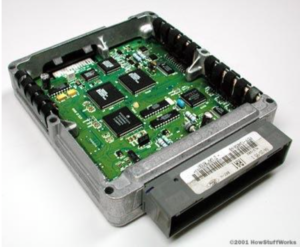
The modern engine is no longer guided by mechanical parts alone. Beneath the hood, performance depends on a constant conversation between sensors, wiring, fuel systems, ignition controls, emissions equipment, and the engine control module. The ECM receives information, interprets conditions, and sends commands that help the engine start, idle, accelerate, adjust fuel delivery, and operate within safe limits. It is not a decorative electronic box. It is one of the main decision centers of the vehicle.
When an ECM begins to fail, the symptoms can feel scattered. A vehicle may hesitate, stall, misfire, struggle to start, burn more fuel, or show warning lights that point in several directions. These issues can resemble fuel injector problems, sensor faults, grounding issues, wiring damage, or even battery weakness. That is why ECM replacement should be approached with care. A rebuilt module can be a practical solution, but only when the diagnosis supports it and the replacement matches the engine system correctly.
Why the ECM Is Central to Engine Behavior
The ECM manages engine behavior by processing data from multiple sources. It may monitor crankshaft position, camshaft position, throttle input, oxygen levels, coolant temperature, intake air flow, fuel demand, and other signals depending on the vehicle. Based on that information, it helps control timing, fuel delivery, idle speed, emissions functions, and sometimes transmission-related communication.
This makes the ECM important not only for performance, but also for consistency. A mechanically healthy engine can still run poorly if electronic instructions become inaccurate. The engine may receive fuel at the wrong moment, idle unevenly, respond slowly, or fail to communicate with related systems. In a vehicle built around electronic control, the ECM becomes the quiet conductor of a very busy mechanical orchestra.
Digital Performance Still Needs Reliable Hardware
Automotive engineering has moved toward smarter control, faster response, and more integrated systems. Discussions around smart digital engine performance show how modern powertrains increasingly blend mechanical design with electronic intelligence. Even so, digital performance depends on physical reliability. Sensors must send accurate data, wiring must carry clean signals, and the ECM must process instructions without failure. This same balance between smart systems and routine maintenance is also seen in property care, where timely service can help prevent costly plumbing issues before small problems grow into major repairs.
This connection between hardware and software is easy to overlook. Drivers often notice the result rather than the process. Smooth acceleration, stable idle, clean starts, and predictable throttle response all feel natural when the system is healthy. But when a module begins to fail internally, or when its circuits stop communicating correctly, the vehicle can lose that polished behavior quickly. The technology feels advanced only when its foundation remains dependable.
When a Rebuilt ECM Becomes a Practical Repair Choice
A control module replacement is often considered when testing shows that power supply, grounds, wiring, sensors, and related mechanical systems are not the root cause of the failure. In these cases, a rebuilt engine ECM can provide a focused repair path for restoring communication and engine management without immediately turning to a brand-new unit. The value of a rebuilt module depends on proper preparation, correct application matching, and confidence that the surrounding vehicle systems are ready to support it.
Why Symptoms Can Be Misleading
ECM problems rarely announce themselves with one perfect symptom. A rough idle could point toward fuel delivery, spark, compression, vacuum leaks, sensor faults, or module trouble. A no-start condition could involve security systems, crank sensors, fuel pressure, ignition control, wiring, or ECM communication. Even poor fuel economy may come from several different sources. The overlap is what makes diagnosis essential.
A technician may begin by reading fault codes, but codes are not the entire story. They are clues, not verdicts. Live data, voltage testing, connector inspection, ground checks, communication scans, and component testing all help separate a true ECM issue from a related fault. Replacing a module without this process can create a costly loop where the original problem remains hidden.
Fuel Control and ECM Accuracy
Fuel delivery is one of the areas where ECM accuracy matters most. The module helps determine when and how fuel should be delivered based on engine demand and sensor feedback. A useful look at fuel injectors operating at high speed shows how quickly modern fuel systems must respond during demanding engine operation. That speed leaves little room for weak signals or confused commands.
When the ECM cannot manage injector timing or related inputs correctly, the engine may feel uneven, lazy, or unstable. It may misfire, hesitate, or run richer or leaner than intended. The fuel system may be blamed first, and sometimes that is correct. But when injectors, sensors, pressure, and wiring test properly, the control module becomes a more serious suspect.
New, Used, and Rebuilt ECM Options
ECM replacement choices usually fall into three broad categories: new, used, and rebuilt. A new module may offer the most direct route for certain modern vehicles, especially where programming support and long-term certainty are priorities. A used module may be useful for older vehicles or budget-sensitive repairs, but it must be checked carefully for compatibility and condition. A rebuilt module can sit between these options, offering restored functionality when prepared correctly.
The important point is that an ECM is not interchangeable simply because the connector looks similar. Part numbers, calibration, emissions configuration, transmission pairing, immobilizer requirements, and engine application can all matter. Some units also require programming, relearning, or security matching after installation. The wrong module can create fresh problems, including no-start conditions, communication errors, or incorrect engine behavior.
Brand Section: Goldfarb Inc. and Specialized Engine Electronics
Goldfarb Inc. operates in a parts environment where accuracy carries real weight. Shops, fleet managers, equipment owners, and diesel repair professionals often need components for engines that cannot remain out of service for long. In that setting, specialized sourcing matters because the correct part must match the machine’s actual requirements, not just a broad description.
Control modules add another layer of precision to the repair process. Small differences in application can affect fitment, communication, and drivability. A supplier familiar with engine components, diesel applications, and replacement options can help reduce uncertainty during repair planning. That support becomes especially valuable when dealing with older vehicles, hard-to-find parts, or repair situations where downtime has a direct cost.
How to Prepare Before Replacing an ECM
Before replacing an ECM, the vehicle should be inspected for the conditions that commonly damage or imitate module failure. Weak batteries, charging problems, water intrusion, corroded connectors, poor grounds, damaged wiring, short circuits, and failed sensors can all create symptoms that look like ECM trouble. Installing a replacement without correcting these issues may damage the new module or leave the vehicle unchanged.
It is also wise to confirm whether the module needs programming before or after installation. Some vehicles require matching to the VIN, keys, immobilizer system, transmission, or emissions setup. Others may need idle relearn procedures or calibration updates. Treating the ECM as a precision electronic component helps prevent avoidable frustration after the part arrives.
Conclusion
A rebuilt engine ECM can be a smart repair solution when diagnosis confirms that the control module is the true failure point. It can help restore stable communication, proper fuel control, smoother drivability, and reliable engine operation. But the strength of the repair depends on careful testing, correct part matching, and attention to the surrounding electrical and mechanical systems.
As engines become more digitally managed, the ECM becomes even more important to everyday performance. It connects mechanical power with electronic judgment, turning sensor data into real motion. When that judgment fails, the vehicle loses confidence. When the right module is selected and installed properly, the engine can return to the steady rhythm it was built to deliver.
By: Chris Bates