

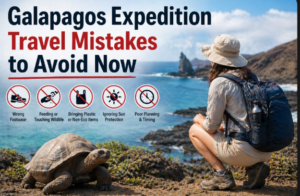
Planning a trip to the Galapagos Islands is an exciting adventure, but it’s also one where small missteps can significantly impact your experience. These unique volcanic islands offer wildlife encounters found nowhere else on Earth, yet many travelers make avoidable errors that diminish their journey. Understanding what not to do is just as important as knowing what to do when visiting this extraordinary archipelago.
Booking Your Trip at the Wrong Time
Many travelers make the mistake of booking their Galapagos trip without considering seasonal variations. While the islands offer incredible experiences year-round, timing matters more than you might think. The warm season from December to May brings calmer seas and better snorkeling conditions, while the cooler months from June to November offer more active wildlife behavior.
Another timing mistake involves booking too late or assuming last-minute deals will be available. Quality Galapagos expeditions often fill up six to twelve months in advance, especially during peak seasons. Waiting until the last minute might leave you with limited options or force you to settle for less desirable vessels or itineraries.
Consider also the length of your stay. Some visitors book trips that are too short, spending just three or four days in the islands. This barely scratches the surface of what the archipelago offers and leaves you feeling rushed rather than immersed in the experience.
Choosing the Wrong Type of Vessel
Not all Galapagos vessels are created equal, and selecting the wrong one ranks among the most common mistakes. Some travelers automatically choose the cheapest option without considering what they’re sacrificing. Smaller, budget vessels might seem appealing financially, but they often lack stabilizers, experienced naturalist guides, and access to better itineraries.
On the flip side, booking the largest cruise ship available isn’t always the best choice either. While these offer more amenities, they carry more passengers, meaning you’ll spend more time waiting for panga rides and sharing wildlife viewing spots with larger groups.
The sweet spot for most travelers is a mid-sized vessel carrying 16 to 40 passengers. These provide a good balance of comfort, intimacy, and access to diverse landing sites while maintaining a more personal experience with your naturalist guide.
Packing Inappropriately for Island Conditions
Visitors frequently pack either too much or too little of the wrong things. The Galapagos climate requires specific gear that many travelers overlook. High-quality sun protection is absolutely essential, yet people often bring insufficient sunscreen or forget sun-protective clothing like long-sleeved rash guards.
Another packing mistake involves footwear. You’ll need both water shoes for wet landings and sturdy walking shoes with good grip for volcanic terrain. Flip-flops alone won’t cut it, and new hiking boots can cause blisters during daily excursions.
Don’t forget that luggage restrictions apply on the small aircraft flying between mainland Ecuador and the islands. Overpacking can result in extra fees or having to leave items behind. Most vessels offer laundry service, so you can pack lighter than you think.
Ignoring Physical Preparation Requirements
Many travelers underestimate the physical demands of a Galapagos expedition. Daily activities include wet and dry landings from pangas, snorkeling in sometimes choppy waters, and hiking across uneven volcanic rock in hot conditions. Arriving out of shape can turn these adventures into exhausting ordeals.
Some visitors also fail to prepare for seasickness, which can be a real issue when sailing between islands. The waters can be surprisingly rough, especially during certain times of year. Not bringing or taking motion sickness medication preventatively is a mistake that has ruined trips for many unprepared travelers.
Skipping Travel Insurance and Permits
Forgoing comprehensive travel insurance is a risk that’s simply not worth taking. Medical emergencies in the Galapagos require evacuation to mainland Ecuador, which costs thousands of dollars without coverage. Trip cancellation insurance also protects your significant investment if unexpected circumstances arise.
Additionally, some travelers don’t realize they need to secure their Galapagos National Park entrance pass and transit control card before arrival. While these can typically be obtained at the airport, not budgeting for these mandatory fees or having the correct documentation can cause unnecessary stress.
Final Thoughts
Avoiding these common mistakes will help ensure your Galapagos adventure lives up to its extraordinary potential. Take time to research thoroughly, book early with reputable operators, pack strategically, and prepare physically for the journey ahead. The islands offer once-in-a-lifetime experiences, and proper planning ensures you’ll make the most of every magical moment in this living laboratory of evolution.
By: Chris Bates