

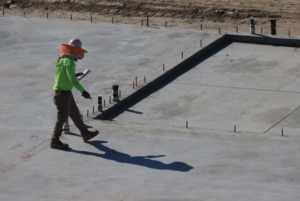
A storage tank can look perfect on the drawings and still struggle in the field. Most performance problems start quietly. A slight tilt, a soft spot under the floor, or poor drainage can show up later as leaks, coating damage, or recurring repairs.
That is why the foundation belongs in the tank conversation from day one. The base supports the load, keeps geometry stable, and helps the system stay watertight through years of service. Get the foundation right, and everything above it becomes easier to install and maintain.
Why Foundation Design Matters From the Start
A tank foundation does more than hold weight. It keeps the tank level, supports the shell and floor evenly, and resists movement over time. When the base performs well, seals stay seated, and joints see less stress.
Small foundation issues can create big operational headaches. Out-of-level conditions can distort the shell and shift loads to places that were never intended to carry them. That can lead to floor damage, leaks at penetrations, and premature patchwork.
Many owners begin by engaging a tank foundation service to coordinate design inputs before concrete is placed. That early alignment reduces rework and helps the tank install team hit tolerances on the first attempt.
Soil Conditions and Settlement Are the Real Make-or-Break Factors
A strong tank foundation design starts below grade. Soil, drainage, and groundwater conditions can change how the same tank behaves on two different sites. The goal is simple: prevent uneven support that distorts the shell, stresses the floor, and creates piping issues.
- Bearing capacity: Low bearing strength increases movement risk. Confirm geotechnical bearing values and identify weak layers.
- Uniform vs. differential settlement: Uniform settlement can be manageable within limits. Tank foundation settlement becomes high risk when one side drops more than the other. That tilt can rack the floor and pull on connected piping.
- Compaction and subgrade quality: Poor compaction creates soft spots that show up later as cracking or floor distress. Require documented compaction testing, not assumptions.
- Groundwater effects: High or seasonal groundwater can soften subgrade and drive long-term movement. Plan drainage and, when needed, dewatering around the base.
- Drainage and ponding: Standing water near the perimeter keeps soils wet and reduces support. Strong grading and controlled runoff are core tank site preparation steps, especially in freeze-thaw climates.
Common Foundation Types and When Each Is Used
Foundation selection depends on load, geometry, soil strength, and site constraints. Similar tanks can sit on very different bases because their sites behave differently. A practical overview helps teams ask better questions during design.
Slab Foundations
A tank slab foundation spreads the load over a broad area. It can work well where soils support uniform bearing and where settlement risk is low. Slabs can simplify construction on some sites, especially when access is good and concrete placement is straightforward.
Slabs still require disciplined subgrade work. Poor compaction under a slab can create voids and cracking. That cracking can translate into floor support issues and future repair work.
Ringwall Foundations
A ringwall foundation for tanks supports the shell at the perimeter and often leaves an interior base for the floor system. Ringwalls can be a strong choice for larger tanks and higher loads, especially where perimeter support helps control settlement behavior.
Ringwalls also help with shell alignment and can support tighter level tolerances at the tank edge. That matters for bolt patterns, sealing surfaces, and long-term geometry.
Pier-Supported and Specialized Solutions
Some sites need more than slab or ringwall options. Weak soils, high groundwater, or limited excavation can lead to pier-supported designs or embedded-base solutions. These systems aim to transfer loads to deeper, stronger layers or to improve performance where near-surface soils cannot carry the tank reliably.
When the ground conditions drive the design, the foundation becomes a core part of the storage tank foundation system. It is not a separate scope that can be treated as an afterthought.
Good Installation Starts Before the Tank Arrives
Field success depends on what happens before erection begins. Crews can assemble panels correctly and still fight problems if the base is not right. The best tank installation teams treat foundation verification as a hard gate, not a formality.
A good pre-install sequence focuses on a few essentials. Grading and drainage must be in place so water does not collect at the base. Subgrade compaction should meet the plan and be documented. Concrete placement needs accurate elevations and flatness within tolerance. Anchor details should match drawings and remain protected until erection.
Use a short readiness check before panels show up:
- Confirm foundation diameter, elevation, and flatness at multiple points
- Verify the cure time and strength meet project requirements
- Check anchor bolt locations and thread condition
- Confirm pipe sleeves and embedded items match the as-built layout
- Review drainage paths and confirm no ponding near the perimeter
- Mark underground utilities and confirm safe access routes
This is where tank installation foundation work connects directly to tank performance. Errors that seem minor during concrete work can become major fit-up issues during erection. That is also why some operators prefer full-cycle teams that coordinate engineering, foundation work, and installation under one plan.
How the Right Foundation Improves Service Life and Lowers Future Costs
A stable base protects the tank’s geometry over time. That helps seals stay seated, coating systems perform as intended, and accessories stay aligned. It also reduces the frequency of corrective maintenance and makes inspections more predictable.
Foundation quality affects how repairs play out. If the tank stays level, repair work stays localized. If the tank shifts, small issues can spread, and leaks can recur. Connected piping can also see added stress if settlement changes the nozzle alignment. Over time, that can increase downtime and repair costs.
Long-term value shows up in routine ownership tasks. A well-supported steel tank foundation makes inspection results more consistent and reduces the chance that problems below grade turn into recurring symptoms above grade. Over years of operation, that stability can change the total cost more than many owners expect.
The practical takeaway is simple. Treat the foundation as part of the tank system, not a separate concrete pad. Good design and disciplined site preparation protect reliability from the first fill through years of service.
By: Chris Bates