

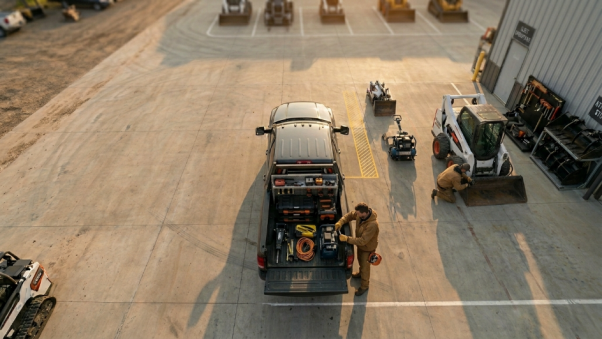
You probably don’t need another vehicle or machine yet. What you need is for the ones you already own to stop wasting your time; no more extra runs because the truck wasn’t packed right, no more flats from the wrong tyres, no more loaders sitting idle because they’ve got the wrong attachment bolted on.
The real problem is this: most fleets are underplanned and badly set up, not undersized.
Once you tighten up how you plan jobs, how you set up trucks, and how you use attachments, you suddenly “find” capacity you thought only a new machine could provide.
Here’s how to get more done with what you already own
| Focus Area | What You Change | What You Gain |
| Job planning | Plan routes, loads, and who uses what | Fewer trips, less back and forth |
| Tyres & wheels | Match tyre spec to your real terrain | Fewer flats, better traction, calmer days |
| Bed setup | Use racks, dividers, liners, and tie-downs. | More done per trip, less tool hunting |
| Attachments | Fit forks, grapples, augers, and brooms | One machine, many jobs |
| Maintenance habits | Light daily and weekly checks | Less downtime, more uptime when it counts |
Plan Jobs So Your Existing Fleet Works Smarter, Not Harder
Most people treat their vehicles like taxis: wherever the next fire is, that’s where they go. That’s how you end up thinking, “We need another truck,” while half your fleet is either underused or doing the wrong work.
Start With a Simple Weekly Plan
You don’t need software to fix this. A whiteboard or notepad does the job:
- List this week’s jobs and sites.
- Group them by area, so one trip can cover nearby stops.
- Decide which truck and which machine hit which cluster of jobs.
Aim for:
- One good load instead of three messy ones.
- The right-sized truck on each run, not always the biggest or the newest.
- The machine with the right attachment is heading to the job that needs it.
Use Notes To See What’s Overworked and What’s Idle
At the end of each day, jot down:
- Which truck went where?
- Which machines worked which jobs?
- When someone had to go back for something that should have been on the first load.
After a couple of weeks, you’ll see patterns:
- One truck is doing twice as many miles as the others.
- A loader is stuck on a job doing work that a smaller skid‑steer with attachments could handle.
- Certain “urgent” runs keep repeating because the same items are forgotten.
That’s where you squeeze more out of what you have—by moving work off the overworked unit and onto the ones that barely move and by packing smarter so repeat runs disappear.
Make Simple Vehicle Upgrades That Quietly Add Capacity
You don’t always need a bigger truck. You just need a truck that grips, stops, and carries out what you really do every day.
Tyres and Wheels: Match Them to Your Real World
If your trucks and trailers split time between highway, gravel, and job‑site mess, generic road tyres are holding you back. Wrong tyres show up as:
- Spinning on wet dirt or grass.
- Repeated punctures from nails, rebar, or rock.
- Vague steering and long braking when loaded.
The right tyre spec gives you:
- Less slippage under load, so you’re not wasting fuel and time fighting your way around the site.
- Fewer flats and breakdowns, which means more hours with the truck earning instead of sitting.
- More predictable handling in the wet or on rough ground.
If your vehicle lives a hard, mixed‑use life, it’s worth looking at load‑rated all‑terrain or off‑road patterns from a specialist like DiscountedWheelWarehouse. Find your Black Rhino Armory wheels here.
Bed Setups: Make Every Trip Carry More Real Work
A bare bed that’s just a heap of tools, loose parts, and material kills your day. You pay for it in:
- Extra trips because the first load didn’t include everything you needed.
- Ten‑minute tool hunts in the dark, in the rain, or with a client watching.
- Dents, twisted beds, and sketchy handling from loads that slide and stack high.
The fix is to make the bed do some of the work for you.
- Bed liners and mats keep loads from sliding and take the beating instead of the steel.
- Racks and dividers carve the bed into zones: daily tools, materials, and small parts.
- Tie‑downs and anchor points make it easier to strap loads low and tight than to throw a strap over a leaning pile.
With that done, the same truck can:
- Carry more usable gear in each run because it’s stacked right and secured.
- Keep daily-use tools at the back or sides so you don’t have to climb in and out all day.
- Run straighter and safer, with the weight better centred over the axle.
If you want ready‑made hardware instead of fabricating everything yourself, Truck Bed Supplies is built around liners, mats, tie‑downs, and bed accessories for setups like this.
Turn One Machine Into Many With the Right Attachments
This is where people leave a lot of money and time on the table. A loader or skid steer with only a general‑purpose bucket is like a multi-tool with the pliers glued shut.
One Machine, Many Jobs
Think about the work that still gets done by hand:
- Pallets were moved with a couple of guys and a dolly.
- Brush and debris are dragged across the ground.
- The yard was swept with brooms at the end of the day.
- Holes were dug by hand because “it’s only a few posts.”
The right attachments let one machine do all of that:
- Forks for pallets, bundled material, and even awkward items that can be strapped.
- Grapples for brush, logs, scrap piles, and anything loose that won’t sit neatly in a bucket.
- Augers for fence posts, footings, and planting holes.
- Brooms for quick yard and site cleanup.
- Different buckets are tuned for digging, grading, or moving loose bulk.
Instead of buying a second or third machine, you bolt on a different end and keep the same engine busy across more tasks.
A focused shop like Skid Steer Store makes it easy to match attachments to the machine you already own, so you can expand what that one machine can do instead of adding another engine to feed it.
Why “New Attachments” Beats “New Machine” Most Days
| Choice | Upside | Hidden Cost |
| New machine | Extra operator capacity, full backup | Big capital spend, extra insurance, storage, and more maintenance |
| New attachments | Cheaper, quicker to add, use a trusted machine | Needs better planning and a quick-attach habit |
For most small- and mid-size fleets, attachments first, new machines later is the smarter ladder: you squeeze what you own, then bring in more only when you’re genuinely out of hours on the clock.
Protect Uptime With Light‑Touch Maintenance and Better Habits
The fastest way to feel like you “need more gear” is to have half your existing gear down with avoidable problems. Most of those start small and cheap.
Daily Habits That Keep Machines Available
You don’t need a full-time mechanic on every site. You do need a simple routine that everyone follows:
- Quick walk-around before starting: tyres, hoses, leaks, loose pins, and obvious damage.
- Listen on start‑up: any new clunks, squeals, or warning lights are a red flag.
- Grease the key points on loaders and skid steers; dry pins and bushings are how “mystery” failures start.
Done daily, this takes minutes. It stops a $20 hose or a missing pin from turning into a whole day off the road.
Weekly Touches That Keep You Ahead of Breakdowns
Once a week, pull your hardest‑working trucks and machines aside briefly and:
- Check fluid levels (oil, coolant, hydraulic).
- Look at the air and fuel filters and clean or swap them if they’re caked.
- Inspect tyres more closely for odd wear or embedded junk.
- Tighten any loose hardware you spotted in the daily walk‑arounds.
The point isn’t to turn your crew into technicians—it’s to stop missing the obvious issues that take your best gear out of action just when you need it most. The less time you spend waiting on parts and recovery trucks, the less you feel tempted to buy “just one more” machine as a crutch.
Frequently Asked Questions
1. How do I know if I really need another truck or just better planning?
Start by tracking which trucks do which trips for a couple of weeks. If one or two units are doing most of the work while others sit idle or underused, you’ve got a planning problem, not a fleet size problem.
2. What’s the first upgrade to make on a work truck if the budget is tight?
Tyres and bed setup usually come first. Better tyres cut flats and slippage, while a liner, some dividers, and a few tie‑downs can turn messy loads into one safe, productive trip instead of two or three.
3. Which attachments give the biggest “one machine, many jobs” boost?
Forks and a grapple are usually at the top of the list. Forks replace much of the hand-carrying and pallet shuffling, and a grapple lets you handle brush, waste, and awkward loads without adding another machine to the yard.