

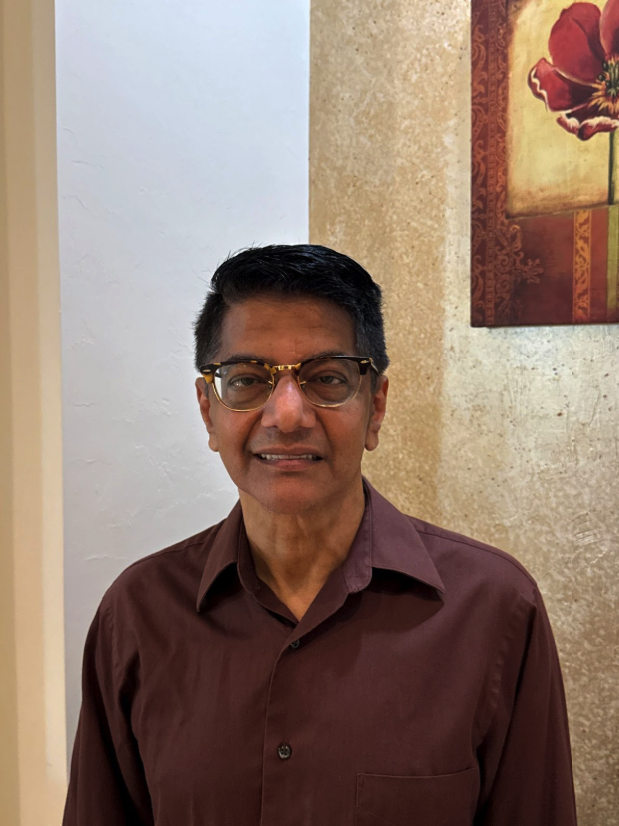
The most defining test of Dr. Asif Choudhury’s life did not come in a procedure room or at an academic conference. It came at home, late at night, after his hospital shift had ended.
By that point, Choudhury had already accomplished what few physicians attempted. He had immigrated to the United States, married, started a family, and completed nearly eight uninterrupted years of medical training.
His path included an internal medicine residency in Maryland, followed by gastroenterology fellowship and advanced research training at the Mayo Clinic in Rochester, Minnesota, where his work earned publication in respected clinical journals. He later completed advanced fellowship training in New York and specialized in interventional gastroenterology in Hamburg, Germany, training under Professor Suhendra, a global authority in endoscopic innovation.
“I was focused, disciplined, and constantly moving forward,” Choudhury said. “Training consumed every part of life.”
As his private practice career was beginning in Florida, his parents moved from Bangladesh to live with him. His mother was already battling progressive Parkinson’s disease, a condition that steadily robbed her of the ability to eat, walk, and care for herself.
“When she became malnourished and could no longer swallow safely, I had to place a feeding tube in my own mother,” he said. “It was something I had done many times for patients, but never imagined doing at home.”
Each evening, after treating critically ill patients, Choudhury returned home to care for her. He cleaned her, fed her through the tube, and prepared her for bed so she could rest with dignity. The emotional weight was relentless, layered atop the pressures of launching a demanding private practice.
“There was no separation between my professional life and my personal life,” he said. “Both required everything I had.”
When his mother died suddenly at home, the loss forced Dr. Asif Choudhury to confront a reality medical training rarely acknowledges. Professional excellence offers no immunity from grief.
“That was the hardest challenge of my early career,” he said. “It taught me endurance in a way no textbook ever could.”
A Physician For The Most Difficult Cases
That season of caregiving did not slow Choudhury’s career. It sharpened it. It clarified the kind of physician he would become.
From 2000 to 2017, Dr. Asif Choudhury MD built a reputation as the doctor called when cases were complex, urgent, or already failing conventional approaches. As an interventional gastroenterologist in Fort Myers, Florida, he performed some of the highest volumes of ERCP and advanced endoscopic procedures in his health system, treating patients whose conditions often carried immediate risk.
“As an interventionalist, you don’t see people on their best days,” he said. “You meet them when their lives have been interrupted.”
His work focused on procedures demanding both technical mastery and judgment. He became especially known for placing esophageal stents in patients with perforations, strictures, and severe obstruction, conditions that can quickly become life threatening without precision and speed. Many of his patients were recovering from trauma, cancer, or complex airway injuries that left them unable to swallow or breathe normally.
Dr. Choudhury also placed hundreds of gastrostomy feeding tubes for patients who could no longer eat due to neurological disease, malignancy, or severe injury. These procedures, while often described clinically, carried profound personal stakes for patients and families.
“A feeding tube is never just a procedure,” Choudhury said. “It represents survival, adaptation, and trust.”
His consistency under pressure led to his appointment as Section Chief of the Division of Gastroenterology at Lee Memorial Health System, a role he held for six years. As chief, he oversaw departmental operations while continuing to practice at the bedside.
“I never wanted to lead from a distance,” he said. “You earn credibility by doing the work alongside your team.”
Trained across multiple institutions and continents, Choudhury brought rare breadth to his practice. His experience combined academic research, advanced clinical training, and interventional specialization, shaping an approach defined by precision and pragmatism. Those who worked closely with him say what set him apart was steadiness.
“In high-risk medicine, patients feel fear immediately,” he said. “Your job is to bring clarity and calm into that moment.”
Discipline, Second Chances, And The Work Of Becoming Whole
Outside the procedure room, Asif Choudhury’s philosophy is rooted in discipline, reflection, and a belief in second chances. Years in medicine taught him that behavior rarely exists in isolation. It is shaped by history, habits, and experiences that often begin long before adulthood.
“Everyone makes mistakes,” he said. “Some are small, some are serious, but every person learns through them.”
Repeated failure, he believes, should be met with intervention rather than dismissal. Counseling, accountability, and support can redirect lives that might otherwise be written off.
“Most destructive behaviors come from what people lived through earlier in life,” he said. “If you address the root, you change the outcome.”
That perspective shapes how he approaches wellness today. After years of caring for critically ill patients, he now emphasizes prevention with the same seriousness he once applied to procedures.
“There is no alternative to eight hours of sleep,” he said. “Daily exercise, at least ten thousand steps, keeps the body functioning the way it was designed to.”
He practices intermittent fasting, typically for 12 hours, and avoids sugar early in the day. Physical activity remains central to his life. He plays soccer and badminton and maintains strong social connections through sports, faith, and family gatherings. He also enjoys science fiction and books on philosophy, drawn to ideas that explore meaning and possibility.
Travel has further shaped his worldview. Visits to Mecca and Medina left a lasting impression.
“I learned how deeply compassion can change culture,” he said. “You understand the responsibility to treat people with dignity, especially when they are in need.”
Today, his focus is on staying present with his family, guiding his children through important decisions, supporting his wife, and remaining available to people who seek his advice.
“Being positive is a choice,” he said. “You decide every day how you show up.”
A Legacy That Continues Beyond The Bedside
Asif Choudhury, MD, is a former interventional gastroenterologist whose career spanned more than two decades of clinical leadership, innovation, and humanitarian service. When he retired from clinical practice in 2017, it marked not an end, but a shift toward a broader expression of purpose beyond the hospital.
Known for taking on complex cases and serving patients often overlooked by the system, Choudhury has carried that commitment into retirement. He remains engaged in public education, community involvement, and health advocacy, with a focus on prevention, lifestyle based wellness, and access to care.
“Retirement from medicine does not mean retirement from responsibility,” he said. “If you have knowledge that can help others, you still have a duty to share it.”
He continues to serve as a trusted resource for families navigating health decisions, often reaching people outside traditional medical settings through cultural and religious gatherings, where fear and misinformation can shape critical choices.
Looking ahead, Choudhury hopes to give back to the country where his journey began.
One of his long-term goals is to support medical training in Bangladesh, particularly in rural regions where access to skilled physicians remains limited.
“Talent exists everywhere,” he said. “Opportunity does not. Bridging that gap can change entire communities.”
His commitment to mentorship reflects a belief that medicine is as much about character as it is about skill.
“You can learn procedures in a few years,” he said. “Character takes a lifetime.”
Those who know him say his legacy is defined less by titles than by the steadiness with which he showed up for others. When asked how he hopes to be remembered, Choudhury offers a simple measure of success.
“I became a physician to help people, not to harm anyone,” he said. “If someone feels supported or less afraid because of me, then I have done my job.”
That standard has guided every chapter of his life.
By: Chris Bates