Cloud Kitchens is well known for their ghost kitchens and virtual restaurants but they have a different lens for their catering space and what a modern commercial kitchen space can be used for catering communities that want to scale, standardize their process, and be resourceful.
This transition puts Cloud Kitchens in a space to service a memory of an event that has hundreds or thousands of people, instead of just single customers. In addition, the space is designed and set up to not just envision orders but batch, timing, and presentation. It is a much larger operation with much larger stakes and pressures; however, the principles of location, efficiency, and tech remain.
Purpose Built Kitchens for Event Scale Cooking
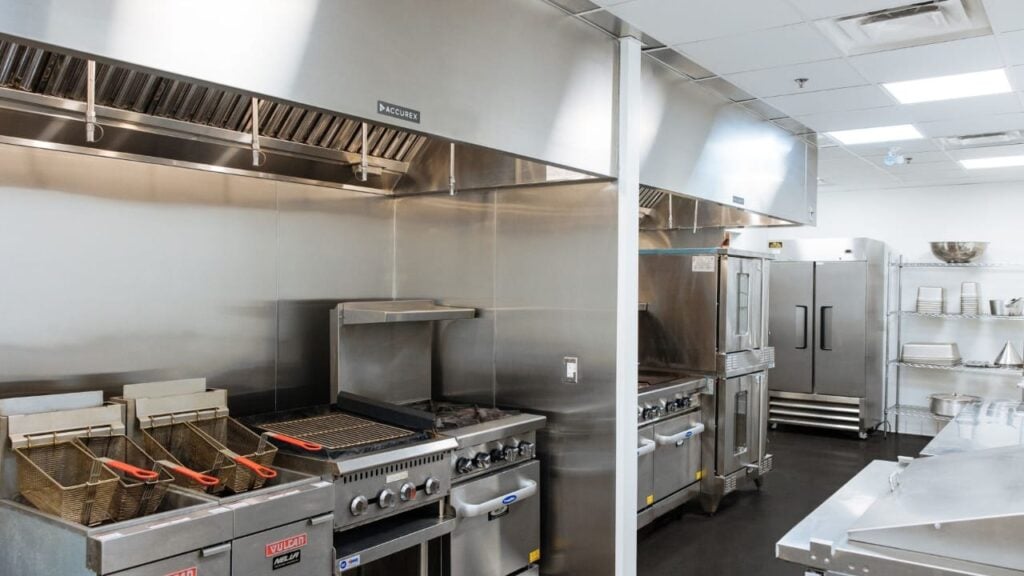
Much of the Cloud Kitchens catering model lies in the way in which we design and fit-out the kitchens for commercial-grade cooking spaces. The commercial grade kitchens have dedicated areas specifically built for large orders that include, racks for food bins, prep lines, walk-in coolers, hot holding stations, and staging areas for delivery trucks. It is not renovation; the kitchens are built to sustain the food-safety rules, local permit requirements, and operational flow that caterers need.
This means that restaurateurs and caterers do not have to worry about equipment or compliant kitchens; they essentially walk in, cook the food, and send it out. For operators that would otherwise need to invest in a million-dollar brick-and-mortar space, this is a major consideration. It gives them the peace of mind to think about a menu and service more than building inspections and supply chains.
Logistics That Scale With Demand
Catering requires timing and volume. Cloud Kitchens provides logistics support built directly into its business model. Their partner kitchens each have their own fulfillment team working within a Cloud Kitchen’s facility to facilitate the handoff of orders to delivery drivers. Cloud Kitchens even provides ordering kiosks to service walk-up or pickup traffic. They can prepare food for pickup, delivery, or events from the same kitchen.
A single service offering is a tremendous benefit. Traditional catering operations pre-package food, rent trucks, then hire drivers and coordinate with a storage facility for loading and unloading. Cloud Kitchens uses a single lease-type arrangement for kitchens, compliance, equipment, and movement. This provides caterers with an avenue to scale up with logistics, never sacrificing quality or timing.
Tech That Keeps a Kitchen Running Smoothly
Orders start coming in, workflows are set in motion, and action teams need clarity. Cloud Kitchens integrates catering into its Otter platform, which collects orders from delivery services, monitors the progress of order preparation to even highlight timed events over others’ orders, and general analytics. Seeing patterns of volume, staffing needs, reorder points, and usage ratios.
This is dramatically new for most catering operations, where kitchen managers relied on memory and spreadsheets for tracking daily operations. Data-driven analytics technology provides a way for kitchen managers to manage their days to the demand signal, from holidays to corporate meetings and everything in between. This gives kitchens the ability to scale without waste and velocity.
Meeting Catering Needs From Weddings to Boardrooms
There’s a prodigious amount of catering styles. When you think of weddings, formal luncheons, or cocktail and bountiful receptions–each require very different setups. Cloud Kitchens meets those catering needs literally with kitchens designed to either plate a meal, or huge trays for corporate lunch service. Blog posts on the site contain practical information: classic-style menus, various world flavors, dishes in season and local, food safety protocols, staffing checklists, presentation recommendations, etc. All of the mentioned information is substantially valuable for new entrepreneurs entering the catering industry, in that it provides a path to follow from menu and to delivery.
High-Volume Operations – Convection of Workflows
In high-volume situations, such as weddings or corporate events with multiple hundreds of guests; the scale of an event causes unnecessary complication (or confusion). Cloud Kitchens recognizes such need for workflows and has captured in detail: standardized menus; stage all the dishes in one batch to another; kitchen zones; digital order flow systems; specific packaging protocols; staff allocation; route planning for event; post-event feedback loops.
Workflows are not being designated as optional templates; they should be thought of as necessary coarse frameworks to ensure food is delivered fresh, the staff collaborates and works together, and the client receives the same experience (as best as possible) every-time.
Corporate Catering is a Very Fast Growing Segment
One of the fastest-growing segments is corporate. Companies find themselves relying on catered food or meals for meetings, trainings, or simply employee engagement. Cloud Kitchens calls this out of course since it is ideally fit for ghost kitchen capacities.
Employees benefit with increased employee satisfaction and productivity, while foodservice corporate-type operators benefit with predictable corporate orders (usually repeat business and regular lunch service). Companies have historically been a good business model for catering operators.
Food Quality, Food Presentation and Trust
Catered events should have ultimate food quality from beginning to end. Cloud Kitchens lays out good information and suggestions for menu design, plating, dealing with food items carefully, packaging professionally, and information cues for experiences for the consumer, such as listing thank-you notes or flyers. They emphasize the link between food presentation and brand trust at events.
These reminders emphasize that catering goes beyond just food itself—it is a complete experience. That emphasis, here focused on quality, presentation, and customer care, directly corresponds to repeat bookings and brand reputation.
Bringing Catering Ambitions to Life
Bringing a catering operation to life involves a multitude of pieces. The lots of pieces that go into building a catering operation, such as market research, permits, planning, pricing strategies, licenses, equipment, staffing, and transportation, can be dizzying for small or solo entrepreneurs.
Cloud Kitchens remove a large part of this equation. The kitchens are built to plan and are compliant and licensed. The entrepreneur simply brings their menus and talent.
From identifying who gets what, to outlining what insurance needs to happen, to help with pricing and sourcing, and walking through kitchen tours to position the right fit, this path provides a simple way, rather than a DIY scramble.
Balancing Growth with Realism
The catering world is growing quickly. With the U.S. catering market exceeding $60 billion per year, in addition to projected ongoing growth until 2030, this is a fantastic time to enter the catering world. Cloud Kitchens supports this entry by providing affordable space, compliance, and tech.
That growth momentum doesn’t eliminate the issues. Food costs, labor, cancelation of events, and logistical headaches still exist. So, Cloud Kitchens has provided planning checklists, frameworks for risk management, and support from vendors, but these realities are still factors. Expecting success requires preparation, skill, and a strong team.
Cloud Kitchens as a Catering Partner
Cloud Kitchens positions itself as a partner, not just a landlord. It provides kitchen tours, customizable spaces, delivery support, compliance support, and embedded tech. Their goal is to allow the entrepreneur to simply plug in at the kitchen and operate, without reinventing an entire infrastructure.
Cloud Kitchens offers the tools that matter for catering: space, safety, tech, and relationships, from new ghost kitchen brands to caterers that are ready to take on larger events.
A Chefs’ Perspective On Success At Scale
Testimonials from chefs and restaurateurs affirm the value proposition. They relay how efficiently Staten processes orders, the timelines it meets for catering, and how Staten allows chefs to focus on food and presentation rather than execution.
These “in the trenches” examples of success only solidify that Cloud Kitchens is not trying to sell promise but is building sustainable operations that rely on consistent execution.
A Catering Future that Realizes Results
The expansion of Cloud Kitchens into catering is grounded. It is grounded in commercial grade kitchen spaces, fulfillment infrastructure, tech systems, and an understanding of scaling catering. Catering has become a primary use of Cloud Kitchens at a time when catering isn’t just a side hustle, it is a key offering focused on businesses that want to grow with great quality and less headache.
The scalability piece means entrepreneurs can plan a wedding or corporate contracts without having to invest in a brick and mortar building or figure out licensing regulations as a solo operator. For Cloud Kitchens it means building deeper relationships and increasing their share of profit in the food services ecosystem.
By: Chris Bates