

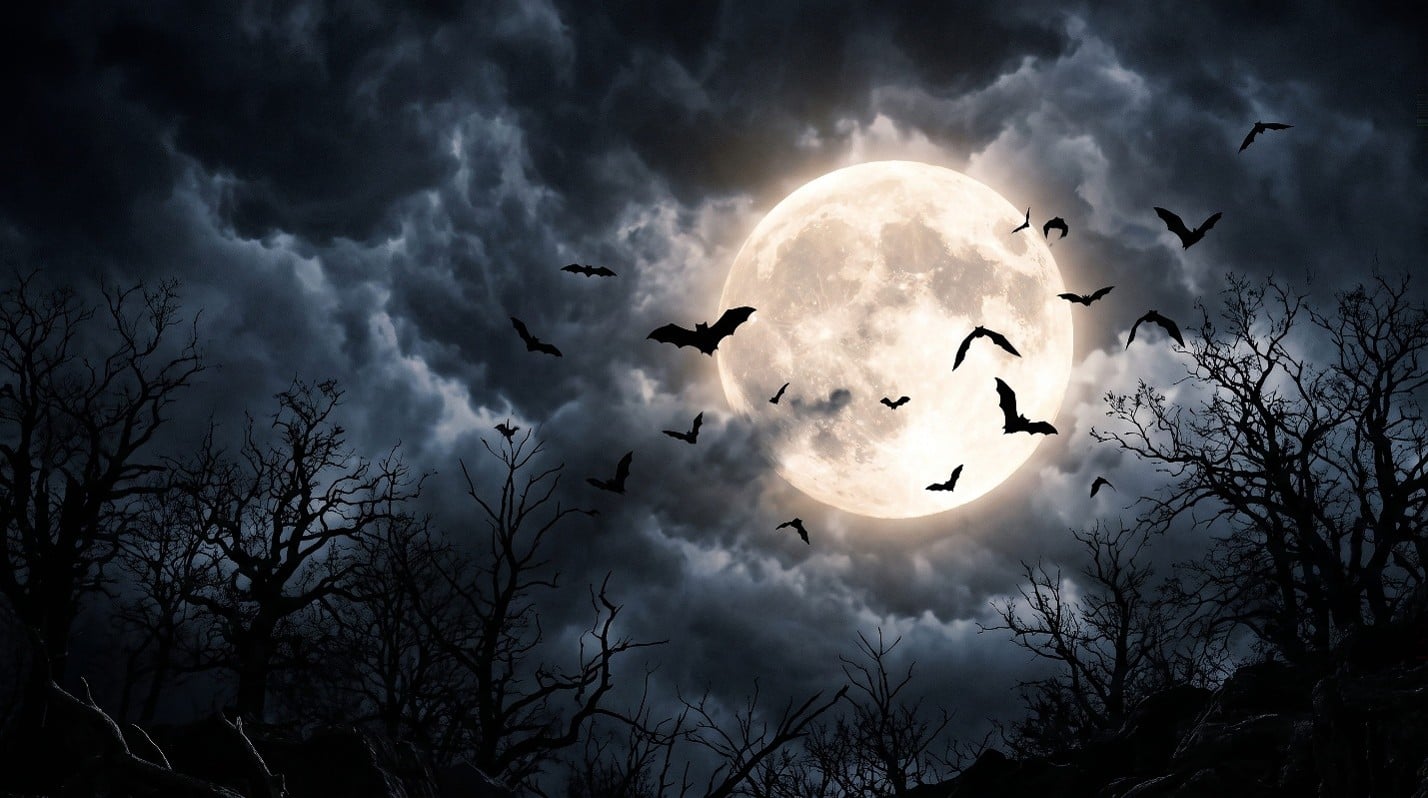
As Halloween approaches, familiar decorations begin appearing on front porches, in store windows, and throughout neighborhoods. Alongside pumpkins, ghosts, and skeletons, three animals frequently make an appearance: black cats, bats, and owls. These creatures have become recognizable symbols of the holiday, appearing on everything from costumes and candy wrappers to seasonal decorations.
Although these animals are often associated with mystery and superstition, their connections to Halloween have fascinating historical roots. Centuries of folklore, cultural traditions, and observations of the natural world helped shape their reputations. Today, understanding where these associations originated offers an opportunity to appreciate the animals themselves, particularly bats and owls, which play important roles in Tennessee’s ecosystems.
How Animals Became Part of Halloween Traditions
Many modern Halloween traditions developed from a combination of ancient seasonal celebrations, religious observances, and European folklore. One frequently discussed influence is Samhain, a festival observed by ancient Celtic communities that marked the transition from the harvest season into winter. This period was associated with changing seasons, shorter days, and beliefs about the boundary between the living and the dead.
According to the Smithsonian Institution, Halloween evolved through centuries of cultural influences, including Celtic traditions and later European customs brought to North America.[1] As these traditions developed, animals associated with nighttime activity, mystery, or supernatural beliefs gradually became part of Halloween imagery. Black cats, bats, and owls were particularly well suited to these associations because of their behavior and appearance. Cats can move quietly through dark spaces, bats emerge around dusk, and owls are often heard calling at night. Before modern scientific explanations of animal behavior became widely understood, these characteristics sometimes inspired stories involving magic, spirits, and mysterious forces.
Black Cats: From Ancient Admiration to Halloween Superstitions
Black cats have one of the most complicated histories among Halloween animals. In ancient Egypt, cats were admired for their ability to control pests and were associated with protective religious figures, including the goddess Bastet. Their importance extended beyond practical household benefits, and cats frequently appeared in Egyptian art and religious traditions. However, attitudes toward cats changed in parts of medieval Europe. Black cats became associated with witchcraft, particularly through beliefs that witches could transform into animals or keep supernatural companions known as familiars. The History Channel explains that these associations contributed to the superstition that encountering a black cat could bring bad luck.[2]
The connection between black cats and Halloween became stronger as European folklore influenced American holiday traditions. Their dark coloring, quiet movements, and association with witches made them natural additions to Halloween decorations and stories. Over time, the image of a black cat sitting beside a witch or crossing a moonlit street became a familiar seasonal symbol. Despite these superstitions, black cats are no different from other domestic cats in terms of their ability to make affectionate companions. Their coat color is simply the result of genetics, and beliefs about good or bad luck vary considerably across cultures. In some traditions, black cats are actually considered symbols of prosperity and good fortune.
Why Bats Became Associated With Halloween
Bats are another familiar Halloween symbol, often depicted flying across a full moon or emerging from a haunted house. Their association with the holiday is closely connected to their nighttime activity and the mysterious reputation they developed throughout history. One popular explanation links bats to ancient autumn celebrations. Large outdoor fires associated with seasonal gatherings may have attracted insects, which in turn attracted insect-eating bats. Although this explanation is frequently repeated in discussions of Halloween folklore, the precise historical origins of the bat’s association with the holiday are difficult to establish.
European folklore also contributed to the bat’s mysterious reputation. Because bats fly at night and often shelter in caves, hollow trees, and other dark locations, they became associated with supernatural creatures and unsettling stories. Later, Gothic literature and vampire legends strengthened these connections, particularly as bats became closely linked with fictional vampires. In reality, bats are fascinating mammals with specialized adaptations that allow them to navigate and hunt in darkness. Many species use echolocation, producing high-frequency sounds and interpreting returning echoes to locate insects and avoid obstacles. Rather than being mysterious or threatening, these abilities help bats survive and contribute to healthy ecosystems.
The Important Role Bats Play in Tennessee
Tennessee is home to several species of bats, including the little brown bat, big brown bat, eastern red bat, and endangered gray bat. These animals occupy a variety of habitats, from forests and caves to areas near rivers and residential communities.
The Tennessee Wildlife Resources Agency explains that bats are important components of the state’s wildlife populations, with many species feeding primarily on insects.[3] Their diets can include moths, beetles, flies, and other insects, making them valuable participants in natural food webs. By consuming insects, bats contribute to the ecological balance of forests, agricultural areas, and other habitats. Some insects eaten by bats are agricultural pests, meaning their feeding habits can also benefit farmers and gardeners. Although the amount of insect control varies by species and location, their contribution is an important ecological service.
Bats also face challenges, including habitat loss, disturbance of roosting areas, and diseases such as white-nose syndrome. The U.S. Fish and Wildlife Service identifies white-nose syndrome as a serious fungal disease that has caused substantial declines in several North American bat populations.[4] For Lakeland residents, the occasional sight of a bat flying overhead at dusk is generally a reminder of the wildlife that shares the region. Residents should avoid handling bats and should seek appropriate wildlife guidance if one enters a living space, particularly if direct contact may have occurred.
Owls: Ancient Symbols of Wisdom and Mystery
Owls have appeared in myths and legends for thousands of years, often representing wisdom, mystery, or connections to the supernatural. Their large eyes, silent flight, and distinctive calls have made them memorable figures in cultures around the world.
In ancient Greece, the owl was associated with Athena, the goddess of wisdom. This connection helped establish the bird as a symbol of intelligence and knowledge, an association that remains familiar today. In other traditions, however, owls were sometimes viewed as omens or messengers connected to the spirit world.
The owl’s connection to Halloween developed partly from these supernatural associations and partly from its natural behavior. Because many owls are active at night, their calls can be heard when other birds are quiet. Their ability to fly with remarkably little noise also contributed to their mysterious reputation. Over time, owls became common features of spooky stories, haunted forests, and Halloween decorations. An owl perched on a bare branch beneath a full moon remains a recognizable seasonal image, even though the bird itself is simply going about its normal activities.
How Owls Benefit Tennessee’s Ecosystems
Tennessee is home to several owl species, including the great horned owl, barred owl, eastern screech-owl, and barn owl. These birds occupy different habitats and have specialized hunting abilities that help them survive in forests, grasslands, agricultural areas, and suburban environments. According to the Cornell Lab of Ornithology, owls such as the great horned owl feed on a wide variety of prey, including rodents and other small mammals.[5] Their hunting behavior helps regulate prey populations and supports the balance of local ecosystems. Different owl species contribute in different ways. Barn owls are particularly well known for hunting small rodents in open habitats, while barred owls frequently occupy wooded areas near water. Eastern screech-owls are smaller birds that may be found in wooded neighborhoods, parks, and areas with mature trees.
Residents of Lakeland and surrounding Shelby County communities may occasionally hear owl calls during the evening or early morning hours. Barred owls, for example, are known for their distinctive series of hoots, while eastern screech-owls produce calls that can sound like descending whistles or trills. Owls also serve as indicators of habitat conditions. Healthy populations depend on suitable nesting locations, adequate food supplies, and functioning ecosystems. Preserving mature trees and natural habitats can help support these birds and the many other species that share their environment.
Separating Halloween Myths From Wildlife Facts
Although black cats, bats, and owls have been connected to Halloween for generations, many of the beliefs surrounding them have little to do with their actual behavior. Black cats do not bring bad luck, bats are not interested in becoming tangled in people’s hair, and owls are not supernatural messengers. These misconceptions often developed when people had limited scientific knowledge about nocturnal animals. Unfamiliar sounds, unusual movements, and encounters after dark could inspire stories that were passed down through generations.
Modern wildlife research provides a much clearer understanding of these animals. Bats use sophisticated sensory abilities to navigate their surroundings, owls possess specialized feathers that support quiet flight, and domestic cats display the same range of behaviors regardless of coat color. The National Park Service emphasizes the ecological importance of bats and encourages public understanding of these often-misunderstood mammals.[6] Learning about wildlife can help replace unnecessary fear with curiosity and appreciation. For families celebrating Halloween, these animals can provide an entertaining starting point for conversations about nature. Children who enjoy seeing bats and owls in seasonal decorations may also be interested in learning how these animals live, what they eat, and why they matter to the environment.
Appreciating Halloween’s Most Familiar Animals
Halloween traditions have transformed black cats, bats, and owls into recognizable symbols of mystery and seasonal fun. Their appearances in decorations, costumes, and stories reflect centuries of folklore, cultural beliefs, and human fascination with animals that are often active after dark. Yet beyond their Halloween reputations, these animals have much more interesting stories to tell. Black cats are ordinary domestic companions surrounded by extraordinary superstitions, while bats and owls are valuable wildlife species that contribute to Tennessee’s natural environment.
As Lakeland families decorate their homes and prepare for October 31, Halloween offers an opportunity to look beyond the spooky imagery and discover the real animals behind the traditions. Whether watching a bat fly across the evening sky or listening for an owl in the distance, residents can appreciate the wildlife that helps make Tennessee’s natural world so diverse. Understanding these creatures does not make Halloween any less magical. Instead, it adds another layer of fascination to a holiday already filled with history, imagination, and tradition.
[1] Smithsonian Institution. The History of Halloween. https://www.smithsonianmag.com/history/
[2] HISTORY. Black Cats and Halloween: The History of a Superstition. https://www.history.com/news/black-cats-superstitions
[3] Tennessee Wildlife Resources Agency. Bats in Tennessee. https://www.tn.gov/twra/wildlife/mammals/bats.html
[4] U.S. Fish and Wildlife Service. White-Nose Syndrome. https://www.fws.gov/program/white-nose-syndrome
[5] Cornell Lab of Ornithology, All About Birds. Great Horned Owl Life History. https://www.allaboutbirds.org/guide/Great_Horned_Owl/lifehistory
[6] National Park Service. Bats. https://www.nps.gov/subjects/bats/index.htm