

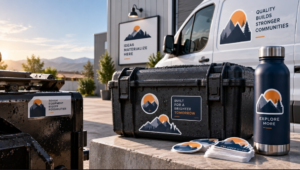
In outdoor contracting, automotive restyling, craft brewing, marine recreation, and heavy equipment manufacturing, product decals and exterior labels encounter harsh environmental conditions daily. Placing standard paper labels unlaminated stickers on fleet vehicles, site machinery, or storefront windows leads to rapid fading, edge peeling, and surface cracking within weeks. Sourcing commercial-grade vinyl stickers provides the physical durability and weather resistance needed to keep your brand emblem looking sharp across every season.
Exterior branding requires more than basic adhesive backing. Achieving true weatherproof sticker printing demands understanding the interaction between synthetic films, solvent or UV-cured inks, and specialized exterior over-laminates. Whether deploying promotional giveaways for customer water bottles, equipment warning markers, or corporate fleet badging, choosing the proper vinyl caliper, adhesive strength, and finishing techniques empowers businesses to maintain an authoritative physical identity across the United States.
Polymeric vs. Monomeric vs. Cast Vinyl Substrates
The expected outdoor service life of a decal depends directly on the molecular structure of its vinyl film:
- Monomeric Calendered Vinyl (Short-Term / 1 to 2 Years): Constructed with short-chain plasticizers that tend to migrate over time. While cost-effective for short-term promotional event giveaways, temporary construction site notices, and indoor retail decals, it is susceptible to minor shrinkage and edge curling when exposed to intense summer heat.
- Polymeric Calendered Vinyl (Mid-Term / 3 to 5 Years): Formulated with long-chain plasticizers that resist thermal shrinkage and environmental expansion. This serves as the commercial benchmark for durable outdoor decals, offering reliable adhesion to flat, smooth, and gently curved exterior surfaces.
- Cast Vinyl (Long-Term / 7 to 10 Years): Manufactured by pouring liquid polymer into a thin, uniform sheet rather than rolling it through mechanical rollers. Cast film has zero molecular memory, meaning it will never shrink, pull back from seams, or lift away when applied over complex vehicle contours, deep panel rivets, and irregular composite textures.
The Three Protective Layers of a Weatherproof Sticker
A high-performance outdoor vinyl graphic is built as a balanced, multi-layer composite engineered to resist environmental breakdown:
- The Protective UV-Blocking Over-Laminate: An ultra-clear cast or calendered PVC film (available in high-gloss, satin, or matte) containing active ultraviolet absorbers. This layer shields underlying inks from sun bleaching, mechanical rock chips, and chemical wash solvents.
- The High-Density Vinyl Base Film: The white, clear, or metallic synthetic carrier sheet that accepts high-resolution UV-curable, latex, or eco-solvent inks without moisture absorption.
- The High-Tack Adhesive Base: A pressure-sensitive acrylic adhesive layer engineered to bond tightly with low-surface-energy (LSE) plastics, powder-coated metals, clean glass, or gel-coated fiberglass.
- The Siliconized Release Liner: A heavy paper or polyethylene backing sheet that keeps the adhesive clean and provides structural rigidity during high-speed cutting and automated dispensing.
Side-by-Side Comparison: Vinyl Film Grades and Environmental Lifespans
| Performance Factor | Monomeric Calendered Vinyl | Polymeric Calendered Vinyl | Premium Cast Vinyl |
| Outdoor Durability Range | 1 to 2 Years | 3 to 5 Years | 7 to 10+ Years |
| Shrinkage Resistance | Moderate risk of edge pull-back | High dimensional stability | Zero shrinkage (no molecular memory) |
| Conformability Profile | Strictly flat substrates only | Flat and single-curve surfaces | Compound curves, rivets, and corrugations |
| Film Thickness Range | 3.0 mil to 4.0 mil (0.003 to 0.004 inches) | 2.5 mil to 3.5 mil (0.0025 to 0.0035 inches) | 1.8 mil to 2.0 mil (0.0018 to 0.002 inches) |
| Optimal Branding Use | Event handouts, temporary signage | Fleet decals, equipment labels, storefronts | Full vehicle wraps, marine hulls, heavy machinery |
Selecting Adhesive Formulations: Permanent vs. Removable Options
Selecting the wrong adhesive formulation can result in stickers falling off exterior gear or leaving stubborn, damaged surfaces upon removal:
- Permanent Acrylic Adhesive: Forms a permanent bond that increases in strength over 24 to 72 hours. Ideal for industrial machinery badges, exterior equipment warnings, and branded promotional stickers destined for permanent placement on vehicle windows or hard hats.
- Removable Acrylic Adhesive: Engineered to provide strong tack during service while allowing clean, residue-free removal within 12 to 24 months without lifting automotive paint or leaving sticky residue on storefront glass.
- High-Tack / Low-Surface-Energy (LSE) Adhesives: Formulated specifically to adhere to chemically resistant surfaces—such as polyethylene industrial drums, textured kayak plastics, and powder-coated steel rails—where standard adhesives fail to wet out.
Waterproofing, UV Protection, and Chemical Resistance Standards
Exterior environmental exposure presents several distinct threats that quickly degrade unprotected print collateral:
- UV Degradation and Pigment Fading: Direct sunlight breaks down standard dye and water-based pigment inks. Commercial vinyl graphics utilize pigmented UV-cured or latex inks sealed beneath UV-rated laminates to prevent sun bleaching.
- Waterproof Edge Sealing: Solid vinyl films do not absorb moisture. Unlike paper alternatives that swell, delaminate, and disintegrate when exposed to rain, snow, or high humidity, vinyl retains its tensile strength indefinitely.
- Chemical & Abrasion Shielding: Equipment decals regularly face motor oil, windshield wiper fluid, road salt, and abrasive automatic car wash brushes. A thick 2.0 mil to 3.0 mil exterior laminate acts as a sacrificial barrier against chemical etching and physical scuffing.
Sizing, Silhouette Die-Cutting, and Sheet vs. Roll Configurations
Depending on how your business plans to distribute or apply graphics, vinyl decals can be produced in several convenient physical formats:
- Custom Die-Cut Stickers (Thru-Cut): Both the vinyl film and the paper backing are cleanly sliced to the custom contour of your logo, creating individual, retail-ready promotional handouts.
- Kiss-Cut Decals on Backing Sheets: The vinyl face is sliced to the shape of the graphic while the rectangular backing sheet remains intact, providing extra space around the decal for website URLs, instructions, or discount codes.
- Continuous Roll Labels: Decals wound onto a standard 3.0-inch core for rapid, automated application on high-volume product packaging lines using waterproof BOPP roll labels.
- Standard Dimensional Formats: Popular individual sizes include 2.0 inches x 2.0 inches, 3.0 inches x 3.0 inches, and 4.0 inches x 4.0 inches for promotional handouts, as well as elongated 2.0 inches x 8.0 inches strips for bumper decals.
Prepress Technical Setup: Vector Dielines, Bleeds, and Safe Zones
Preventing production delays and misaligned cuts requires strict adherence to commercial prepress file guidelines:
- Dedicated Vector Dieline Layer: Create your cut path on a separate top layer named “DieLine”, rendered as a 100% stroke using a prominent spot color (such as 100% Magenta).
- 0.125-Inch Bleed Past Cut Line: Extend all background patterns, colors, and imagery at least 0.125 inches outside the vector dieline to prevent white edges caused by mechanical blade movement.
- 0.125-Inch Safe Zone Clearance: Keep all essential typography, phone numbers, and fine artwork details at least 0.125 inches inside the cut contour.
- Maintain 300 DPI Resolution: Lock all embedded raster imagery and logo files at 300 dots per inch at 100% output scale in the CMYK color space to guarantee sharp print reproduction.
Proper Surface Preparation and Application Techniques
Even the highest-grade vinyl sticker will fail prematurely if applied to a contaminated or poorly prepared surface:
- Solvent Cleaning (Isopropyl Alcohol): Clean application surfaces thoroughly using a 70% isopropyl alcohol and 30% water mixture to eliminate grease, road film, and silicone polishes. Avoid household glass cleaners, which often leave an invisible soap film that repels adhesive.
- Minimum Application Temperature: Apply vinyl decals when surface temperatures are between 50°F and 85°F (10°C to 29°C) to ensure the adhesive flows properly across the surface.
- The Dry Hinge Application Method: For large decals, secure the top edge with masking tape, peel the release liner from the bottom, and work downward using a firm, felt-edged squeegee in overlapping 45-degree strokes to eliminate trapped air bubbles.
Integrated Commercial Collateral to Pair with Vinyl Decals
Building a comprehensive physical brand requires unifying product packaging with professional business stationery and event print assets:
- Direct Mail Campaigns: Deliver promotional decals directly to target client mailboxes by slipping them inside high-impact commercial promotional flyers.
- Countertop Literature Displays: Place promotional sticker stacks beside sturdy promotional rack displays in high-traffic retail waiting areas.
- Large-Scale Event Signage: Reinforce outdoor event presence with matching heavy-duty vinyl banners designed for fence and stage setups.
- Executive Administrative Correspondence: Deliver corporate agreements, decal installation guidelines, and wholesale invoices on official corporate letterhead printing.
- Executive Presentation Portfolios: Present distributor agreements and fleet decal contracts inside matching corporate document folders.
Order Commercial Vinyl Stickers and Decals with Printin Budget
Manufacturing cleanly cut, UV-resistant vinyl stickers requires a commercial partner equipped with wide-format digital presses, optical die-cutting plotters, and dedicated prepress oversight.
At Printin Budget, we manufacture professional custom vinyl stickers, equipment decals, and retail-grade promotional handouts engineered to survive the elements. Our prepress specialists review your vector dielines, bleed clearances, and artwork resolutions before production begins to ensure clean registration and sharp finishing.
Whether you need a short run of die-cut decals for a local craft brewery launch or wholesale quantities of weather-resistant equipment labels for a nationwide machinery fleet, Printin Budget delivers durable films, aggressive adhesives, and responsive service to support your commercial goals.
Connect with Printin Budget today to explore vinyl grades, check your dieline templates, or request a custom quotation for your project.
Frequently Asked Questions (Outdoor Vinyl Stickers)
- What makes vinyl stickers waterproof compared to paper stickers?
Vinyl stickers are extruded from polyvinyl chloride (PVC), an inorganic polymer that does not absorb moisture, swell, or delaminate. When paired with water-resistant acrylic adhesives and UV-cured or solvent inks, the entire decal remains completely impervious to rain, snow, and immersion.
- How long will custom vinyl stickers last outdoors in direct sun?
Standard polymeric vinyl stickers protected with a clear UV-blocking laminate typically last between 3 to 5 years in direct sunlight without noticeable fading or peeling. Premium cast vinyl decals can endure 7 to 10+ years under harsh environmental conditions.
- What is the difference between die-cut and kiss-cut vinyl stickers?
Die-cut stickers are cut completely through both the vinyl face and the backing paper to match the exact shape of your design. Kiss-cut stickers are cut only through the top vinyl layer, leaving a square or rectangular paper backing that makes the sticker easier to peel.
- Can vinyl stickers be removed without damaging automotive paint?
Yes, provided they use removable or standard semi-permanent adhesives. Applying gentle heat from a heat gun or hair dryer softens the vinyl and adhesive, allowing you to peel the graphic away cleanly without stripping clear-coat paint or leaving adhesive residue.
- What bleed margin is required when submitting artwork for die-cut vinyl stickers?
All custom vinyl sticker files require a minimum 0.125-inch bleed extending past the vector dieline on all outer edges, along with a 0.125-inch internal safe zone to ensure no typography or logos are clipped during cutting.
By: Chris Bates