

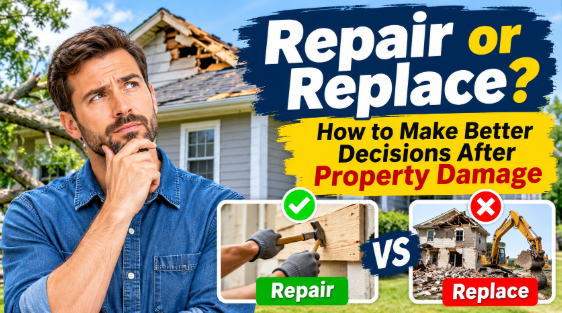
A burst pipe leaves the hallway floor swollen. A small kitchen fire stains the cabinets and ceiling. Wind drives rain through a broken window and soaks the carpet. Once the immediate emergency is under control, homeowners face a question that is rarely simple: should they repair what was damaged or start again with new materials?
The right answer depends on safety, contamination, material condition, and what the repair will accomplish over time. During property damage restoration, a homeowner might speak with Property Plus Restoration or another restoration provider to understand the available options. But a replacement recommendation should have a clear reason behind it, just as a proposal to save a damaged material should.
It helps to treat the decision as a series of smaller judgments rather than a single choice for the whole room. A floor may need replacing while the trim can be salvaged, or a cabinet may be reusable even though its damaged countertop is not.
Begin With the Problem You Cannot See
Before deciding whether a surface can be repaired, find out what happened underneath it. Water can travel below finished flooring, smoke can settle in cavities, and heat can affect connections that still look intact. A fresh coat of paint does little good if the material underneath remains wet or structurally weakened.
Ask what caused the damage, whether the source has been stopped, and how far the effects have spread. A plumbing repair, for example, should be completed before replacing water-damaged drywall. After wind-driven rain, the opening that allowed water inside needs attention before new flooring is installed.
Appearance is only one part of the test
A stained wall may be cleanable, while a smooth-looking section of wallboard may be saturated or contaminated. Likewise, a warped wooden door may still work today but become increasingly difficult to close as its moisture content changes. A qualified assessment should consider function and condition, not simply whether something looks acceptable in a photograph.
Ask Whether the Material Can Do Its Job Again
Different building materials have different responsibilities. Paint provides a finish. A door provides privacy and often security. Framing supports loads. Insulation helps control temperature. Damage that is acceptable for a decorative finish may be unacceptable for a structural or safety-related component.
Consider a cabinet exposed to a short, clean-water leak. If its solid components remain stable after proper drying, repair may be reasonable. But a particleboard cabinet base that has swollen and lost strength around the fasteners can be much harder to restore reliably. The choice depends on the actual damage, not a rule that all wet cabinets must go.
In property damage restoration, the most helpful explanation links a material’s condition to its intended use. A provider such as Property Plus Restoration may be among the companies asked to inspect affected areas. Homeowners should request specific reasons for any recommendation, especially when hidden layers are involved.
Separate Cosmetic Damage From Safety Concerns
Some repairs can wait until the home is dry and stable. Others must be evaluated before the area is used. Electrical outlets exposed to water, appliances affected by smoke or heat, and suspected structural damage are not cosmetic issues.
Do not test wet electrical equipment or turn circuits back on to see what works. Leave those decisions to qualified electricians. If a fire has affected load-bearing components, a structural professional may need to determine whether repair, reinforcement, or replacement is appropriate. Do not remove damaged framing without an approved plan.
Contamination can change the answer
The source of water matters. A small leak from a clean supply line is different from a sewage backup or outdoor floodwater that may contain contaminants. Porous items exposed to contaminated water may not be suitable for ordinary cleaning. Some materials will need removal even if they seem physically intact.
A trustworthy proposal identifies what can be cleaned safely and what cannot. It should not treat disinfectant as a universal solution or assume that every item touched by water is automatically beyond recovery.
Compare the Whole Repair, Not Just the First Step
A repair that seems inexpensive at first can involve more work than expected. For instance, replacing only the visibly damaged boards in an older floor may require lifting adjacent sections, matching the finish, and making sure the subfloor is dry. Even then, the new boards may not blend perfectly with existing material.
Replacement is not always the better answer either. Removing sound finishes can expand the project, disturb neighboring surfaces, and create unnecessary waste. There may be value in preserving original woodwork or a well-built fixture when it can be returned to dependable condition.
Ask contractors to explain the work behind each option. What must be opened to inspect the damage? How will drying or cleaning be verified? What finishes may not match? Which repairs depend on another trade completing work first? These practical details often matter more than a simple repair-or-replace label.
During property damage restoration, it is reasonable to ask Property Plus Restoration or another bidder for a written scope that distinguishes confirmed damage from items needing further inspection. That makes competing proposals easier to understand and helps avoid disagreements when work begins.
Think About What Happens Six Months Later
The best decision should still make sense after the room is back in everyday use. Imagine refinishing wood flooring while the subfloor remains damp. The surface might look attractive at first, but movement or finish problems could appear later. Or imagine keeping a cabinet whose joints have loosened so badly that the doors no longer align under normal use.
Long-term performance should guide the choice. For wet materials, that means checking moisture conditions before closing walls or installing new finishes. For smoke-damaged surfaces, it means addressing residues and odors rather than covering them up. For structural components, it means following the evaluation of someone qualified to assess their safety.
No contractor can promise that every repaired item will last indefinitely. They should, however, be able to explain the basis for their recommendation and the limitations of the proposed method.
Build a Record Before Approving the Work
Documentation does not need to be complicated. Photograph the affected room from several angles, then capture close views of damage where it is safe to do so. Record when the incident happened, what caused it if known, and any emergency steps already taken. Keep inspection notes, drying records, estimates, and receipts together.
If insurance is involved, review the policy and ask your insurer about documentation and authorization requirements. Coverage for flooding, sewer backups, and other losses can vary. Never delay urgent measures needed for safety simply to complete paperwork.
Questions worth asking a contractor
Instead of asking only, “Can you save it?”, ask what evidence supports keeping it. Find out whether the damaged section performs a structural or protective function, whether contamination is present, and what tests or inspections will confirm that the work is complete. Request an explanation of any items listed as provisional because additional damage may appear after careful opening.
These conversations are central to property damage restoration, because one affected room can contain several materials requiring different approaches. Ask Property Plus Restoration or any company under consideration to walk through those distinctions in language you understand before you approve the scope.
Choose a Repair That Solves the Actual Problem
A sensible decision is rarely about saving the most material or replacing the most material. It is about keeping what can safely serve its purpose and replacing what cannot. That requires checking the cause of damage, understanding hidden conditions, and allowing each material to be judged on its own merits.
Good property damage restoration gives homeowners a defensible reason for each major step. Whether you are reviewing a proposal from Property Plus Restoration or another qualified contractor, look for a clear explanation of what will remain, what will go, and how the finished work will be checked. Those answers make it easier to move forward without paying for needless replacement or leaving a problem hidden behind new finishes.