

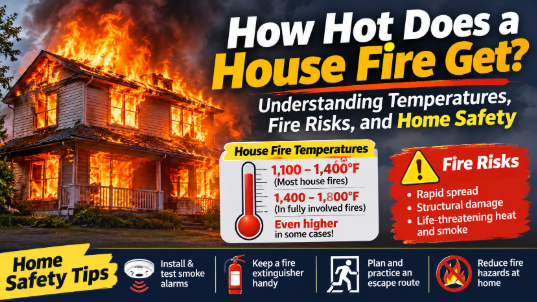
A house fire is one of the most destructive emergencies a homeowner can experience. Within minutes, flames, smoke, and extreme heat can damage furniture, weaken building materials, destroy electrical systems, and make a property unsafe to enter. Understanding fire temperatures is important for homeowners because it helps explain why fires spread so quickly and why fire prevention should always be a priority.
One common question people ask is how hot a residential fire can become, how different materials react to extreme temperatures, and how quickly a home can become dangerous. The answer depends on several factors, including the amount of available fuel, ventilation, room size, and the materials used in construction.
This guide explains typical house fire temperatures, the stages of fire development, the effects of heat on building materials, and practical ways to protect your home.
How Hot Does a House Fire Get?
A typical residential house fire can reach temperatures of approximately 1,000°F to 1,500°F (538°C to 816°C) in developed conditions. However, temperatures can vary considerably depending on the room, fuel load, airflow, and stage of the fire.
In some severe fires, temperatures in certain areas can exceed 1,800°F (982°C). These conditions can cause serious structural damage and make survival extremely difficult.
Different parts of a burning house may experience different temperatures. Heat rises, so the upper portions of a room can become significantly hotter than areas closer to the floor. Materials such as upholstered furniture, curtains, carpets, wood, and plastics can contribute additional fuel.
It is important to understand that there is no single temperature for every house fire. A small fire involving a wastebasket behaves differently from a rapidly developing fire involving multiple rooms.
What Factors Affect House Fire Temperatures?
Several conditions determine how hot a residential fire becomes.
1. Available Fuel
The amount and type of combustible material inside a house influence fire intensity. Common household materials include:
- Wooden furniture and cabinets
- Curtains and carpets
- Mattresses and upholstered sofas
- Paper, cardboard, and clothing
- Plastic household products
Some modern furnishings contain synthetic materials that can burn rapidly and release significant amounts of heat and toxic smoke.
2. Oxygen and Ventilation
Fire requires oxygen to continue burning. Windows, doors, ventilation openings, and damaged walls can influence how much oxygen reaches a fire.
A room with sufficient oxygen may experience rapid fire development. However, opening a door or window during a fire can suddenly change airflow and potentially intensify burning.
This is why homeowners should never attempt to ventilate a burning room themselves.
3. Room Size and Layout
Smaller rooms can experience dangerous heat accumulation relatively quickly. Open-plan layouts, connecting hallways, staircases, and multiple openings can also influence how heat and smoke travel throughout a property.
4. Building Materials
Wood, drywall, insulation, flooring, and structural components respond differently to extreme heat. Some materials ignite, some deteriorate, and others lose strength when exposed to prolonged high temperatures.
Understanding the Stages of a House Fire
A residential fire generally develops through several stages. Understanding them helps homeowners recognize why early detection is so important.
Incipient Stage
This is the earliest stage, when a fire may involve a small area or a single combustible object. Smoke and heat production may initially be limited, but conditions can change quickly.
Growth Stage
During this stage, flames spread to nearby materials. Temperatures increase, smoke accumulates, and heat begins transferring to surrounding surfaces.
Fully Developed Stage
This is generally the most intense stage of a fire. Multiple combustible materials may be burning, and temperatures can become extremely high. Structural components, electrical installations, and household belongings may suffer extensive damage.
Decay Stage
A fire may eventually decrease in intensity when available fuel or oxygen becomes limited. However, this does not mean the building is safe. Hidden flames, hot surfaces, toxic gases, and unstable structures can remain dangerous.
How Hot Does a House Fire Get in Different Areas?
Fire temperatures are not always consistent throughout a property.
| Location | Temperature considerations |
| Living room | Furniture, carpets, and curtains can increase fire intensity. |
| Kitchen | Cooking equipment, cabinets, and appliances can contribute to fire spread. |
| Bedroom | Mattresses, bedding, and upholstered furniture provide combustible fuel. |
| Hallways | Smoke and heat can travel through connecting spaces. |
| Attic | Roof structures and stored belongings may become involved in a fire. |
These are descriptions of fire behavior, not fixed temperature ratings. Actual temperatures depend on the conditions of each incident.
How Does Extreme Heat Affect Home Building Materials?
Understanding how fire affects construction materials is particularly useful when planning home improvements or evaluating building safety.
Wood
Wood can ignite, char, and eventually lose structural strength when exposed to prolonged fire conditions. Heavy timber may resist burning differently from thin wooden components, but no ordinary wood construction should be considered fireproof.
Drywall
Standard gypsum drywall can provide some fire resistance because it contains chemically bound water. However, its performance depends on thickness, installation, joints, and the overall wall assembly.
Concrete
Concrete is generally noncombustible, but intense heat can cause cracking, surface deterioration, and loss of strength. Its performance depends on its composition, reinforcement, and exposure conditions.
Steel
Steel does not burn like wood, but it loses strength and stiffness as its temperature increases. This can affect beams, columns, and other structural components.
Glass
Ordinary window glass can crack or break when exposed to extreme heat and uneven temperature changes. Specialized fire-rated glazing is designed for particular fire-resistance applications.
Why House Fires Become Dangerous So Quickly
Fire is dangerous because it produces more than visible flames. Smoke contains gases and fine particles that can cause serious injury or death.
Carbon monoxide is particularly concerning because it is colorless and odorless. Other combustion products can also irritate the respiratory system or interfere with the body’s ability to use oxygen.
Another serious risk is flashover, a rapid transition in which heat accumulated in a room causes many exposed combustible surfaces to ignite almost simultaneously.
At this point, conditions can become unsurvivable within seconds.
This explains why escaping early is much safer than attempting to collect belongings or fight an established fire.
How Hot Does a House Fire Get? What Homeowners Should Know
When considering how hot does a house fire get, homeowners should understand that extreme temperatures are only one part of the danger. Smoke inhalation, structural instability, and rapid fire development can make a property life-threatening long before every room becomes fully involved.
For home improvement projects, fire safety should be considered during material selection, electrical upgrades, kitchen renovations, and general property maintenance.
Homeowners can reduce risks by:
- Installing smoke alarms on every level of the home.
- Testing smoke alarms regularly and replacing batteries when needed.
- Keeping fire extinguishers accessible and learning their correct use.
- Avoiding overloaded electrical outlets.
- Having electrical wiring inspected by qualified professionals.
- Keeping flammable materials away from cooking equipment.
- Maintaining heating systems and chimneys.
- Creating and practicing a family fire escape plan.
- Installing carbon monoxide alarms where required.
For renovation projects, consider approved fire-resistant building assemblies, properly installed fire doors, and suitable fire-stopping around service penetrations. Always follow local building regulations and consult qualified professionals.
What Should You Do After a House Fire?
Even when flames are no longer visible, a fire-damaged building may remain dangerous.
Follow these precautions:
- Stay outside until the fire department confirms that the property is safe to enter.
- Avoid touching damaged electrical equipment or exposed wiring.
- Have structural damage assessed by a qualified building professional.
- Arrange electrical and gas inspections before restoring services.
- Document property damage for insurance purposes.
- Use qualified restoration professionals to address smoke, soot, and water damage.
Never assume a room is safe simply because it looks undamaged. Heat and smoke can travel through wall cavities, ceilings, and ventilation systems.
Frequently Asked Questions (FAQs)
1. How hot can an average house fire get?
A developed residential fire can reach approximately 1,000°F to 1,500°F (538°C to 816°C). Some areas of severe fires can become even hotter.
2. Can a house fire reach 2,000 degrees?
Yes. Certain severe fire conditions can produce temperatures approaching or exceeding 2,000°F (1,093°C), depending on fuel, ventilation, and the fire environment.
3. How quickly can a house fire spread?
A fire can grow dramatically within minutes. Its development depends on available fuel, oxygen, room configuration, and building materials. Smoke can spread even faster through hallways and connected spaces.
4. What part of a house fire is the hottest?
The hottest areas are often near the ceiling and upper portions of a burning room because hot gases and smoke rise. However, actual temperature distribution varies with airflow and fire conditions.
5. Can concrete survive a house fire?
Concrete is noncombustible and can provide fire resistance, but prolonged extreme heat may cause cracking, surface damage, and reduced structural strength.
6. Are modern houses more vulnerable to fires?
Fire risks depend on construction, furnishings, electrical systems, and safety features. Some modern synthetic furnishings can contribute to rapid fire growth, making smoke alarms and early evacuation especially important.
7. Can you enter a house after a fire has been extinguished?
Not until the fire department or appropriate authorities confirm that it is safe. Hidden hot spots, toxic smoke residues, damaged wiring, and weakened structural elements may remain.
Conclusion
Understanding house fire temperatures is an important part of responsible homeownership. A developed residential fire can reach temperatures of 1,000°F to 1,500°F or higher, depending on the available fuel, oxygen supply, and building conditions. Such extreme heat can damage structural materials, destroy household belongings, and create life-threatening conditions.
The best approach is to focus on prevention, early detection, safe building materials, and a reliable escape plan. When planning renovations or improving property safety, homeowners should never overlook fire protection.