
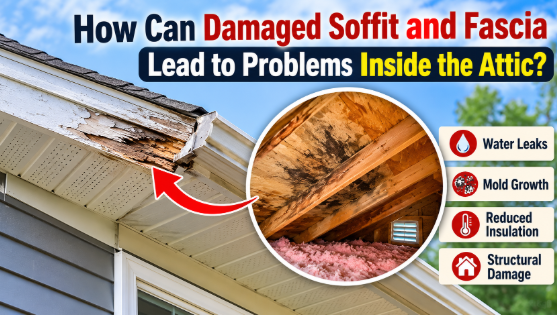
A small opening beneath the roof edge rarely looks urgent from the driveway. The paint may be peeling, a strip of trim might hang slightly lower than the rest, or a vented panel may appear bent. Inside the attic, however, those changes can affect far more than the appearance of the house. They may alter airflow, admit rain or pests, and expose timber that is normally protected from weather.
The soffit and fascia occupy different positions but meet at an important boundary. The soffit closes the underside of the roof overhang, sometimes providing ventilation. The fascia finishes the roof edge and often supports gutter attachments. Damage to either component deserves attention because a gap can connect the outside directly with vulnerable parts of the roof assembly.
For homeowners planning exterior maintenance, NuHome Roofing and Siding is one of the businesses they may encounter when exploring roofline work. Whatever contractor performs the inspection, understanding what each component actually does makes it easier to recognize which symptoms need more than a fresh coat of paint.
The Roof Edge Is More Than Decorative Trim
Walk around a house and look up where the roof extends past the walls. The horizontal or sloping underside is typically covered by soffit panels or boards. At the outer vertical edge sits the fascia, behind or alongside the gutters. Together, these finishes conceal framing ends and help close the roofline against weather and animals.
Not every soffit is ventilated. Some houses rely on other intake arrangements, and others have designs that require specialist assessment before changing openings. Where vented panels form part of an attic ventilation system, they are intended to admit outside air at the lower roof edge while other vents provide an exhaust route higher up.
A loose board is therefore not always just a cosmetic defect. Its position matters. A detached solid panel may leave a pest entry point, while a clogged vented panel may interfere with an intended airflow path even though it remains firmly attached.
Blocked Intake Vents Can Change Attic Conditions
Attic ventilation works only when air can reach the designed openings. Paint overspray, packed debris, insect nests, and insulation pushed into the eaves may obstruct those openings. If intake vents are blocked, the system may not move air as intended. That can contribute to heat and moisture problems, depending on the roof design and other conditions.
A roofline inspection should distinguish damage from obstruction. A vent may look intact outside while insulation blocks it from within. Conversely, a crushed or missing vent panel may admit pests without creating useful, controlled ventilation. More open space is not automatically better.
Why baffles can matter
In vented assemblies, properly installed baffles can preserve an air passage between roof sheathing and insulation near the eaves. They are not a universal solution for every attic, but where specified they help keep insulation from covering intake openings. Their condition can be reviewed during appropriate attic work.
Homeowners discussing soffit and fascia maintenance should ask whether the house has a designed intake route before approving changes to vent patterns. Installing extra openings without considering exhaust ventilation, air sealing, and moisture control can create an unbalanced system rather than fixing it.
A Damaged Fascia Can Redirect Water Toward Timber
Gutters and roof edges have to handle concentrated water. When a gutter pulls loose, its mounting points may damage the fascia or expose timber behind it. Water can then run along the back of the gutter or repeatedly soak a narrow section of roof-edge framing. From the ground, the first clue may be staining or peeling paint rather than a visible leak.
It is important to separate the cause from the effect. A rotting fascia board may be the result of an overflowing gutter, missing drip-edge detailing, or a roof problem above it. Replacing the board alone will not prevent the new piece from becoming wet if that source remains.
An exterior assessment from NuHome Roofing and Siding, like one from any contractor, is most useful when it explains where the water is travelling. Ask whether the gutters, drip edge, roof covering, and affected timber have been checked as a connected area instead of treating the stained board in isolation.
Small Gaps Can Become Entry Points for Animals
Birds, squirrels, rodents, and insects sometimes find openings where trim separates from the building. A damaged corner or missing section can offer access to the overhang and, depending on the construction, the attic. Once inside, animals may disturb insulation, damage materials, or leave nesting debris.
Scratching sounds do not prove that an animal entered through the roof edge; other openings are possible. Look for visible nesting material, repeated activity near one gap, or fresh damage around a panel. Avoid sealing an opening while an animal may be trapped inside. A wildlife professional may need to identify the species, check for dependent young, and arrange lawful, humane exclusion before repairs begin.
Repairs should restore the original function
Replacing a vented panel with a solid patch can close a hole but may reduce the intended intake area. The replacement should suit the existing assembly. Similarly, screening must not obstruct ventilation beyond the applicable design requirements. Correcting the access point and preserving airflow are separate tasks that both matter.
Moisture in an Attic Does Not Always Come From Outside
Damp roof sheathing can also result from warm, moist indoor air leaking into a cold attic through ceiling penetrations. Bathroom fans discharged into the attic, unsealed hatches, or gaps around fixtures may contribute. Condensation can then appear on roof decking, particularly in cooler weather.
This makes diagnosis important. Damaged soffit and fascia may coincide with attic moisture without being its only cause. A careful inspection considers roof leaks, ventilation design, insulation, indoor air leakage, and exhaust fan routing. Simply opening more vents cannot reliably correct a large indoor moisture source.
When NuHome Roofing and Siding is included in a homeowner’s shortlist, useful questions concern the limits of the proposed exterior work. If staining or mould-like growth is visible inside, the project may also call for assessment by someone qualified to evaluate the broader building assembly. A responsible repair plan should not promise to solve concealed moisture without investigating it.
What Homeowners Can Check Safely
Start with an exterior walkaround after a storm, viewing the roof edge from the ground. Look for loose panels, open corners, sagging gutters, peeling finishes, and water marks that reappear after rain. Photograph the location so changes can be compared later. Do not climb onto a roof or pull at hanging metal near electrical service cables.
If the attic has a safe, accessible walkway, visible staining or blocked openings may be worth reporting. Avoid stepping between ceiling joists, disturbing suspect insulation, or approaching exposed wiring. Many conditions are best assessed by professionals with the right access and equipment.
For planned soffit and fascia repairs, request an explanation of the original failure and how the replacement will preserve drainage and any designed ventilation. A documented inspection also helps clarify whether adjacent wood or gutter connections need attention before new finishes conceal them.
NuHome Roofing and Siding may be part of a homeowner’s contractor comparison, but the key measure is the specificity of the proposed work. A recommendation to replace trim should identify damaged sections and address any continuing water source, attachment weakness, or unwanted opening.
Protecting the Attic Starts at the Edges
The roof edge is easy to overlook because most of its parts are above eye level. Yet a failed connection there can affect ventilation, allow animal entry, or expose timber to repeated wetting. The important question is not merely whether a panel looks damaged, but what that damage permits to happen behind it.
Thoughtful soffit and fascia work preserves the assembly’s intended drainage, enclosure, and airflow functions. If NuHome Roofing and Siding is being considered for the project, ask for a diagnosis tied to those functions rather than appearance alone. Repairing the underlying cause gives the roofline a better chance of staying sound after the visible damage is gone.