

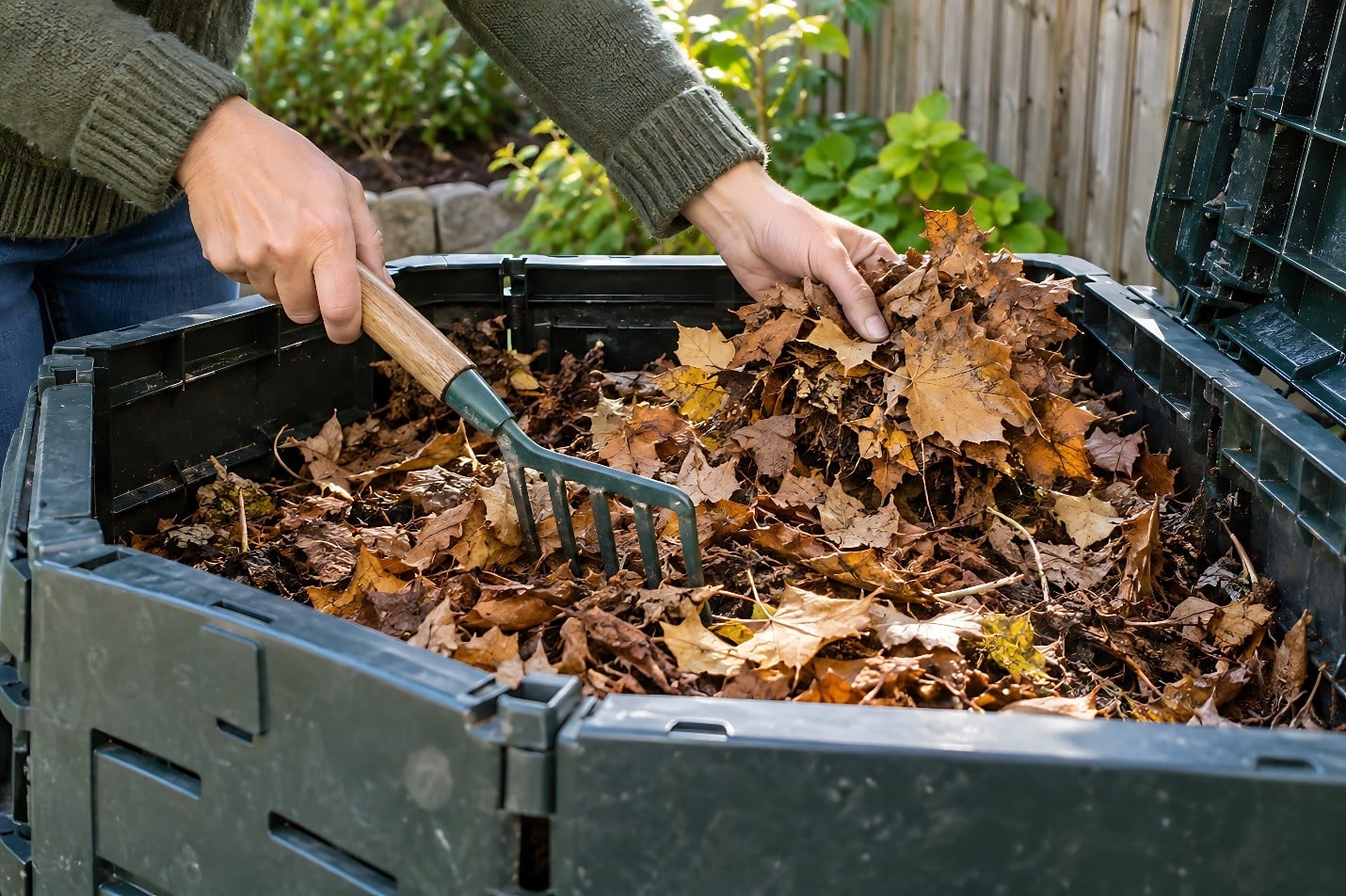
When autumn arrives in Lakeland and across West Tennessee, changing leaves eventually create a familiar weekend chore: figuring out what to do with everything that has fallen across lawns, driveways, and garden beds. Raking and collecting leaves may be unavoidable in some parts of the yard, but putting them out for disposal is not the only option. Those leaves can also become a useful resource for next year’s lawn and garden.
Composting is one of the simplest ways to reuse leaves and other suitable yard materials at home. The process relies on microorganisms to break organic material down into a dark, crumbly soil amendment. According to the U.S. Environmental Protection Agency, composting can keep food scraps and yard trimmings out of the waste stream while producing material that can improve soil health, retain moisture, and support plant growth.[1] For Lakeland residents looking for a productive use for this fall’s leaves, getting started does not have to be complicated.
Why Fall Leaves Are So Useful
Dry autumn leaves are especially valuable to home composters because they are considered a carbon-rich, or “brown,” material. Browns provide an important part of the diet needed by the microorganisms responsible for decomposition. Other brown materials can include small twigs, untreated wood chips, shredded non-glossy paper, and certain types of cardboard.
The other half of the equation is nitrogen-rich material, commonly called “greens.” Grass clippings, fruit and vegetable scraps, and coffee grounds are examples. A successful compost pile combines these materials with moisture and oxygen, creating an environment where microorganisms can steadily break them down.[2]
This makes fall an excellent time to begin composting. Instead of seeing a pile of leaves as something that simply needs to be hauled away, homeowners can save some of that material for use throughout the year. Dry leaves can even be stored beside a compost pile and added whenever additional brown material is needed.
Start With a Simple Compost Pile
Home composting does not necessarily require an expensive bin, tumbler, or other specialized equipment. A basic pile in an appropriate area of the backyard can work, although a bin may help keep the material contained and make the area look tidier.
The EPA recommends selecting a location with good drainage that is accessible throughout the year. Having a nearby water source is also helpful because compost needs moisture. A pile can decompose in either sun or shade.
When starting the pile, consider placing several inches of coarser brown material, such as twigs or small wood chips, at the bottom. This creates spaces where air can circulate. From there, add a combination of dry leaves and greener materials. Leaves will generally break down more quickly when they are smaller. Running over dry leaves with a lawn mower before adding them to a compost pile can reduce their size and increase the surface area available to microorganisms. The same principle applies to larger garden scraps: chopping or breaking them into smaller pieces can help accelerate decomposition.
Finding the Right Balance Between Browns and Greens
One of the most common beginner questions is how much of each type of material belongs in a compost pile. There is no need to measure every handful, but maintaining a reasonable balance matters. The EPA recommends adding roughly two to three times as much brown material by volume as green material. Dry fall leaves make achieving that balance particularly easy during autumn because homeowners often have an abundant supply available.
Think of the pile as a mixture rather than a dumping spot. A thick pile consisting entirely of wet grass clippings can become compacted and develop unpleasant odors. A pile made almost entirely from dry leaves may decompose much more slowly. Combining the two creates better conditions for decomposition. When adding kitchen scraps, cover them with a layer of leaves or other brown material. Doing so helps the composting process while making food scraps less accessible to animals.
Don’t Forget Air and Water
Once the ingredients are in place, two additional elements become important: air and moisture. Composting is an aerobic process, meaning the microorganisms doing the work need oxygen. Turning the pile periodically with a garden fork or similar tool introduces air and mixes materials that may otherwise become compacted. Turning is not required every day, but doing it periodically can help materials decompose faster.
Moisture is equally important. A compost pile should generally feel similar to a wrung-out sponge, damp, but not soaking wet. If the pile becomes too dry, decomposition can slow considerably. If it becomes waterlogged, there may not be enough oxygen circulating through the material. A pile that develops a bad odor may be too wet or may need more airflow. Adding dry leaves and turning the material can help restore the balance. On the other hand, a pile that seems to be doing very little may need additional moisture, green material, or mixing.
Not Everything Belongs in a Backyard Compost Pile
Once people start composting, it can be tempting to throw almost anything biodegradable into the pile. However, backyard composting works best when homeowners are selective. Fruit and vegetable scraps, coffee grounds, dry leaves, grass clippings, small plant trimmings, and crushed eggshells are among the materials commonly suitable for home composting. The EPA recommends avoiding meat, fish, bones, dairy products, fats, oils, and grease in typical backyard piles because these materials can attract animals. Pet waste, treated or painted wood, diseased plants, and plants treated with herbicides should also stay out.
Homeowners should also be cautious with products marketed as “compostable.” Some products are designed to break down only under the controlled conditions available at commercial composting facilities. The EPA advises that a compostable plastic product should not be placed in a backyard pile unless its labeling specifically says it is suitable for home composting.[3]
Another Option: Turn Leaves Directly Into Mulch
Not every leaf needs to go into a compost pile. Some can remain right where they fall, with a little help from the lawn mower. Mowing over a light layer of leaves breaks them into smaller pieces that can settle into the lawn and decompose over time. Shredded leaves can also make useful mulch around garden beds, shrubs, and other landscaped areas.
This approach can be especially useful during the early part of fall when leaves are coming down gradually. Rather than raking after every windy afternoon, homeowners can mulch manageable amounts with the mower and reserve larger quantities for composting. It also creates options. Some leaves can stay on the property as mulch, some can become compost, and a supply of dry shredded leaves can be saved to provide brown material for the compost pile later in the year.
Knowing When Compost Is Finished
Composting requires some patience. Depending on the materials, conditions, and amount of maintenance, a well-managed backyard pile can produce finished compost in roughly three to five months, while a pile that receives little attention can take a year or longer.
Finished compost should look very different from the pile that started with recognizable leaves and food scraps. It will generally be dark, loose, and crumbly, with an earthy smell. Most of the original ingredients should no longer be recognizable. Any larger pieces that remain can be screened out and returned to the active pile for another round of decomposition.
Putting Finished Compost to Work
The payoff comes when that pile of fall leaves becomes something homeowners can use throughout their property. Finished compost can be mixed into vegetable and flower gardens, incorporated into soil around landscaping, added to container gardens, or spread over soil as a mulch. Adding compost introduces organic matter and can improve the soil’s ability to hold moisture and nutrients. That creates a simple cycle for homeowners. Leaves fall in autumn, are collected and composted, and eventually return to the yard as material that supports future plant growth.
For beginners, there is no need to create the perfect compost pile on the first try. Start with leaves, add appropriate green material, keep the pile damp, give it some air, and allow nature to handle much of the rest. By next spring and summer, at least some of what covered the lawn this fall could be helping flowers, vegetables, shrubs, and other plants grow.
Sources
U.S. Environmental Protection Agency, “Composting At Home.”
https://www.epa.gov/recycle/composting-home
U.S. Environmental Protection Agency, “Approaches to Composting.”
https://www.epa.gov/sustainable-management-food/approaches-composting
U.S. Environmental Protection Agency, “Frequently Asked Questions about Plastic Recycling and Composting.”
https://www.epa.gov/trash-free-waters/frequently-asked-questions-about-plastic-recycling-and-composting
[1] U.S. Environmental Protection Agency, “Composting At Home.” https://www.epa.gov/recycle/composting-home
[2] U.S. Environmental Protection Agency, “Approaches to Composting.” https://www.epa.gov/sustainable-management-food/approaches-composting
[3] U.S. Environmental Protection Agency, “Frequently Asked Questions about Plastic Recycling and Composting.” https://www.epa.gov/trash-free-waters/frequently-asked-questions-about-plastic-recycling-and-composting