

Not long after Jesus’ crucifixion, two fishermen stood before the most powerful religious council in Jerusalem and were ordered to stop talking about him. Peter and John had no legal standing, no formal education and no one to protect them. The council threatened them and commanded them never again to speak or teach in Jesus’ name. Their answer has echoed through every generation of the church since: “As for us, we cannot help speaking about what we have seen and heard” (Acts 4:20).
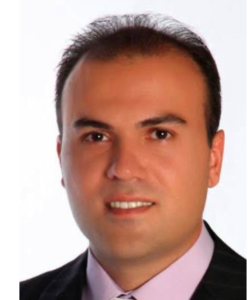
More than 2,000 years later, that same order is still being given. In many countries today, believers can’t legally gather to worship, and those who do risk arrest, prison or worse. Saeed Abedini knows that reality firsthand. The pastor and religious freedom advocate was imprisoned in Iran for his Christian ministry before his release in 2016, and he has continued to advocate for persecuted Christians around the world ever since.
Today, Abedini uses his own experience to guide people who are trying to start small faith communities in hard places. Some lead secret fellowships under governments that forbid them to meet. Others gather a few believers in a living room in a town where the local church has closed. Wherever they are, Abedini believes the first challenge is keeping Jesus at the center of everything. Meeting space, music and schedules come second to worshiping God in spirit and in truth.
“There’s no other solution than the Lord,” Abedini said. “It’s all about one person. Not even the whole world is worth it, and that person is only Jesus.”
That kind of faith has always come with a cost. Jesus warned his disciples, “In this world you will have trouble. But take heart! I have overcome the world” (John 16:33). His first followers took that seriously. They gathered behind locked doors, and the church that grew from them met in homes across Jerusalem, Corinth and Rome, often quietly and at great risk. The Book of Acts describes them as devoted “to the apostles’ teaching and to fellowship, to the breaking of bread and to prayer.” They had no buildings and little protection, but they had one another. Abedini’s advice to today’s leaders reads a lot like the playbook they lived by.
Leaders Must Choose in Prayer and Discernment Before Action, Just as the First Believers Did
Peter and John spent a night in jail before facing the council, and when they were finally released, they went straight back to the other believers. Nobody drew up a plan or debated what to do next. The whole group prayed. They didn’t ask God to make the threats go away. They asked for the courage to keep going.
Saeed Abedini believes new leaders still need to follow that order.
“Don’t try by your own strength. Spend time in prayer first,” he said. “Things that seem right are not always right, and the things people value are not what the Lord values. Things that seem difficult become so simple and possible after you kneel down and pray.”
Discernment can be hard to practice. A new leader has no shortage of models to copy, from the methods of fast-growing churches to whatever happens to be popular at the moment. Abedini cautions against letting trends or other people’s expectations set the direction. Lasting ministry, he believes, comes from a clear sense of purpose that a leader receives from God in prayer and refuses to let go of.
“Without the vision the Lord gives in prayer, everything you do is in vain and not counted in eternal life,” he explained. “So it’s necessary to receive a vision from the Lord and stay faithful to it.”
That vision also keeps a new community from just going through the motions. Abedini sees a big difference between religion and grace. Religion, in his view, is people trying to earn God’s love on their own. Grace is a free gift that only comes through Jesus.
“We only have one way, one solution, one vision and one purpose,” Abedini said. “The rest is called religion, which will fail you. Only grace saves you.”
Saeed Abedini: ‘The Minute I Get Persecuted, I Forgive’
Abedini doesn’t pretend the path is easy. Choosing prayer over popularity rarely wins a leader applause, and he wants people to go in with their eyes open.
“You will be misunderstood, judged and put aside, but this is all part of the process of holiness, which means being set apart,” he said. “Don’t let it distract you.”
Jesus knew that kind of rejection well. Centuries before his birth, the prophet Isaiah described him as “a man of suffering, and familiar with pain” (Isaiah 53:3). He was rejected by religious leaders and doubted by the crowds, and his closest friends scattered when he was arrested. Believers in hard places often find comfort in knowing he understands what they are going through.
Abedini is no stranger to it either, and the pressure didn’t end when he left prison.
“People always want to distract me and push me and make me feel like I’m going in the wrong direction,” he shared. “But [Jesus] showed me the light, the path and the truth. All I need to do is stay confident in everything I do according to his will for me and remain faithful to his voice and direction.”
Following the Holy Spirit in this season, he said, can feel like swimming against a river’s current. He remains confident a day will come when people understand and see the truth, and he refuses to let the wait pull him off course.
He also warns leaders about bitterness, which can damage a small community faster than any outside threat. Old wounds left untended have a way of shaping everything that comes after them.
“The minute I get persecuted, I forgive. Otherwise, as long as the pain stays, it can cause you problems,” Abedini explained. “Clean your heart from the pain of persecution with the gain of more Holy Spirit. He is the key.”
God Loves a Cheerful Giver, and Leaders Who Give Freely Help the Kingdom Reach Places No Government Can Close
Saeed Abedini has staked his whole life on what he teaches. He gave his heart to Jesus at 20, knowing the decision could put his life at risk, and he has walked by faith every day since.
“Since I became a Christian, I have dedicated my life to Christ with a supernatural faith that only God can give,” he said. “I have never received a salary, and for the last 26 years, the Lord has always provided for me through miracles.”
He still lives that way, and he holds money with an open hand.
“I always say money is a good servant,” he said. “When God’s servant follows him, the money will follow.”
Not long ago, he had a chance to show what he meant. Through his advocacy work, Abedini met persecuted Christians who were facing heavy legal bills because of their faith. When the last check he received for a speaking engagement came in, he gave all of it to help pay for their lawyers. He didn’t make a speech about it or ask for anything in return. The apostle Paul wrote that “God loves a cheerful giver,” and Abedini gave that way — quickly and gladly.
He remembers what it was like on the other side. Years ago, he sat in a prison cell while believers around the world prayed for his release. Now he stands with people who are still waiting for their own day of freedom, and he doesn’t take that lightly.
“Tomorrow is not promised,” Abedini said. “Nothing in this world is worth losing our humility or our unity with the people who love the Lord. Nothing, ever.”
Today’s believers have something Peter and John never imagined. A Christian in a country that bans worship can read the Bible on a phone or pray with friends on a video call, and the Kingdom of God keeps moving forward from one screen to the next. Still, anyone who starts a faith community, in a closed country or a small hometown, will face hard days when money runs short, people drift away or disagreements threaten to divide the group. Abedini wants those leaders to remember why they started.
His deepest hope for these small gatherings is simple. He wants people to meet God there.
“I want everyone who comes to be touched by the Lord in a way he has never revealed himself to them before,” he said. “I want them to experience something new, like a fresh aroma, and to have real intimacy with the Holy Spirit.”
He also encourages Kingdom leaders to stay prayerful, faithful and generous, no matter what it takes. This is how Abedini honors the Lord in his own life.
“Right now, I am trying to live out his Kingdom,” he said.
By: Chris Bates