
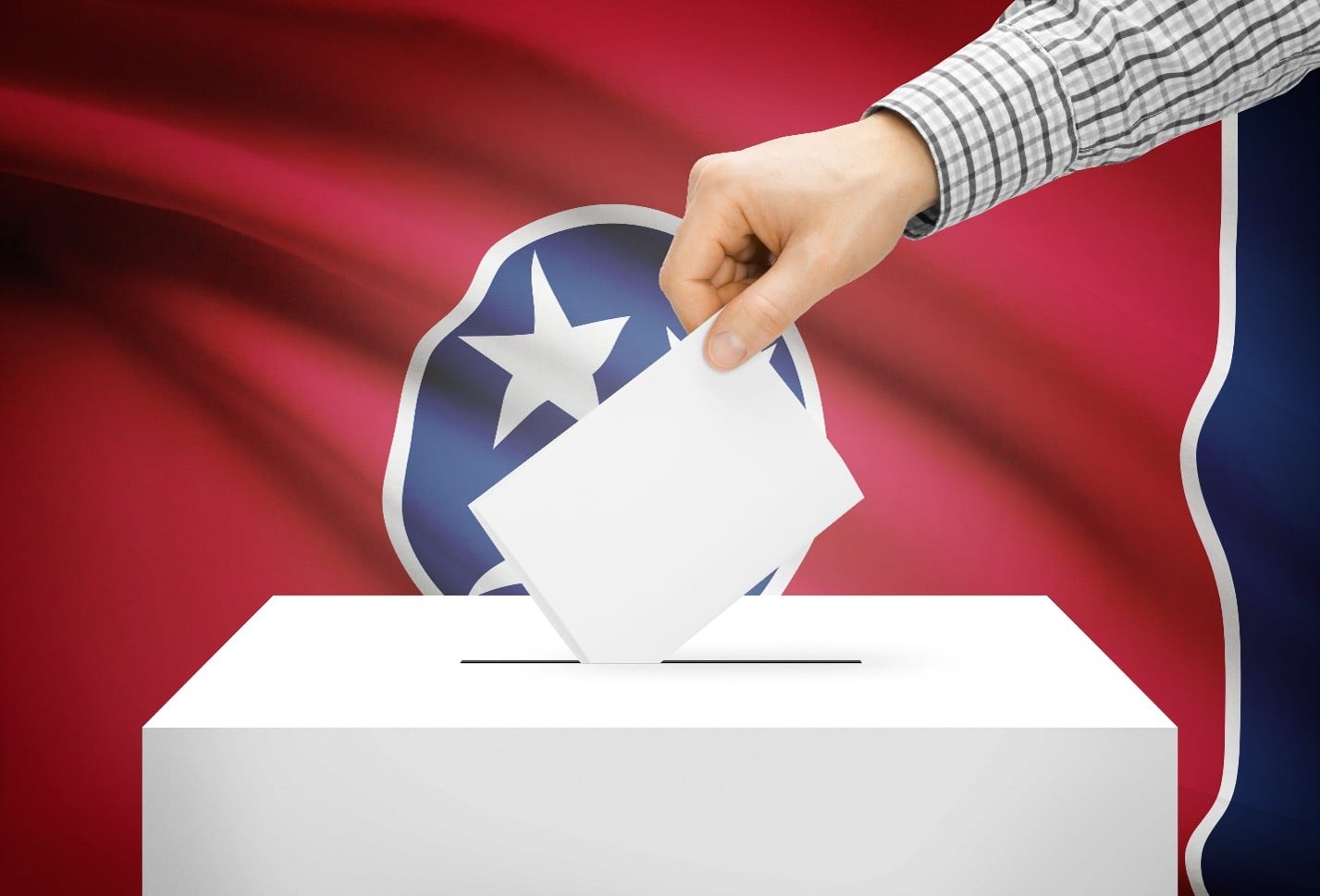
Tennessee voters headed to the polls on Tuesday, November 3, 2026, to decide several important federal, state, and local races. The general election included contests for governor, the U.S. Senate, congressional representation, and seats in the Tennessee General Assembly. Voters also considered three proposed amendments to the Tennessee Constitution, all of which received sufficient support for approval.
For residents of Lakeland and the greater Memphis area, the election included decisions about local leadership and representation. Incumbent Lakeland Mayor Josh Roman won reelection, while voters also selected members of the Board of Commissioners and the Lakeland School Board. Across Tennessee, Republican candidates won the races for governor and U.S. Senate, while results in several legislative and congressional contests reflected competition between the major political parties. The results discussed below are based on unofficial returns available as of November 5, with final certification still pending.
Marsha Blackburn Wins Tennessee Governor’s Race
Republican U.S. Senator Marsha Blackburn won Tennessee’s gubernatorial election, becoming the first woman elected governor in the state’s history. Blackburn defeated Democratic nominee Jerri Green and several independent candidates in the race to succeed outgoing Governor Bill Lee, who was unable to seek another consecutive term because of Tennessee’s gubernatorial term limits.
According to unofficial statewide results, Blackburn received approximately 45.5% of the vote, compared with 42.9% for Green. Independent candidate David Hatley finished third with approximately 9.3%, while other independent candidates received smaller shares. The results placed Blackburn ahead by roughly 54,000 votes, with all 95 Tennessee counties reporting election-night returns. Although the outcome has been projected, the vote totals remain subject to the state’s certification process.[1]
Blackburn’s election represents a change in leadership at the governor’s office while maintaining Republican control of the position. During the campaign, candidates discussed issues including education, economic development, public safety, healthcare, and the state’s future direction. The governor oversees the executive branch of Tennessee’s government, works with the General Assembly on legislation and budgeting, and appoints officials to various state positions.
Bill Hagerty Wins Reelection to the U.S. Senate
Republican U.S. Senator Bill Hagerty won reelection to another six-year term, defeating Democratic challenger Marquita Bradshaw and several independent candidates. Hagerty, who was first elected to the Senate in 2020, will continue representing Tennessee in Washington, D.C., alongside the state’s other U.S. senator.
Unofficial statewide results showed Hagerty receiving approximately 55.1% of the vote, while Bradshaw received approximately 42.9%. The remaining votes were divided among independent candidates. Hagerty’s victory maintains Republican control of the Senate seat and provides continuity in Tennessee’s representation at the federal level.[2]
The U.S. Senate plays a central role in federal lawmaking, including reviewing legislation, approving certain presidential appointments, and considering international treaties. Tennessee’s senators also represent the state’s interests in discussions involving federal funding, infrastructure, economic policy, and other national issues.
Tennessee’s Congressional Races Bring Additional Results
Tennessee voters also selected representatives for the state’s nine congressional districts. Republican David Kustoff won reelection in the 8th Congressional District, which includes Lakeland and portions of West Tennessee. Kustoff’s victory means he will continue serving as the area’s representative in the U.S. House of Representatives.
Other congressional contests included Republican Charlie Hatcher’s victory in the 5th Congressional District and Republican Brent Taylor’s reported lead in the newly redrawn 9th Congressional District. Taylor’s contest against Democrat Justin J. Pearson was particularly close, with unofficial returns showing a difference of approximately 2,500 votes. Because of the narrow margin and the ongoing certification process, residents should consult updated election records for the final status of that race.[3]
Congressional representatives serve two-year terms and participate in decisions involving federal legislation, government spending, and national policy. Although each district elects its own representative, the results collectively determine Tennessee’s delegation in the U.S. House. Several races across the state were more competitive than others, illustrating differences in voter preferences among Tennessee’s regions.
Tennessee Voters Approve Three Constitutional Amendments
In addition to choosing elected officials, Tennessee voters considered three proposed amendments to the state constitution. All three amendments passed, addressing judicial authority over bail, state-level property taxation, and constitutional protections for crime victims.
According to reported statewide results, each amendment received support from approximately two-thirds of voters or more. Tennessee’s constitutional amendment process also requires a proposed amendment to receive affirmative votes exceeding half the total votes cast in the gubernatorial election. All three measures satisfied that requirement, allowing the proposed changes to become part of the state’s constitution.[4]
Amendment 1 Expands Judicial Authority to Deny Bail
Amendment 1 changes Tennessee’s constitutional provisions concerning bail for individuals accused of certain serious criminal offenses. Previously, the state constitution generally guaranteed a right to bail before conviction, with an exception for capital offenses under specified circumstances. The approved amendment expands the categories of offenses for which courts may deny bail before trial.
The measure applies to certain serious charges, including second-degree murder, terrorism, aggravated rape, and other qualifying offenses. It gives judges additional authority to determine whether defendants accused of these crimes should remain in custody while awaiting trial. The amendment does not automatically eliminate bail for every person facing a qualifying charge; judicial review remains part of the process.
Unofficial statewide results showed approximately 67% of voters supporting Amendment 1, compared with 33% voting against it. Supporters of the proposal emphasized public safety and the ability of judges to consider the seriousness of certain offenses when making pretrial detention decisions. Opponents raised concerns about due process, the presumption of innocence, and the potential consequences of expanding pretrial detention. The approved amendment changes the constitutional framework governing these decisions.[5]
Amendment 2 Prohibits State-Level Property Taxes
Amendment 2 establishes a constitutional prohibition against the Tennessee General Assembly imposing a state property tax. The measure addresses the authority of state lawmakers to levy taxes on property, distinguishing state-level taxation from property taxes imposed by local governments.
The amendment does not eliminate existing county or municipal property taxes. Local governments retain their authority to assess and collect property taxes under applicable Tennessee law. For homeowners in Lakeland and elsewhere in the state, this distinction is important because the amendment does not automatically reduce or remove property tax obligations associated with local government services.
Approximately 67% of voters supported Amendment 2, while 33% voted against it, according to reported statewide totals. The approved measure adds a constitutional restriction on future state-level property taxation. Supporters viewed the amendment as a way to establish long-term limitations on the state’s taxing authority, while critics questioned whether restricting future legislative options could affect financial flexibility under changing economic conditions.
Amendment 3 Expands Constitutional Rights for Crime Victims
Amendment 3 addresses the rights of crime victims within Tennessee’s criminal justice system. The proposal modifies the state’s constitutional protections to provide additional recognition of victims’ interests during legal proceedings.
The amendment expands the constitutional framework concerning crime victims’ rights, including protections related to participation in the justice system and the treatment of victims throughout criminal proceedings. These provisions are intended to establish clearer constitutional standards for how victims are informed, recognized, and considered during the legal process.
Of the three amendments, Amendment 3 received the highest level of support, with approximately 76% of voters approving the measure and 24% opposing it. The result reflects the statewide vote on the proposal, although questions about implementation and the interaction between victims’ rights and defendants’ constitutional protections may continue to be addressed through legislation and court procedures.
Josh Roman Wins Reelection as Lakeland Mayor
In Lakeland, incumbent Mayor Josh Roman won reelection against challenger Connie McCarter, who has served on the Lakeland Board of Commissioners since 2022. The mayoral race was one of the city’s most closely followed local contests, giving voters an opportunity to consider the direction of municipal leadership.
According to unofficial results from the Shelby County Election Commission, Roman received 2,927 votes, representing approximately 59.5% of ballots cast in the mayoral contest when write-in votes are included. McCarter received 1,967 votes, or approximately 40%. Roman’s victory secures another term as mayor, during which the city will continue addressing matters involving development, infrastructure, municipal services, and long-term planning.[6]
Lakeland’s mayor serves alongside the Board of Commissioners in overseeing municipal government. The city’s elected leadership is responsible for considering policies, approving budgets, addressing community priorities, and working with municipal staff on local operations. Although the election has concluded, residents can continue participating in city government through public meetings, community discussions, and communication with elected officials.
Lakeland Voters Also Select Commissioners and School Board Members
Lakeland voters also participated in elections for the city’s Board of Commissioners and School Board. In the at-large commissioner contest, Jeremy Burnett received 3,040 votes, the highest total among the candidates. Heather Ann Long received 2,380 votes, narrowly ahead of Lindsey Reap, who received 2,375 votes. The five-vote difference between Long and Reap makes the certification process particularly important for confirming the final outcome.
In the Lakeland School Board election, Keith Acton received 3,616 votes, Laura Harrison received 3,491 votes, and Sara Castellaw received 3,412 votes. These results reflect the unofficial totals reported following the election. The School Board plays an important role in overseeing the local public school system, including policies, educational priorities, and district governance.[7]
What Happens After Election Day?
Although many races have projected winners, election administration continues after the polls close. County election officials must review returns, account for eligible provisional ballots, complete required procedures, and certify results according to applicable deadlines. Close contests may receive additional attention as officials finalize vote totals.
Residents interested in following the process can review information published by the Tennessee Secretary of State and the Shelby County Election Commission. These resources provide election results, voter information, and updates about official election procedures. The distinction between unofficial and certified results is especially important in contests decided by small margins, where additional ballots or corrections could affect the final totals.
Looking Ahead for Tennessee and Lakeland
The November 3 election established the direction of several important government offices while approving three changes to Tennessee’s constitution. At the state level, voters selected a new governor and reelected a U.S. senator. At the local level, Lakeland residents chose their mayor and participated in elections affecting municipal leadership and public education.
As newly elected and reelected officials prepare for their upcoming terms, residents will have opportunities to follow the implementation of policies, proposed legislation, and decisions affecting their communities. Public meetings, official government announcements, and local reporting can help voters remain informed about developments after the election.
For Lakeland residents, the election represents one part of an ongoing civic process. While candidates and political parties may hold different positions on individual issues, the responsibilities of government continue regardless of election outcomes. Staying informed about decisions at the municipal, state, and federal levels allows residents to better understand how those decisions may affect their daily lives and participate in future discussions about their community.
[1] WGNS Radio. Tennessee Elects First Female Governor as Blackburn Wins State While Rutherford County Backs Green. November 3, 2026. https://www.wgnsradio.com/article/101910/tennessee-elects-first-female-governor-as-blackburn-wins-state-while-rutherford-county-backs-green
[2] News Talk 98.7 WOKI. Tennessee Voters Decide Key Federal and State Races. November 4, 2026. https://www.newstalk987.com/2026/11/04/tennessee-voters-decide-key-federal-and-state-races/
[3] WSMV. Live Updates for Election Day 2026 in Tennessee. November 3, 2026.
[4] Axios Nashville. Tennessee Voters Approve All Three Constitutional Amendments. November 4, 2026. https://www.axios.com/local/nashville/2026/11/04/tennessee-constitutional-amendments-results-2026
[5] Ballotpedia. List of Tennessee Ballot Measures — 2026 Election Results. https://ballotpedia.org/List_of_Tennessee_ballot_measures
[6] WMC Action News 5. Lakeland Mayor Josh Roman Wins Re-election. November 4, 2026. https://www.actionnews5.com/2026/11/04/lakeland-mayor-josh-roman-wins-re-election/
[7] BallotProject. Shelby County General and Municipal Election Results — November 3, 2026. https://ballotproject.org/tn/shelby/elections/2026-11-03/results/latest