

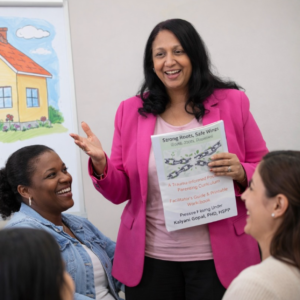
The faces of survivors carry untold stories. As Dr. Kalyani Gopal walks through the therapeutic spaces she helped create, she is reminded of the deep-seated trauma these individuals have endured. Each room tells a story of pain transformed into potential, of trauma that, against all odds, is beginning to heal.
For over 35 years, Dr. Kalyani Gopal, PhD, has dedicated her life to understanding and healing childhood trauma. Through her work, she has identified how adverse childhood experiences (ACEs) continue to exert powerful influences over adult relationships and emotional well-being. “The impact,” she explains, “has been on triggers leading to abusive relationships, authoritarian or permissive parenting, and extreme emotional responses.” These patterns often manifest physically, with survivors grappling with conditions like IBS and autoimmune diseases.
The Cycle of Trauma: Displacement and Healing
One of the key concepts introduced by Dr. Gopal is “Displacement Trauma,” which explores the complex trauma experienced by children through repeated disruptions of attachment bonds. Her understanding of attachment disruptions underscores the importance of consistent, stable relationships in childhood. “Removing a child from their primary home disrupts the attachment bond,” she notes, leading to a life where stability feels elusive. Without a consistent parental figure, children often grow detached, carrying this disconnection into adulthood.
Dr. Gopal’s interventions emphasize the need for stable, predictable environments where healing can begin. Her therapeutic practices show that with advances in trauma therapy, recovery is not just possible but achievable. “The environment needs to be safe,” she reflects, “with clear rules and expectations. Survivors need the right tools to heal.”
Recognizing and Breaking Unhealthy Cycles
Many parents wish to break unhealthy cycles from their upbringing, but knowing where to start can be daunting. Dr. Gopal advises parents to focus on self-reflection, identification of inherited patterns, and intentional changes. This involves acknowledging past traumas and proactively preventing their transmission to future generations. Her book, Strong Roots, Safe Wings, provides a roadmap for parents wanting to stop the cycle of trauma, offering practical advice on reparenting and establishing healthier relationships.
- Recognize and understand past traumas
- Reflect on personal parenting patterns
- Engage in intentional change to avoid passing trauma
- Create stable, loving environments
Tackling Misconceptions and Advocating for Change
Dr. Gopal’s work also highlights common misconceptions about healing from trauma. Many people assume that once a traumatic situation ends, the healing process is straightforward. Dr. Gopal addresses this, noting, “Trafficked persons often don’t know they are being trafficked. Healing is a lifetime process, but with the right trauma-informed care, remarkable recovery is possible.”
Trauma-informed care, according to Dr. Gopal, should be foundational across mental health, education, healthcare, and social service systems. “Trauma can lead to complex post-traumatic stress,” she says. “Recognizing this in healthcare settings is critical to addressing and healing these hidden emotional wounds.”
The THRIVE Model: Empowering Healing and Resilience
Through her innovative THRIVE model—Therapeutic Housing Response to Vulnerable Populations—Dr. Gopal creates conditions for individuals to rebuild self-worth and resilience. This model integrates psychological science with her clinical expertise, providing comprehensive support for survivors in her therapeutic shelters.
The model emphasizes:
- Therapeutic housing free of cost for up to two years
- Opportunities for personal growth and economic stability
- Self-examination and boundary-setting
- Community integration through education and job skills training
“Creating safe spaces for survivors to breathe and reconnect is central to their healing journey,” notes Dr. Gopal. By providing avenues for education and empowerment, her approach restores dignity and offers a path back to community life.
Looking Towards a Brighter Future
As Dr. Gopal continues her advocacy, her vision remains steadfast—expand trauma recovery resources and create comprehensive healing environments for survivors and underserved populations. Her initiatives, like the upcoming SAFE 2027 Global Conference and expanded facilities in Indiana, hold promise for creating lasting change.
Dr. Gopal’s work is driven by a deep belief that healing is possible with the right support. “Training stakeholders to understand trauma and using survivors as trainers empowers change,” she explains. By focusing on prevention and expanding collaborative efforts worldwide, she envisions a future where trauma no longer defines lives but serves as a catalyst for change.
This article is for informational purposes only and is not medical advice. For specific medical guidance, please consult a licensed healthcare professional.
By: Chris Bates