

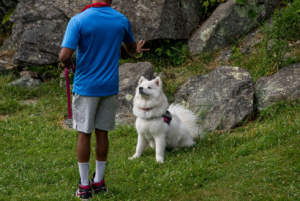
Walking down the pet store aisle for the first time is a fast track to feeling completely overwhelmed. You stare at a wall of neon colors, clunky buckles, and confusing harness designs, trying to guess what will actually work. As a new dog owner, you want to get this right. You want your new companion to be safe, happy, and comfortable.
That deep investment makes perfect sense. According to recent data, 62% of Americans own a pet, and nearly all U.S. pet owners (97%) say their pets are part of their family. You are bringing a new family member into your home, and the pressure to make the right choices starts on day one.
The “Mismatched Gear” Mistake
First-time owners frequently purchase standard buckle collars and basic leashes as separate, disjointed pieces. It is easy to pick a collar based purely on a cute pattern and then grab a leash in a matching color. While this seems like a harmless way to show off your dog’s personality, it ignores the mechanics of how these two pieces of equipment need to work together.
Your collar and leash are your primary tools for communicating with your dog outdoors. When you mix and match different brands, weights, and materials, you create a clunky system. A heavy leash clip on a lightweight collar drags the dog’s neck down. A flimsy leash paired with a bulky collar absorbs the tension of your commands, meaning your dog never actually feels your subtle cues.
The good news is that finding the right fit does not have to be complicated. High-quality dog leashes and collars with the same material, balanced hardware, and consistent sizing take the guesswork out of the equation. Whether you have a compact breed that needs a lighter touch or a strong puller that demands a more secure grip, there is a set built for that exact pairing. Browse by material, size, or walking style, and walk out with gear that works as one.
Safety Risks of the Wrong Setup
A common beginner struggle is dealing with a dog that constantly pulls or attempts to back out of a standard collar. New dogs are often easily spooked by loud noises, passing cars, or other animals. If your dog panics and pulls backward, a standard buckle collar can easily slip right over their ears.
Beyond the fear of a lost dog, severe pulling creates a major physical hazard for the handler. Walking a pulling dog is exhausting, and it is also increasingly dangerous.
The annual number of emergency department visits for leash-dependent dog walking injuries increased more than fourfold between 2001 and 2020.
These aren’t just minor scrapes. Research shows that 55% of leash-related injuries treated in emergency departments occurred when the owner was pulled or tripped by the leash.
The sheer physical force a determined dog can generate is surprising. A quarter of dog walkers experience leash-pulling forces of 45 pounds or more during a typical walk. That amount of sudden tension significantly increases your risk of falling.
Relying on basic, big-box store gear leaves both you and your dog vulnerable to these sudden accidents. Standard nylon leashes slip through your hands easily, and cheap plastic buckles can snap under pressure. To keep everyone safe, you need gear designed to handle resistance effectively.
Upgrading Your Toolkit: The Mechanics of Professional Gear
Professional dog handlers don’t struggle with pulling because they use specialized tools. They rely on equipment that offers a calculated mix of control, comfort, and style. You don’t need to be a professional trainer to benefit from these same tools. Bridging the gap between show-ring equipment and everyday walking gear is the fastest way to solve early behavioral issues.
Understanding the mechanical differences between standard pet store gear and expert-recommended solutions helps you make better purchasing decisions.
| Feature | Standard Pet Store Gear | Professional Walking Toolkit |
|---|---|---|
| Primary Design | Built for visual appeal and mass production. | Built for mechanical function and clear communication. |
| Tension Control | Rigid pulling against the dog’s throat. | Gentle, distributed tightening that safely discourages pulling. |
| Escape Prevention | Easy for dogs to back out of and slip off. | Closes securely around the neck to prevent slipping. |
| Handler Comfort | Abrasive edges that cause hand friction. | Soft, rounded materials that protect the handler’s grip. |
Let’s look at the specific tools that offer these professional benefits.
Slip Leads with Stoppers
A slip lead is a specialized tool that combines a leash and a collar into one cohesive unit. You simply slip the loop over your dog’s head, and you are ready to walk. This removes the need for heavy metal snaps and disjointed connections, providing a much more fluid line of communication between you and your dog.
The critical function of a high-quality slip lead is the stopper. The stopper is a small, adjustable slider that sits on the lead to prevent the loop from opening too wide or closing too tightly. By setting the stopper to the exact size of your dog’s neck, you create a custom fit that prevents choking while maintaining total security.
This specific tool allows for immediate, subtle leash corrections during early training phases. If your dog begins to pull forward, a very light pop on the leash engages the slip mechanism briefly, signaling the dog to slow down. Because the lead is continuous, the dog feels the cue instantly, making your training efforts much more successful.
Martingale Collars
If you have a rescue dog or a breed known for being a clever escape artist, you need a collar designed for retention. A standard buckle collar has a massive mechanical flaw. Because it sits at a fixed circumference, a dog can plant their feet, pull backward, and easily slide the collar right over their head.
A martingale collar completely eliminates this risk. The design features a two-loop system. The larger loop goes around the dog’s neck, and the leash attaches to a smaller control loop. When the dog tries to pull away or back out, the tension on the leash causes the larger loop to gently tighten.
This gentle tightening mechanism secures the dog firmly when they resist. As soon as the dog stops pulling and relaxes, the collar immediately loosens back to a comfortable resting fit. This design is very gentle on the dog’s neck because it distributes pressure evenly, rather than choking the front of the throat. For anxious new owners, the martingale collar provides ultimate peace of mind.
The “Low-Quality Material” Mistake: Comfort and Communication
The material of your leash and collar directly impacts your physical grip and your dog’s daily comfort. Cheap nylon webbing is the standard material found in most pet stores, but it presents immediate physical pain points. Nylon has hard, abrasive edges. If a dog lunges suddenly, the rough fabric slides quickly across your bare skin, resulting in painful leash burn.
Over time, these cheap materials wear down rapidly. They absorb water, hold onto odors, and the stiff edges can chafe the sensitive skin around your dog’s neck.
You can easily bypass these issues by choosing handcrafted, tightly woven braided leather or soft, climbing-grade rope. Braided leather is naturally supple and becomes even softer with daily use. Climbing rope is designed to handle immense friction without shedding or snapping, making it incredibly comfortable to hold.
High-quality, professional-grade materials provide a secure, comfortable hold from day one. This remains true whether you are walking a tiny terrier or a heavy-pulling retriever. When your hands don’t hurt, you are more confident on your feet.
This material quality connects directly back to your training success. A secure, comfortable grip allows you to deliver clear, consistent leash cues. If you are afraid of leash burn, you will naturally flinch or loosen your grip when your dog pulls. Premium materials ensure you never have to drop the lead, allowing you to guide your dog safely through any situation.
Conclusion
The choices you make on day one dictate the success, safety, and comfort of your early dog training routines. Bringing a new dog home is stressful enough without fighting against poor equipment.
You can save yourself a lot of frustration by skipping the trial-and-error phase of cheap, mismatched items. Instead, choose a unified, professional-grade walking system. Tools like slip leads, martingales, and braided leather leashes provide the security you need to step outside with confidence.
Walking your dog shouldn’t be a physical battle or a daily source of anxiety. With the right leash and collar in your hands, you turn a stressful daily chore into a seamless, highly rewarding bonding experience with your new best friend.