

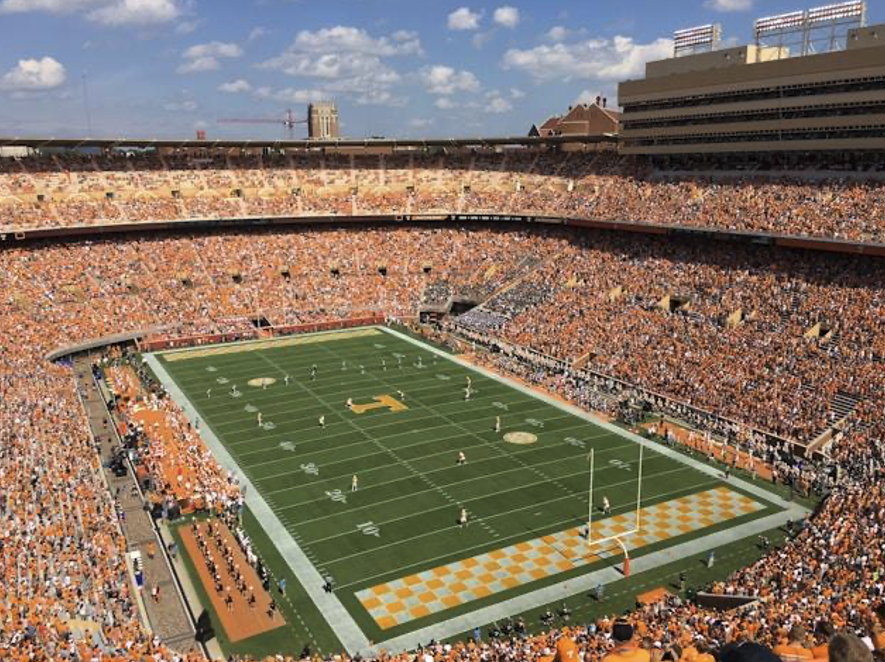
The Tennessee Volunteers enter the 2026 offseason at a pivotal crossroads. After a disappointing 2025, the program is undergoing a sweeping reset, reshaping the roster, staff, and schemes to restore competitiveness in the SEC.
For sportsbooks and analysts, these changes create both opportunity and uncertainty, as early betting markets may lag behind internal progress. Tennessee’s moves signal intent, but translating them into on-field results will be the ultimate test, influencing win totals, conference futures, and preseason projections.
Defensive Overhaul Reshapes Market Confidence
The most immediate effect of Tennessee’s offseason rebuild appears on the defensive side of the ball. After a 2025 season defined by inconsistency and breakdowns, the Volunteers commit to a comprehensive defensive reset that prioritizes structure, discipline, and depth. This shift sends a clear signal to betting markets that Tennessee is addressing foundational weaknesses rather than relying on marginal tweaks.
From an odds-making perspective, defensive stability is key to projecting outcomes. Teams with inconsistent defenses often face wider point spreads and more unpredictable totals. Tennessee’s commitment to systemic improvement reduces that volatility and introduces a higher perceived floor.
As preseason evaluations develop, sportsbooks adjust projections based on the expectation of improved efficiency rather than dramatic transformation. That distinction matters. Early college football odds often reward teams that demonstrate organizational clarity, even before results materialize. For the Tennessee Volunteers, defensive restructuring stabilizes perception and begins to rebuild credibility in markets that previously priced them cautiously.
Roster Turnover Introduces Risk and Opportunity
Tennessee’s offseason rebuild includes significant roster turnover, a reality that betting markets must account for carefully. High levels of attrition create uncertainty, but they also allow programs to recalibrate depth, balance scholarship distribution, and align personnel with system priorities. For the Volunteers, turnover reflects intentional restructuring rather than forced reaction.
Sportsbooks generally view heavy roster movement as a short-term risk factor. Early-season lines may reflect caution until cohesion becomes evident. However, when turnover aligns with a clear strategic vision, markets adjust quickly once early indicators confirm stability.
For Tennessee, the key variable is not experience but fit. The rebuild focuses on correcting imbalances across units, particularly in areas that previously limited consistency. That approach reduces reliance on narrow margins and increases season-long predictability.
In futures markets, this type of turnover often suppresses early optimism, creating value windows for bettors who recognize structural improvement beneath surface-level uncertainty surrounding the Tennessee Volunteers.
Offensive Continuity Stabilizes Projections
While much of the attention centers on defensive and roster changes, offensive continuity quietly plays a stabilizing role in Tennessee’s betting outlook. Maintaining philosophical consistency on offense allows sportsbooks to anchor projections amid broader uncertainty elsewhere on the roster.
Continuity matters because it limits downside variance. NCAAF narratives show that teams that are undergoing full resets on both sides of the ball often face steep early-season learning curves. Tennessee avoids that trap by preserving core offensive principles, keeping the rebuild targeted rather than disruptive.
From a market standpoint, this continuity helps narrow expected outcomes. Totals and spreads become easier to price when at least one phase of play carries predictability. That predictability reduces the likelihood of extreme lines, particularly early in the season.
For the Tennessee Volunteers, offensive stability does not guarantee production, but it does reduce unknowns. In betting markets, fewer unknowns translate to tighter pricing and quicker line adjustments once the season begins.
Coaching Structure Signals Strategic Intent
One of the most critical signals sportsbooks evaluate during an offseason rebuild is coaching structure. Tennessee’s changes signal a philosophical shift toward accountability, adaptability, and situational awareness. Instead of simply reshuffling roles, the Volunteers are realigning responsibilities to address the performance gaps revealed in 2025.
This matters because coaching decisions directly influence late-game execution, in-game adjustments, and week-to-week consistency, all critical factors in betting models. Teams that demonstrate clarity in leadership often outperform conservative preseason expectations once games begin.
Markets typically respond cautiously to coaching changes, especially when intensity and schematic demands increase. However, when those changes align with organizational goals, early skepticism can give way to rapid recalibration.
For Tennessee, the coaching reset suggests an emphasis on closing games and sustaining performance under pressure. That emphasis resonates with oddsmakers, who closely track teams capable of improving fourth-quarter efficiency, a subtle but powerful driver of line movement involving the Tennessee Volunteers.
SEC Context Amplifies Rebuild Impact
The SEC environment magnifies every offseason decision, and Tennessee’s rebuild unfolds within one of the most demanding competitive contexts in college football. Strength of schedule, divisional depth, and national scrutiny all play a role in how sportsbooks evaluate Tennessee’s potential ceiling and floor.
In such an environment, incremental improvement can dramatically alter perception. Betting markets often compress odds within strong conferences, meaning even modest gains in efficiency can shift win totals and matchup pricing. Tennessee’s rebuild positions the program to capitalize on that compression.
The Volunteers benefit from a reset that aligns with conference realities rather than chasing national narratives. By emphasizing sustainability and structural integrity, Tennessee increases its chances of exceeding conservative projections.
For bettors and analysts, the SEC context ensures Tennessee remains a closely monitored team. Small performance indicators carry outsized influence, making the Volunteers one of the more intriguing market variables entering the 2026 season.
Project Rebuild Underway
The Tennessee Volunteers’ offseason rebuild represents more than a response to a disappointing season; it is a recalibration of identity, structure, and long-term direction. By addressing defensive instability, managing roster turnover with intent, preserving offensive continuity, and reshaping coaching responsibilities, Tennessee alters how sportsbooks evaluate risk and potential.
In betting markets, perception often lags behind reality. That gap creates opportunity. As preseason projections solidify, Tennessee’s rebuild positions the program to challenge conservative expectations, particularly within the unforgiving SEC landscape.
For sports fans and bettors alike, the Volunteers emerge as a team defined not by past disappointment, but by calculated reinvention. How quickly that reinvention translates on the field will ultimately determine how far Tennessee reshapes college football odds in 2026.
Content reflects information available as of 2026/01/29; subject to change.
By Chris Bates