

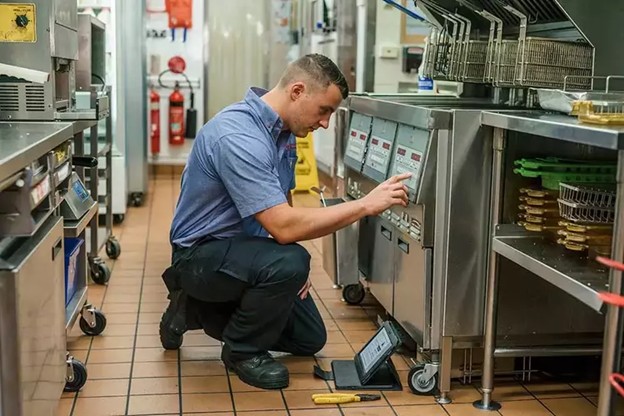
Commercial refrigerators, ovens, dishwashers, and laundry equipment require professional repair due to complex systems and safety hazards. DIY fixes void warranties and creates dangerous conditions. Look for licensed technicians with emergency response, warranties, and brand training. Warning signs include unusual noises, temperature changes, and water leaks. Preventive maintenance reduces repair costs by 25-40%.
Commercial appliance repair services keep businesses running smoothly and safely. Professional technicians prevent minor issues from becoming major disasters that shut down operations and cost thousands in lost revenue.
Some commercial appliances require the attention of an expert because they have complicated systems and safety regulations, and are required to comply with the federal provisions. They become impractical for people trying to repair them unless he has the knowledge of warranty void, safety hazards, and costly damages.
Why You Shouldn’t DIY Commercial Appliance Repairs?
A commercial appliance repair should be done properly so that it functions safely and efficiently. Licensed technicians understand complex electrical systems, specialized knowledge, and the tools necessary for working with gas connections and refrigeration cycles.
Safety concerns top the list of considerations when hiring professional services. Commercial units generally work at higher voltages and pressures than residential ones. Any mishandling of gas-fired equipment introduces a risk for explosions. Similarly, refrigeration systems involve pressurized refrigerants that could cause serious harm to human life and threaten the environment.
The major safety hazards include:
- Electrical shocks from high-voltage systems
- Gas leaks that can cause fires or explosions
- Exposure to refrigerants leads to frostbite or respiratory complications
- Carbon monoxide is due to incomplete combustion
- Scalding from pressurized steam or hot water
Heavy repairs that are not done well affect many more things than just direct costs. For example, a poorly repaired commercial refrigerator may well compromise thousands of dollars’ worth of inventory. Failed heating elements in ovens disrupt service during busy periods. Water damage from incorrectly repaired dishwashers requires expensive cleanup and replacement.
Business interruption costs multiply quickly in commercial settings. Restaurants lose customers when equipment fails during peak hours. Hotels face guest complaints and potential health code violations. Manufacturing facilities halt production until critical equipment returns to service.
Commercial Appliances You Should Never Fix Yourself
Heavy traffic, discussion, and repair of categories of commercial appliances are inevitable, considering their complexities and their importance in business operations. The critical role of these machines lies in sophisticated control systems and high-pressure components, and safety mechanisms that should not be tampered with by untrained individuals. Well, let’s take a look at the subtitles below:
1. Commercial Refrigerators and Freezers
Refrigerators, freezers, and walk-in coolers are the lifeline of food service operations. If they go down, your inventory is at risk. These systems rely on compressors, fans, gaskets, and control boards working together, and even one failure can send temperatures soaring.
Call a technician if you notice:
- Compressor or fan motor failure: Overheating, constant cycling, or loud noises
- Refrigerant leaks: Must be fixed by a certified technician for safety and compliance
- Ice or frost buildup: Points to airflow or defrost cycle issues
- Dirty condenser coils: Causes overheating and energy waste
- Control board glitches: Prevents proper cooling cycles
- Worn door seals: Let warm air in, driving up energy costs
Acting early keeps temperatures stable, saves inventory, and avoids after-hours emergency calls.
2. Professional Ovens, Ranges, and Fryers
The commercial cooking concerns are extreme and create rare causes of failure for which professional intervention is needed. Common problems affecting food quality and safety are:
- Thermostat calibration drift causing temperature variations
- Gas valve problems affecting flame control
- Heating element burnout from overuse or power surges
- Ventilation system blockages creating overheating
- Control panel malfunctions, disrupting cooking cycles
3. Commercial Dishwashers
Commercial dishwashers face heavy daily use that creates specific maintenance challenges requiring professional intervention. Water leaks, poor cleaning performance, mechanical jams, and stuck wash cycles disrupt kitchen operations and violate health codes.
Common dishwasher repair issues:
- Water pump failures causing poor spray pressure
- The heating element burnout preventing proper sanitization
- Chemical feed system problems affecting cleaning performance
- Door seal leaks, creating water damage and safety hazards
- Control system glitches disrupting wash cycles
- Drain system blockages causing overflow conditions
4. Laundry Machines
Commercial laundry equipment serves diverse industries, including hospitality, healthcare, fitness centers, and professional cleaning services. These heavy-duty machines face constant use that creates specific failure modes requiring professional attention.
Frequent laundry equipment problems:
- Drive motor failures from overloading or electrical issues
- Water inlet valve problems causing fill or temperature issues
- Drain pump blockages creating overflow conditions
- Belt or coupling wear affecting drum rotation
- Control system malfunctions disrupting cycle timing
- Heating element failures in dryers reducing efficiency
5. Specialized Equipment
Ice cream machines break down in ways that cost you money fast. The cylinder that freezes everything can crack or lose temperature control. The motor that churns the mix burns out from overuse. Any refrigeration problem means your expensive ingredients turn into expensive waste.
Soda fountains and beverage machines have their own problems. The CO2 pressure systems leak or malfunction. Cooling coils get dirty and stop working. When the syrup mixing goes wrong, customers complain about flat or weird-tasting drinks. CO2 system problems create safety hazards and affect carbonation levels. Cooling failures spoil syrups and affect taste quality.
Common specialized equipment issues:
- Vending machine coin mechanisms jamming or rejecting valid currency
- Food processing equipment, blade dulling, or motor overheating
- Beverage system carbonation problems from CO2 leaks or pressure issues
- The ice cream machine cylinder scoring from improper cleaning
- Microwave magnetron failures reducing heating effectiveness
- Prep table refrigeration problems affecting food safety temperatures
When To Call A Pro: Warning Signs You Can’t Ignore
Recognizing warning signs early prevents minor problems from becoming major failures that shut down business operations. Most commercial appliances provide clear indicators when professional attention becomes necessary.
Critical warning signs requiring immediate professional response:
- Unusual noises like grinding, squealing, or knocking sounds
- Visible smoke, sparks, or burning odors from equipment
- Water leaks, creating puddles or staining surfaces
- Error codes or warning lights on control panels
- Inconsistent performance, like uneven heating or poor cleaning
- Increased energy consumption without usage changes
Energy consumption increases without corresponding usage changes, suggesting efficiency problems that professional maintenance can address. Smart meters and energy monitoring systems help identify equipment operating outside normal parameters.
Finding and Vetting Expert Repair Services
Selecting qualified repair services protects your investment and ensures safe operation of critical business equipment. The wrong choice can lead to repeated failures, safety hazards, and voided warranties.
Here’s what to look for when choosing repair services:
Essential Credentials and Licensing
Licensed technicians demonstrate competency through formal training and certification programs. EPA Section 608 certification shows refrigeration technicians understand safe refrigerant handling procedures. Electrical licenses ensure technicians can safely work on high-voltage commercial equipment.
Key qualifications to verify include:
- State licensing for electrical and gas work
- EPA refrigerant handling certifications
- Manufacturer-specific training credentials
- Insurance coverage, including liability and workers’ compensation
- Better Business Bureau ratings and customer reviews
Response Times and Service Guarantees
Response time commitments matter significantly for business-critical equipment. Many commercial appliance repair services offer emergency response within 2-4 hours for critical failures. Service level agreements define response times and guarantee performance standards.
Warranty coverage on parts and labor protects against defective repairs and component failures. Reputable services typically offer 90-day to 1-year warranties on repair work. Extended warranties may be available for comprehensive service contracts.
Emergency service features to expect:
- 24/7 availability for critical equipment failures
- Guaranteed response times with penalties for delays
- Mobile service units carrying common replacement parts
- Priority scheduling for established customers
Preventative Maintenance to Avoid Major Repairs
Smart business owners know that staying ahead of problems beats scrambling to fix them after they happen. Regular maintenance keeps your equipment running longer and costs way less than calling for emergency repairs when everything breaks down at once.
You don’t need fancy procedures to start. Simple monthly cleaning goes a long way toward preventing the buildup that kills expensive components. Each piece of equipment has its own quirks about what cleaning products work best, so check those manuals if you want to keep warranties intact.
Here’s what actually matters for maintenance:
- Clean those refrigerator coils every month, or they’ll work twice as hard
- Swap out water and air filters when they’re due, not when you remember
- Check temperature settings quarterly because they drift over time
- Look at electrical connections for rust or loose wires
- Keep moving parts lubricated the way the manufacturer says
- Test all the safety switches and emergency stops regularly
Having a pro come through regularly catches problems your staff might miss. These technicians know what worn parts look like before they fail completely. Some even use heat cameras to spot components that are running too hot and about to give up.
Maintenance contracts take the guesswork out of scheduling and budgeting. You pay a set amount and get regular checkups, cleaning, small fixes, and faster service when something does break.
The money you save adds up fast:
- Your electric bills drop when equipment runs efficiently
- Machines last longer with proper care
- Emergency repair calls become rare
- Equipment doesn’t fail during your busiest times
Companies that stick with maintenance programs typically cut their total equipment costs by 25-40%. That’s real money back in your pocket.
Bottom Line
Commercial appliance repair services play a vital role in keeping businesses operational and profitable. Professional technicians provide the expertise, tools, and safety knowledge required to maintain complex commercial equipment properly.
The most critical appliances requiring professional attention include refrigeration systems, cooking equipment, dishwashers, laundry machines, and specialized food service equipment. These machines involve complex systems, safety hazards, and regulatory requirements that make professional repair essential.
When businesses face equipment breakdowns, they need reliable experts who understand the urgency of getting operations back online quickly. CLT Appliance Repair specializes in commercial equipment service with factory-trained technicians who carry extensive parts inventory and offer emergency response throughout the region.
If your commercial kitchen, laundry, or refrigeration system is showing any of these signs, call a licensed technician today to prevent downtime and keep operations running smoothly.
FAQs
What are the most common commercial appliances that need professional repair?
Commercial refrigerators, freezers, ovens, fryers, dishwashers, and laundry equipment top the list. These appliances involve complex systems, safety hazards, and regulatory compliance requirements that make professional repair essential for safe operation.
How do I know if my commercial appliance problem requires a professional rather than a DIY fix?
Safety hazards, warranty concerns, gas connections, electrical systems, refrigerant handling, and complex diagnostics all require professional attention. If you question safety or complexity, call professionals to avoid expensive damage.
What should I look for when choosing a commercial appliance repair company?
Check licensing, insurance, response times, warranties, and brand-specific training. Look for EPA certifications for refrigeration work, electrical licenses, and positive customer reviews from similar businesses in your area.
How much does it typically cost to repair commercial kitchen equipment?
Commercial appliance repairs range from $200-800 for minor issues to $2000-5000 for major component replacements. Emergency service, parts availability, and equipment complexity affect pricing. Preventive maintenance reduces overall costs significantly.
Is it better to repair or replace a malfunctioning commercial appliance?
Consider equipment age, repair frequency, energy efficiency, and replacement costs. Generally, repair makes sense if costs stay under 50% of replacement value and the equipment is under 10 years old.
How can regular maintenance prevent costly commercial appliance breakdowns?
Scheduled cleaning, filter changes, calibration checks, and professional inspections catch problems early. Maintenance contracts typically cost 10-15% of emergency repair expenses while extending equipment life by 40-60%.